
Soft-plumaged Petrel vs White-headed Petrel
Pterodroma mollis versus Pterodroma lessonii
Play a quiz with Soft-plumaged Petrel and White-headed Petrel
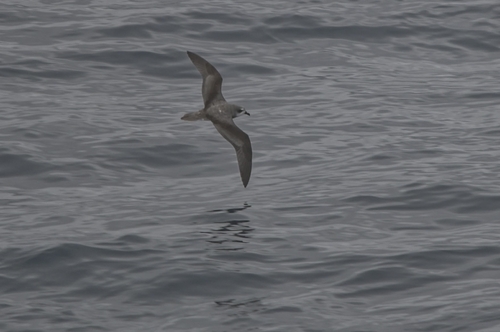 Soft-plumaged Petrel
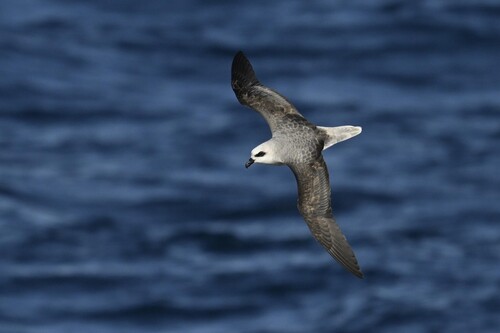 White-headed Petrel
In short
The most reliable field mark to separate Soft-plumaged Petrel from White-headed Petrel is the head pattern: Soft-plumaged shows a dark grey head with white cheeks and throat, while White-headed Petrel has a strikingly pale white head with a dark eye patch. In flight, both have long, narrow wings and pointed tails, but White-headed Petrel is much bulkier and longer-winged. Underwing coloration is similar, but overall size and head contrast are key. Bill size and structure also differ, with White-headed Petrel having a noticeably stouter bill. Use these features together, especially at sea where views are brief.
Identification tips
- Head pattern is key: Look for the head—Soft-plumaged Petrel has a dark grey head with white cheeks and throat, while White-headed Petrel's head is strikingly pale white with a dark eye patch. This is the most reliable field mark at all ages and in all plumages.
- Size and bulk: White-headed Petrel is much larger and heavier (over twice the mass), with a longer body and broader wings. If the bird looks robust and fulmar-like, suspect White-headed; a more delicate, medium-sized bird fits Soft-plumaged.
- Bill structure: White-headed Petrel has a noticeably stouter, larger black bill with a strong hook. Soft-plumaged's bill is slimmer, though both are black and hooked. This can be seen at close range or in good photos.
- Upperparts contrast: White-headed Petrel has paler grey upperparts with a contrasting darker grey on the upper wings and rump. Soft-plumaged Petrel is more uniformly dark grey above, lacking strong contrast.
- Underparts: Both are mostly white below, but this is not a strong separator. Focus on the head and size.
- Underwing color: Both species show dark underwings, so this is not a reliable field mark for separation.
- Tail shape: Both have pointed tails, but White-headed's longer body and tail may appear more pronounced in flight.
- Leg color: Both have pinkish legs with black on the toes; this is not a useful field mark in most views.
- Flight style: White-headed Petrel may appear steadier and more powerful due to its size, while Soft-plumaged is more agile and buoyant. Use this only as supporting evidence.
- Vocalizations: Soft-plumaged Petrel is noisy at colonies, but calls are rarely heard at sea and are not diagnostic in the field.
- Habitat: Both are pelagic and overlap at sea; breeding habitat is not useful for field separation.
- Pitfalls: In poor light or distant views, the head pattern may be obscured, making size and structure more important. Beware of the dark morph Soft-plumaged Petrel, which may appear even darker overall but still lacks the white head of White-headed.
- Season and age: No strong seasonal or age-related differences in field marks are described for these species; the head pattern is reliable year-round.
- Direct comparison: If both species are present, the size and head contrast should be obvious. If only one is seen, use a combination of head pattern, size, and bill structure for best results.
- When in doubt: If the head is pale white and the bird is large, it's White-headed Petrel. If the head is dark grey with white cheeks and the bird is medium-sized, it's Soft-plumaged Petrel.
Size
White-headed Petrel is significantly larger and heavier than Soft-plumaged Petrel (about 708g vs 300g [wikidata]). This size difference is apparent in direct comparison or when seen alongside other seabirds: White-headed Petrel appears bulkier, with a longer body (about 400 mm in length [wikipedia]) and broader wings. Soft-plumaged Petrel is medium-sized for a Pterodroma, noticeably lighter and more delicate in build. If you see a petrel with a robust, almost fulmar-like jizz, suspect White-headed; a more graceful, lighter bird fits Soft-plumaged.
Plumage
- Juvenile/immature upperwing pattern: No specific age-related upperwing patterns are described for either species in these sources, so focus on head and body plumage for all ages.
- Head pattern: Soft-plumaged Petrel shows a dark grey head with prominent white cheeks and throat, plus white speckling on the forehead and a dark eye patch. White-headed Petrel has a much paler, almost entirely white head with a dark eye patch—this pale head is the standout feature at all ages.
- Upperparts: Both have grey upperparts, but White-headed Petrel's are paler overall, with a contrasting darker grey on the upper wings and rump. Soft-plumaged is darker grey above, lacking the same contrast.
- Underparts: Both species are mostly white below, but Soft-plumaged has dark grey underwings, while White-headed's underwing color is not specifically described as different—expect both to show dark underwings, so this is not a strong separator.
- Bill and legs: Both have black bills, but White-headed's is stouter and larger. Leg color is similar (pinkish with black on toes), so not useful in the field.
- Tail: Both have pointed tails, but White-headed's longer body and tail may appear more pronounced.
Behaviour
Both species use similar dynamic soaring flight typical of Pterodroma petrels, with long glides and rapid banking. White-headed Petrel, being larger and heavier, may appear steadier and more powerful in flight, while Soft-plumaged is more agile and buoyant. Both are pelagic and rarely seen on land except at breeding colonies. No strong behavioral differences are noted in these sources.
Habitat
Both species are pelagic outside the breeding season, ranging widely over southern oceans. White-headed Petrel breeds in burrows on subantarctic islands (Antipodes and Auckland Islands), often among tussocks and herbfields. Soft-plumaged Petrel breeds on remote islands as well, but habitat at sea is not a reliable separator. At sea, both may be encountered far from land, so habitat is not diagnostic for field separation.
Voice
Soft-plumaged Petrel is described as noisy, with medium-pitched moans and shrill squeaks. No specific vocal description is provided for White-headed Petrel in these sources. At sea, vocalizations are rarely heard, so this is not a practical field mark.
Soft-plumaged Petrel · White-headed Petrel · My Tricky Birds