

Snowy Egret vs Dickinson's Kestrel
Egretta thula versus Falco dickinsoni
Play a quiz with Snowy Egret and Dickinson's Kestrel
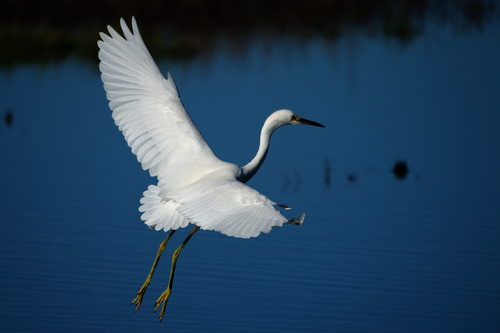 Snowy Egret
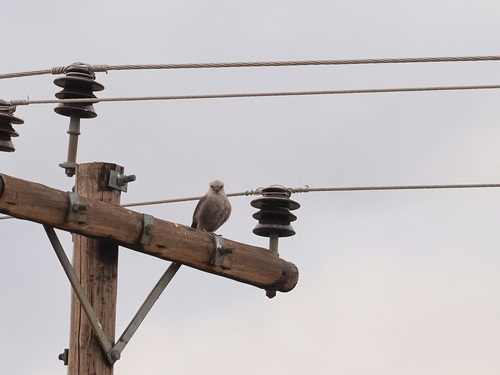 Dickinson's Kestrel
In short
The most reliable field mark is overall structure and color: Snowy Egret is a slender, all-white heron with black legs and bright yellow feet, while Dickinson's Kestrel is a stocky, dark grey raptor with a pale head and rump, barred tail, and yellow cere and feet. Immature Snowy Egrets have greenish legs, but are still white, whereas juvenile Dickinson's Kestrels are grey-brown with barred flanks and lack the adult's pale head and rump. In flight, the egret shows long, rounded wings and slow, buoyant flapping, while the kestrel has pointed wings and a direct, rapid flight. Perched, the egret is upright and elegant, the kestrel squat and predatory. These two should not be confused if you focus on body shape, leg color, and flight style.
Identification tips
- Overall color and pattern: Snowy Egret is always pure white (all ages), while Dickinson's Kestrel is dark grey or grey-brown with a pale or white rump and head (adult), or grey-brown with barred flanks (juvenile).
- Leg and foot color: Adult Snowy Egret has black legs and bright yellow feet, a unique combination. Juveniles have greenish legs, but never yellow bare parts. Dickinson's Kestrel has yellow feet and cere (adults), or greenish cere and eye-ring (juveniles), but never black legs or yellow feet together.
- Bill shape and color: Snowy Egret has a long, thin, straight black bill. Dickinson's Kestrel has a short, hooked, dark grey bill typical of falcons.
- Body structure: Egrets are long-necked, long-legged, and slender, with a graceful, upright stance. Kestrels are compact, with a large, square head, short neck, and perched horizontally.
- Flight silhouette: Snowy Egret shows broad, rounded wings, long trailing legs, and a slow, buoyant flight. Dickinson's Kestrel has pointed wings, short tail, and rapid, direct flight with quick wingbeats.
- Tail pattern: Kestrel's tail is grey with narrow black bars and a broad subterminal band, visible in flight and when perched. Egret's tail is short, white, and lacks any barring.
- Plumage details (immature): Juvenile kestrels are grey-brown with barred flanks and lack the adult's pale head/rump; juvenile egrets are white with duller legs, never barred or brown.
- Bare parts (face/eye): Kestrel has yellow (adult) or greenish (juvenile) cere and eye-ring; egret has yellow lores between bill and eye, but no colored cere.
- Habitat context: Egret is almost always near water, often wading; kestrel is in open woodland or savanna, perched on trees or wires, rarely near water.
- Behavior: Egret forages by stalking or running in shallow water, sometimes in groups; kestrel hunts from a perch or flies over open ground, rarely seen on the ground.
- Perched posture: Egret stands upright, neck extended; kestrel sits horizontally, often hunched, with head held high.
- Size impression: Egret appears larger and more elongated due to neck and legs, despite being lighter; kestrel is compact and robust.
- Vocalization: Not a reliable separator; both species are generally quiet, but kestrel may give a high-pitched alarm or mewing call at the nest.
- Seasonal/age confusion: No season or age where egret shows barring, grey, or brown; no age where kestrel is all white or has black legs/yellow feet.
- Common pitfalls: At distance, a perched egret can look oddly compact if neck is retracted, but leg length and bill shape always give it away. Kestrel never shows white plumage or wades in water.
Size
Dickinson's Kestrel is heavier and more robust, with a body mass of about 210 g and a length of 27–30 cm (11–12 in), wingspan 61–68 cm (24–27 in). Snowy Egret is longer but much lighter and more delicate: length 56–66 cm (22.1–26.0 in), wingspan 100 cm (39.4 in), weight about 370 g. However, the egret's long neck, legs, and bill make it appear much larger and lankier than the kestrel, whose compact build and shorter tail/neck are obvious in the field.
Plumage
Juvenile and immature birds are most easily separated by overall color and pattern: young Snowy Egrets are always white, with duller, greenish legs (not black/yellow as in adults), and lack any barring or grey tones. Juvenile Dickinson's Kestrels are grey-brown overall, with barred flanks and no pale head or rump, and a greenish cere and eye-ring. Adults are even more distinct: Snowy Egret is pure white with black legs and yellow feet, while Dickinson's Kestrel is dark grey with a pale head and rump, yellow bare parts, and a grey tail with narrow black bars and a broad subterminal band. In flight, the egret's wings are broad and rounded, all white; the kestrel's are pointed, barred below, and the tail shows clear banding. No age of egret ever shows barring or a pale rump.
Behaviour
Snowy Egret forages actively in shallow water, often running, shuffling its feet, or standing still to ambush prey; it may join mixed-species groups. Dickinson's Kestrel hunts from a perch, rarely hovers, and is drawn to grass fires to catch insects and small vertebrates. The egret is almost always seen wading or flying low over wetlands, while the kestrel is seen perched on trees or wires, or flying with rapid, direct wingbeats over open woodland or savanna. The egret's feeding is slow and deliberate; the kestrel's is watchful and predatory.
Habitat
Snowy Egret is found in shallow wetlands, marshes, ponds, and sometimes open fields, always near water. Dickinson's Kestrel prefers savanna and open woodland, especially with palm or baobab trees, and is less tied to water, though it may be near swamps. The egret is rarely seen away from water, while the kestrel is rarely seen wading or near the ground in water.
Voice
Dickinson's Kestrel is usually silent but gives a high-pitched alarm and a soft, mewing call at the nest. Snowy Egret is generally quiet, with no distinctive call described in the sources. Voice is not a reliable separator in most field situations.