

Motmot

Slaty-backed Gull vs Iceland Gull

Larus schistisagus versus Larus glaucoides

Play a quiz with Slaty-backed Gull and Iceland Gull
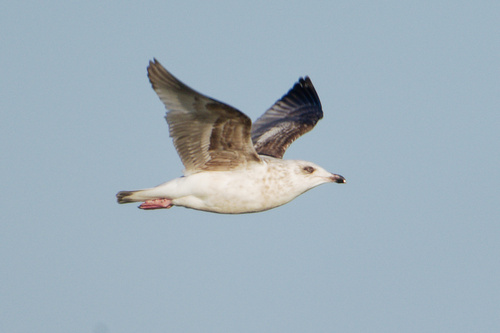
Slaty-backed Gull (Larus schistisagus) Slaty-backed Gull
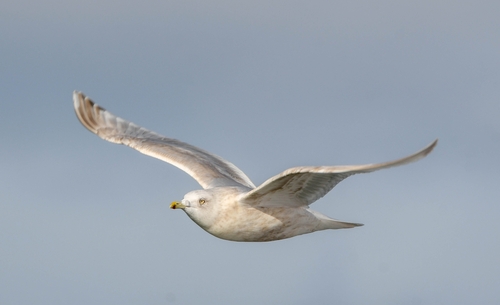
Iceland Gull (Larus glaucoides) Iceland Gull

Media

Loading…

In short

The most reliable field mark to separate Slaty-backed Gull from Iceland Gull is the adult wing pattern: Slaty-backed shows a distinctive 'string of pearls'—a row of large white crescents on the mid-primaries and a broad white trailing edge—while adult Iceland Gulls have very pale wings with no black and lack these bold markings. Immature birds are trickier, but Slaty-backed is bulkier and pot-bellied with shorter pink legs, while Iceland Gull is slimmer and longer-winged. Bill color and structure also help: Slaty-backed's bill is stouter and yellow with a red spot in adults; Iceland's is thinner and yellowish-green. In flight or at rest, always check for the unique wing pattern and overall structure before relying on color alone.

Identification tips

  1. Adult wing pattern is key: Slaty-backed Gull shows a 'string of pearls'—large white crescents on the mid-primaries—plus a broad white trailing edge and white mirrors on the outer primaries. Iceland Gull adults have no black in the wingtips and lack these bold white markings; their wings are pale gray and look almost translucent in flight.
  2. Immature confusion: Immature Slaty-backed is brownish and similar to immature Herring Gull, not easily separated from immature Iceland Gull by plumage alone. However, Iceland Gull immatures are generally paler gray, with a more extensively dark bill and no pink, while Slaty-backed is slightly darker and bulkier.
  3. Structure and jizz: Slaty-backed is larger, more robust, and pot-bellied with a shorter-legged, heavier appearance. Iceland Gull is slimmer, longer-winged, and more graceful both perched and in flight.
  4. Bill shape and color: Adult Slaty-backed has a stout yellow bill with an orange-red spot near the tip. Iceland Gull's bill is thinner, shorter, and yellowish-green in adults; immatures have a more extensively dark bill.
  5. Leg color: Slaty-backed has pink legs that are relatively short for its size. Iceland Gull also has pinkish legs, but they appear longer and more slender due to the bird's overall build.
  6. Eye color and orbital skin: Slaty-backed adults have yellow eyes with purple to deep pink orbital skin. Iceland Gull's eye color is less distinctive and not a primary field mark.
  7. Back and mantle color: Slaty-backed's back and wings are a darker slaty-gray, noticeably darker than Iceland Gull's pale gray upperparts.
  8. Tail and rump: Both species have white tails in adults; this is not a useful separator.
  9. Flight style: Slaty-backed appears heavier and less buoyant in flight, while Iceland Gull is lighter and more graceful.
  10. Habitat and range: In North America, Iceland Gull is far more likely in the Atlantic and Great Lakes in winter, while Slaty-backed is a rare vagrant, mostly on the Pacific coast.
  11. Size in mixed flocks: If seen with other gulls, Slaty-backed will stand out as larger and bulkier than Iceland Gull.
  12. Bill spot: The red subterminal spot on Slaty-backed's bill is prominent in adults; Iceland Gull's bill spot is less obvious and the bill is greener.
  13. Seasonal context: Both species are most likely to be confused in winter, when immatures predominate and both can be found in mixed flocks.
  14. Plumage pitfalls: Do not rely on overall paleness alone, as lighting can make Slaty-backed appear paler or Iceland Gull darker. Always check wing pattern and structure first.
  15. When in doubt: Focus on the combination of wing pattern (especially in adults), overall structure, and bill shape/color. If the bird shows a 'string of pearls' and a broad white trailing edge, it's Slaty-backed; if the wings are pale with no black and the bird is slim, it's Iceland Gull.

Size

Slaty-backed Gull is noticeably larger and heavier than Iceland Gull. Adults measure 55–68.5 cm in length, with a wingspan of 132–160 cm and a mass of 1.05–1.7 kg. Iceland Gull is smaller and lighter: 50–64 cm long, 115–150 cm wingspan, and 480–1,100 g in weight. The difference is most obvious when both species are side by side, but Slaty-backed generally appears more robust, with a stouter body and shorter legs, while Iceland Gull is more slender and delicate overall.

Plumage

For adults, Slaty-backed Gull stands out with its dark slaty-gray back and wings, broad white trailing edge, and a 'string of pearls'—large white crescents on the mid-primaries, plus white mirrors on the outer primaries. Iceland Gull adults are much paler, with pale gray upperparts and no black in the wingtips; their wings appear almost translucent in flight. Immature Slaty-backed Gulls are brownish and resemble immature Herring Gulls, but are paler than Great Black-backed; their immature plumage is not distinctive compared to Iceland Gull. Immature Iceland Gulls are very pale gray, with a more extensively dark bill than Glaucous Gull, and lack any pink. Both species take several years to reach adult plumage, but Iceland Gull immatures are generally paler and less patterned than Slaty-backed, especially on the upperwing.

Behaviour

Both species are typical Larus gulls in behavior, often seen loafing, scavenging, or foraging along coasts and at dumps. Slaty-backed tends to appear more heavyset and pot-bellied, often standing with a slightly hunched posture and shorter legs. Iceland Gull is more graceful and slender, with a lighter, more buoyant flight style. Both species are opportunistic and may be found in mixed gull flocks, especially in winter.

Habitat

Slaty-backed Gull breeds on the northeastern Palearctic coast and wanders widely in winter, often found along Pacific coasts, harbors, and sometimes inland. Iceland Gull breeds in Arctic Canada and Greenland, wintering along the North Atlantic coasts and sometimes inland to the Great Lakes. In North America, Slaty-backed is rare and usually a vagrant, while Iceland Gull is a regular winter visitor in the northeast and Great Lakes. Both species frequent coastal areas, but local abundance and context can help: Iceland Gull is far more likely in the Atlantic, Slaty-backed on the Pacific.

Submit a better description

Use the same sections as the comparison. Your text is published immediately.

The most reliable field mark to separate Slaty-backed Gull from Iceland Gull is the adult wing pattern: Slaty-backed shows a distinctive 'string of pearls'—a row of large white crescents on the mid-primaries and a broad white trailing edge—while adult Iceland Gulls have very pale wings with no black and lack these bold markings. Immature birds are trickier, but Slaty-backed is bulkier and pot-bellied with shorter pink legs, while Iceland Gull is slimmer and longer-winged. Bill color and structure also help: Slaty-backed's bill is stouter and yellow with a red spot in adults; Iceland's is thinner and yellowish-green. In flight or at rest, always check for the unique wing pattern and overall structure before relying on color alone.

  1. Adult wing pattern is key: Slaty-backed Gull shows a 'string of pearls'—large white crescents on the mid-primaries—plus a broad white trailing edge and white mirrors on the outer primaries. Iceland Gull adults have no black in the wingtips and lack these bold white markings; their wings are pale gray and look almost translucent in flight.
  2. Immature confusion: Immature Slaty-backed is brownish and similar to immature Herring Gull, not easily separated from immature Iceland Gull by plumage alone. However, Iceland Gull immatures are generally paler gray, with a more extensively dark bill and no pink, while Slaty-backed is slightly darker and bulkier.
  3. Structure and jizz: Slaty-backed is larger, more robust, and pot-bellied with a shorter-legged, heavier appearance. Iceland Gull is slimmer, longer-winged, and more graceful both perched and in flight.
  4. Bill shape and color: Adult Slaty-backed has a stout yellow bill with an orange-red spot near the tip. Iceland Gull's bill is thinner, shorter, and yellowish-green in adults; immatures have a more extensively dark bill.
  5. Leg color: Slaty-backed has pink legs that are relatively short for its size. Iceland Gull also has pinkish legs, but they appear longer and more slender due to the bird's overall build.
  6. Eye color and orbital skin: Slaty-backed adults have yellow eyes with purple to deep pink orbital skin. Iceland Gull's eye color is less distinctive and not a primary field mark.
  7. Back and mantle color: Slaty-backed's back and wings are a darker slaty-gray, noticeably darker than Iceland Gull's pale gray upperparts.
  8. Tail and rump: Both species have white tails in adults; this is not a useful separator.
  9. Flight style: Slaty-backed appears heavier and less buoyant in flight, while Iceland Gull is lighter and more graceful.
  10. Habitat and range: In North America, Iceland Gull is far more likely in the Atlantic and Great Lakes in winter, while Slaty-backed is a rare vagrant, mostly on the Pacific coast.
  11. Size in mixed flocks: If seen with other gulls, Slaty-backed will stand out as larger and bulkier than Iceland Gull.
  12. Bill spot: The red subterminal spot on Slaty-backed's bill is prominent in adults; Iceland Gull's bill spot is less obvious and the bill is greener.
  13. Seasonal context: Both species are most likely to be confused in winter, when immatures predominate and both can be found in mixed flocks.
  14. Plumage pitfalls: Do not rely on overall paleness alone, as lighting can make Slaty-backed appear paler or Iceland Gull darker. Always check wing pattern and structure first.
  15. When in doubt: Focus on the combination of wing pattern (especially in adults), overall structure, and bill shape/color. If the bird shows a 'string of pearls' and a broad white trailing edge, it's Slaty-backed; if the wings are pale with no black and the bird is slim, it's Iceland Gull.

Slaty-backed Gull is noticeably larger and heavier than Iceland Gull. Adults measure 55–68.5 cm in length, with a wingspan of 132–160 cm and a mass of 1.05–1.7 kg. Iceland Gull is smaller and lighter: 50–64 cm long, 115–150 cm wingspan, and 480–1,100 g in weight. The difference is most obvious when both species are side by side, but Slaty-backed generally appears more robust, with a stouter body and shorter legs, while Iceland Gull is more slender and delicate overall.

For adults, Slaty-backed Gull stands out with its dark slaty-gray back and wings, broad white trailing edge, and a 'string of pearls'—large white crescents on the mid-primaries, plus white mirrors on the outer primaries. Iceland Gull adults are much paler, with pale gray upperparts and no black in the wingtips; their wings appear almost translucent in flight. Immature Slaty-backed Gulls are brownish and resemble immature Herring Gulls, but are paler than Great Black-backed; their immature plumage is not distinctive compared to Iceland Gull. Immature Iceland Gulls are very pale gray, with a more extensively dark bill than Glaucous Gull, and lack any pink. Both species take several years to reach adult plumage, but Iceland Gull immatures are generally paler and less patterned than Slaty-backed, especially on the upperwing.

Both species are typical Larus gulls in behavior, often seen loafing, scavenging, or foraging along coasts and at dumps. Slaty-backed tends to appear more heavyset and pot-bellied, often standing with a slightly hunched posture and shorter legs. Iceland Gull is more graceful and slender, with a lighter, more buoyant flight style. Both species are opportunistic and may be found in mixed gull flocks, especially in winter.

Slaty-backed Gull breeds on the northeastern Palearctic coast and wanders widely in winter, often found along Pacific coasts, harbors, and sometimes inland. Iceland Gull breeds in Arctic Canada and Greenland, wintering along the North Atlantic coasts and sometimes inland to the Great Lakes. In North America, Slaty-backed is rare and usually a vagrant, while Iceland Gull is a regular winter visitor in the northeast and Great Lakes. Both species frequent coastal areas, but local abundance and context can help: Iceland Gull is far more likely in the Atlantic, Slaty-backed on the Pacific.

Discard your changes?

You have unsaved edits. If you leave now, those changes will be lost.

Slaty-backed Gull · Iceland Gull · My Tricky Birds