

Slaty-backed Gull vs Gabbiano d'Islanda
Larus schistisagus contro Larus glaucoides
Fai un quiz con Slaty-backed Gull e Gabbiano d'Islanda
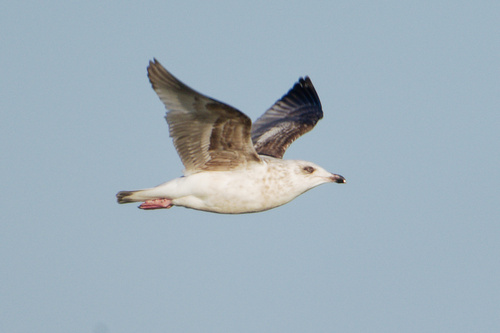 Slaty-backed Gull
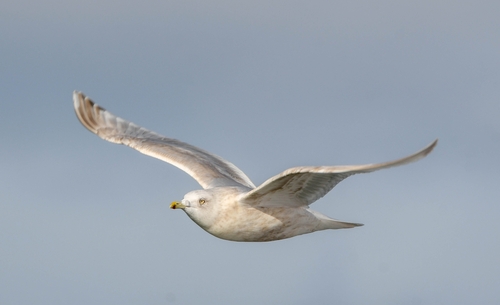 Gabbiano d'Islanda
In breve
Il segno distintivo più affidabile per separare il Gabbiano d'Islanda dal Gabbiano glauco è il modello delle ali degli adulti: il Gabbiano glauco mostra una distintiva 'stringa di perle'—una fila di grandi mezze lune bianche sulle primarie medie e un ampio bordo bianco posteriore—mentre gli adulti Gabbiani d'Islanda hanno ali molto chiare senza nero e mancano di queste marcature audaci. Gli uccelli immaturi sono più complicati, ma il Gabbiano glauco è più robusto e con la pancia prominente, con gambe rosa più corte, mentre il Gabbiano d'Islanda è più snello e con ali più lunghe. Anche il colore e la struttura del becco aiutano: il becco del Gabbiano glauco è più robusto e giallo con una macchia rossa negli adulti; quello del Gabbiano d'Islanda è più sottile e giallo-verde. In volo o a riposo, controlla sempre il modello unico delle ali e la struttura generale prima di fare affidamento solo sul colore.
Consigli di identificazione
- Il modello delle ali degli adulti è fondamentale: Il Gabbiano glauco mostra una 'stringa di perle'—grandi mezze lune bianche sulle primarie medie—più un ampio bordo bianco posteriore e specchi bianchi sulle primarie esterne. Gli adulti Gabbiani d'Islanda non hanno nero nelle punte delle ali e mancano di queste marcature bianche audaci; le loro ali sono grigie chiare e sembrano quasi traslucide in volo.
- Confusione tra immaturi: Il Gabbiano glauco immaturo è marrone e simile all'immaturo Herring Gull, non facilmente separabile dall'immaturo Gabbiano d'Islanda solo per il piumaggio. Tuttavia, gli immaturi Gabbiani d'Islanda sono generalmente di un grigio più chiaro, con un becco più scuro e senza rosa, mentre il Gabbiano glauco è leggermente più scuro e robusto.
- Struttura e aspetto: Il Gabbiano glauco è più grande, più robusto e con la pancia prominente, con un aspetto più pesante e gambe più corte. Il Gabbiano d'Islanda è più snello, con ali più lunghe e più grazioso sia in perching che in volo.
- Forma e colore del becco: L'adulto Gabbiano glauco ha un becco robusto e giallo con una macchia rosso-arancio vicino alla punta. Il becco del Gabbiano d'Islanda è più sottile, più corto e giallo-verde negli adulti; gli immaturi hanno un becco più scuro.
- Colore delle gambe: Il Gabbiano glauco ha gambe rosa che sono relativamente corte per la sua taglia. Anche il Gabbiano d'Islanda ha gambe rosa, ma sembrano più lunghe e più slanciate a causa della struttura generale dell'uccello.
- Colore degli occhi e pelle orbitale: Gli adulti Gabbiani glauchi hanno occhi gialli con pelle orbitale viola a rosa scuro. Il colore degli occhi del Gabbiano d'Islanda è meno distintivo e non è un segno distintivo principale.
- Colore del dorso e del mantello: Il dorso e le ali del Gabbiano glauco sono di un grigio scuro, visibilmente più scuro rispetto alle parti superiori grigie chiare del Gabbiano d'Islanda.
- Coda e groppa: Entrambe le specie hanno code bianche negli adulti; questo non è un separatore utile.
- Stile di volo: Il Gabbiano glauco appare più pesante e meno galleggiante in volo, mentre il Gabbiano d'Islanda è più leggero e più grazioso.
- Habitat e distribuzione: In Nord America, il Gabbiano d'Islanda è molto più probabile nell'Atlantico e nei Grandi Laghi in inverno, mentre il Gabbiano glauco è un raro vagabondo, principalmente sulla costa del Pacifico.
- Dimensione in stormi misti: Se visto con altri gabbiani, il Gabbiano glauco si distinguerà come più grande e robusto rispetto al Gabbiano d'Islanda.
- Macchia del becco: La macchia rossa subterminale sul becco del Gabbiano glauco è prominente negli adulti; la macchia del becco del Gabbiano d'Islanda è meno evidente e il becco è più verde.
- Contesto stagionale: Entrambe le specie sono più probabilmente confuse in inverno, quando predominano gli immaturi e entrambi possono essere trovati in stormi misti.
- Trappole del piumaggio: Non fare affidamento solo sulla chiarezza generale, poiché l'illuminazione può far apparire il Gabbiano glauco più chiaro o il Gabbiano d'Islanda più scuro. Controlla sempre prima il modello delle ali e la struttura.
- Quando hai dubbi: Concentrati sulla combinazione di modello delle ali (soprattutto negli adulti), struttura generale e forma/colore del becco. Se l'uccello mostra una 'stringa di perle' e un ampio bordo bianco posteriore, è un Gabbiano glauco; se le ali sono chiare senza nero e l'uccello è snello, è un Gabbiano d'Islanda.
Taglia
Il Gabbiano glauco è visibilmente più grande e pesante del Gabbiano d'Islanda. Gli adulti misurano 55–68,5 cm di lunghezza, con un'apertura alare di 132–160 cm e una massa di 1,05–1,7 kg. Il Gabbiano d'Islanda è più piccolo e leggero: 50–64 cm di lunghezza, apertura alare di 115–150 cm e peso di 480–1.100 g. La differenza è più evidente quando entrambe le specie sono affiancate, ma il Gabbiano glauco appare generalmente più robusto, con un corpo più robusto e gambe più corte, mentre il Gabbiano d'Islanda è più snello e delicato nel complesso.
Piumaggio
Per gli adulti, il Gabbiano glauco si distingue per il suo dorso e le sue ali grigio scuro, un ampio bordo bianco posteriore e una 'stringa di perle'—grandi mezze lune bianche sulle primarie medie, più specchi bianchi sulle primarie esterne. Gli adulti Gabbiani d'Islanda sono molto più chiari, con parti superiori grigie chiare e senza nero nelle punte delle ali; le loro ali sembrano quasi traslucide in volo. I Gabbiani glauchi immaturi sono marroni e somigliano agli immaturi Herring Gull, ma sono più chiari rispetto ai Gabbiani neri maggiori; il loro piumaggio immaturo non è distintivo rispetto al Gabbiano d'Islanda. I Gabbiani d'Islanda immaturi sono di un grigio molto chiaro, con un becco più scuro rispetto al Gabbiano glauco, e mancano di rosa. Entrambe le specie impiegano diversi anni per raggiungere il piumaggio adulto, ma gli immaturi Gabbiani d'Islanda sono generalmente più chiari e meno patternizzati rispetto al Gabbiano glauco, specialmente sulla parte superiore dell'ala.
Comportamento
Entrambe le specie sono tipici gabbiani Larus nel comportamento, spesso visti oziare, cercare cibo o foraggiare lungo le coste e nei cassonetti. Il Gabbiano glauco tende a sembrare più robusto e con la pancia prominente, spesso in piedi con una postura leggermente curvata e gambe più corte. Il Gabbiano d'Islanda è più grazioso e snello, con uno stile di volo più leggero e galleggiante. Entrambe le specie sono opportunistiche e possono essere trovate in stormi misti di gabbiani, specialmente in inverno.
Habitat
Il Gabbiano glauco nidifica sulla costa nord-orientale del Paleartico e vaga ampiamente in inverno, spesso trovato lungo le coste del Pacifico, nei porti e talvolta nell'entroterra. Il Gabbiano d'Islanda nidifica in Canada artico e Groenlandia, svernando lungo le coste dell'Atlantico settentrionale e talvolta nell'entroterra fino ai Grandi Laghi. In Nord America, il Gabbiano glauco è raro e di solito un vagabondo, mentre il Gabbiano d'Islanda è un visitatore invernale regolare nel nord-est e nei Grandi Laghi. Entrambe le specie frequentano aree costiere, ma l'abbondanza locale e il contesto possono aiutare: il Gabbiano d'Islanda è molto più probabile nell'Atlantico, il Gabbiano glauco nel Pacifico.
Slaty-backed Gull · Gabbiano d'Islanda · I miei uccelli difficili