

Motmot

Senegal Eremomela vs Rufous-crowned Eremomela

Eremomela pusilla versus Eremomela badiceps

Play a quiz with Senegal Eremomela and Rufous-crowned Eremomela
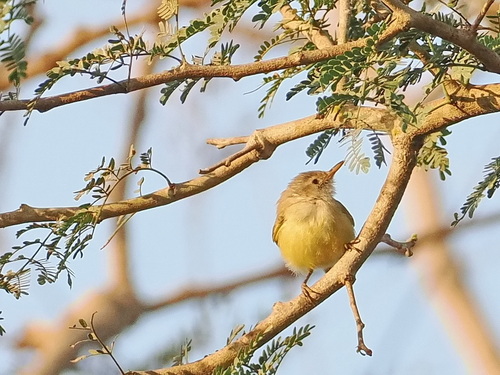
Senegal Eremomela (Eremomela pusilla) Senegal Eremomela

Rufous-crowned Eremomela (Eremomela badiceps) Rufous-crowned Eremomela

Media

Loading…

In short

The most reliable way to separate Senegal Eremomela from Rufous-crowned Eremomela is by head and underpart color: Senegal has a pale brownish-grey head with a distinct pale supercilium and a striking white-to-lemon yellow belly, while Rufous-crowned has a rufous (reddish-brown) crown and lacks the bright yellow underparts. Senegal Eremomela also shows a greenish back and rump, contrasting with the more uniform tones expected in Rufous-crowned. Habitat is a strong clue: Senegal favors savanna, Rufous-crowned is a rainforest bird. If you see a small eremomela with a rufous crown in dense forest, it's almost certainly Rufous-crowned; in open savanna with a pale head and yellow belly, it's Senegal.

Identification tips

  1. Head color: Senegal Eremomela has a pale brownish-grey head with a pale white supercilium; Rufous-crowned Eremomela has a distinctive rufous (reddish-brown) crown. This is the most obvious difference in good light and close views.
  2. Supercilium: Senegal shows a clear pale supercilium (eyebrow), which is not mentioned for Rufous-crowned and is likely absent or much less distinct.
  3. Back and rump: Senegal has a green back and mantle, with a brighter yellowish-green rump. Rufous-crowned lacks this green coloration and is more uniformly colored above.
  4. Underparts: Senegal Eremomela's throat and upper breast are white, with the lower breast, belly, and vent a bright lemon yellow. Rufous-crowned does not show this strong yellow coloration below.
  5. Bill and legs: Senegal has a blackish bill with a pale lower mandible and pale brownish legs. Bill and leg color are not described for Rufous-crowned, so are not reliable for separation.
  6. Size: Both are very small birds; size is not a useful separator in the field.
  7. Habitat: Senegal Eremomela is a savanna species; Rufous-crowned is a rainforest specialist. If you are in open country, expect Senegal; in dense forest, expect Rufous-crowned.
  8. Geographic range: Senegal is found in western Sub-Saharan Africa's savannas; Rufous-crowned is widespread in African tropical rainforest. Overlap is minimal due to habitat preferences.
  9. No age-specific or wing pattern marks: There are no described differences in juvenile or immature plumage, nor in wing pattern, for these species. Adults are the main reference.
  10. Sexes similar: No sexual dimorphism is described for either species, so male and female are not separable in the field.
  11. Behavior: Both species are active and forage in foliage, but behavior is not diagnostic.
  12. Voice: No vocal differences are described in the available notes, so do not rely on calls or song for separation.
  13. Context: If you are unsure, use a combination of head color, underpart color, and habitat as your primary clues.
  14. Pitfalls: Poor light or distant views may obscure the head and underpart colors. Always try to confirm with multiple features, especially habitat and head pattern.
  15. When marks fail: If you cannot see the crown or underparts clearly, rely on habitat and range as secondary clues, but be aware of possible vagrancy or habitat edges.

Size

Senegal Eremomela is a very small bird, with a body mass of about 6.2g [wikidata]. No direct mass data is available for Rufous-crowned Eremomela, but both are small eremomelas and likely similar in size. Size is not a reliable field mark between these two.

Plumage

Adult Senegal Eremomela shows a pale brownish-grey head with a pale white supercilium, green back and mantle, and a bright yellowish-green rump. The throat and upper breast are white, transitioning to bright lemon yellow on the lower breast, belly, and vent. The bill is blackish with a pale lower mandible, and the legs are pale brownish. In contrast, Rufous-crowned Eremomela is named for its rufous (reddish-brown) crown, which is the key head feature, and lacks the green back and yellow belly of Senegal. The rest of its plumage is more uniform and lacks the strong color contrasts seen in Senegal. No age-specific or wing pattern marks are described for either species, so adult plumage is the main separator.

Behaviour

Both species are active, small insectivores typical of eremomelas, and their behavior is not described as diagnostic in the available notes. Both may forage in small groups and move restlessly through foliage, but this is not a reliable way to separate them.

Habitat

Habitat is a strong separator: Senegal Eremomela is found in the savannas of western Sub-Saharan Africa, favoring open, grassy or lightly wooded areas. Rufous-crowned Eremomela is restricted to African tropical rainforest, so is found in dense, humid forest environments. If you know your location and habitat, this can be a decisive clue.

Submit a better description

Use the same sections as the comparison. Your text is published immediately.

The most reliable way to separate Senegal Eremomela from Rufous-crowned Eremomela is by head and underpart color: Senegal has a pale brownish-grey head with a distinct pale supercilium and a striking white-to-lemon yellow belly, while Rufous-crowned has a rufous (reddish-brown) crown and lacks the bright yellow underparts. Senegal Eremomela also shows a greenish back and rump, contrasting with the more uniform tones expected in Rufous-crowned. Habitat is a strong clue: Senegal favors savanna, Rufous-crowned is a rainforest bird. If you see a small eremomela with a rufous crown in dense forest, it's almost certainly Rufous-crowned; in open savanna with a pale head and yellow belly, it's Senegal.

  1. Head color: Senegal Eremomela has a pale brownish-grey head with a pale white supercilium; Rufous-crowned Eremomela has a distinctive rufous (reddish-brown) crown. This is the most obvious difference in good light and close views.
  2. Supercilium: Senegal shows a clear pale supercilium (eyebrow), which is not mentioned for Rufous-crowned and is likely absent or much less distinct.
  3. Back and rump: Senegal has a green back and mantle, with a brighter yellowish-green rump. Rufous-crowned lacks this green coloration and is more uniformly colored above.
  4. Underparts: Senegal Eremomela's throat and upper breast are white, with the lower breast, belly, and vent a bright lemon yellow. Rufous-crowned does not show this strong yellow coloration below.
  5. Bill and legs: Senegal has a blackish bill with a pale lower mandible and pale brownish legs. Bill and leg color are not described for Rufous-crowned, so are not reliable for separation.
  6. Size: Both are very small birds; size is not a useful separator in the field.
  7. Habitat: Senegal Eremomela is a savanna species; Rufous-crowned is a rainforest specialist. If you are in open country, expect Senegal; in dense forest, expect Rufous-crowned.
  8. Geographic range: Senegal is found in western Sub-Saharan Africa's savannas; Rufous-crowned is widespread in African tropical rainforest. Overlap is minimal due to habitat preferences.
  9. No age-specific or wing pattern marks: There are no described differences in juvenile or immature plumage, nor in wing pattern, for these species. Adults are the main reference.
  10. Sexes similar: No sexual dimorphism is described for either species, so male and female are not separable in the field.
  11. Behavior: Both species are active and forage in foliage, but behavior is not diagnostic.
  12. Voice: No vocal differences are described in the available notes, so do not rely on calls or song for separation.
  13. Context: If you are unsure, use a combination of head color, underpart color, and habitat as your primary clues.
  14. Pitfalls: Poor light or distant views may obscure the head and underpart colors. Always try to confirm with multiple features, especially habitat and head pattern.
  15. When marks fail: If you cannot see the crown or underparts clearly, rely on habitat and range as secondary clues, but be aware of possible vagrancy or habitat edges.

Senegal Eremomela is a very small bird, with a body mass of about 6.2g [wikidata]. No direct mass data is available for Rufous-crowned Eremomela, but both are small eremomelas and likely similar in size. Size is not a reliable field mark between these two.

Adult Senegal Eremomela shows a pale brownish-grey head with a pale white supercilium, green back and mantle, and a bright yellowish-green rump. The throat and upper breast are white, transitioning to bright lemon yellow on the lower breast, belly, and vent. The bill is blackish with a pale lower mandible, and the legs are pale brownish. In contrast, Rufous-crowned Eremomela is named for its rufous (reddish-brown) crown, which is the key head feature, and lacks the green back and yellow belly of Senegal. The rest of its plumage is more uniform and lacks the strong color contrasts seen in Senegal. No age-specific or wing pattern marks are described for either species, so adult plumage is the main separator.

Both species are active, small insectivores typical of eremomelas, and their behavior is not described as diagnostic in the available notes. Both may forage in small groups and move restlessly through foliage, but this is not a reliable way to separate them.

Habitat is a strong separator: Senegal Eremomela is found in the savannas of western Sub-Saharan Africa, favoring open, grassy or lightly wooded areas. Rufous-crowned Eremomela is restricted to African tropical rainforest, so is found in dense, humid forest environments. If you know your location and habitat, this can be a decisive clue.

Discard your changes?

You have unsaved edits. If you leave now, those changes will be lost.

Senegal Eremomela · Rufous-crowned Eremomela · My Tricky Birds