

Scalloped Woodcreeper vs Masked Gnatcatcher
Lepidocolaptes falcinellus versus Polioptila dumicola
Play a quiz with Scalloped Woodcreeper and Masked Gnatcatcher
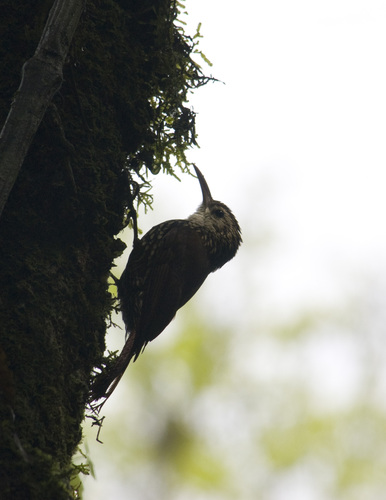 Scalloped Woodcreeper
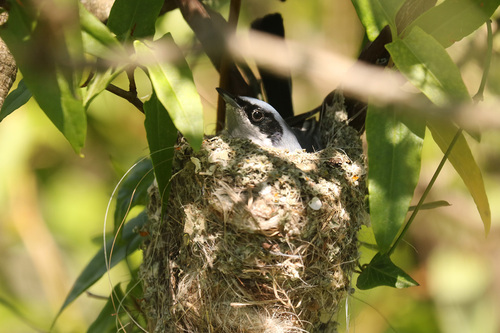 Masked Gnatcatcher
In short
The most reliable way to separate Scalloped Woodcreeper from Masked Gnatcatcher is by overall structure and bill shape: the woodcreeper is much larger, with a long, decurved bill and woodcreeper jizz, while the gnatcatcher is tiny, slim, and short-billed. In all plumages, Scalloped Woodcreeper shows a boldly streaked, scaly underpart pattern and a rufous-chestnut tail, while Masked Gnatcatcher is plain below and has a distinctive black mask (male) or crescent (female). In flight or perched, the woodcreeper’s size and climbing behavior are unmistakable compared to the active, flitting gnatcatcher. Even at a distance or in poor light, the woodcreeper’s streaked underparts and woodcreeper structure contrast sharply with the gnatcatcher’s smooth gray and white plumage and small, round-headed shape.
Identification tips
- Size and structure: Scalloped Woodcreeper is much larger and bulkier than Masked Gnatcatcher. If the bird looks small, round-bodied, and delicate, it is not a woodcreeper.
- Bill shape: Woodcreeper’s bill is long, strong, and distinctly decurved, suited for probing bark. Gnatcatcher’s bill is short, thin, and straight, adapted for picking tiny insects.
- Tail color and shape: Woodcreeper has a long, rufous-chestnut tail, often fanned or pressed against trunks. Gnatcatcher’s tail is shorter, mostly black with white outer feathers, and is frequently flicked or cocked.
- Underpart pattern: Scalloped Woodcreeper always shows bold, black-edged buff streaks on olive underparts, creating a scaly effect. Masked Gnatcatcher is plain below, pale gray to whitish, with no streaks or scaling at any age or sex.
- Facial pattern: Adult male Masked Gnatcatcher has a prominent black mask with a white line below; female has a black crescent below the eye. Woodcreeper has a creamy white, black-mottled face with a pale supercilium but no mask or crescent.
- Crown and nape: Woodcreeper’s crown and nape are dusky to blackish with rich buff spots; gnatcatcher’s are blue-gray (male) or dull gray (female/berlepschi), always lacking spots.
- Flight feathers: Woodcreeper’s flight feathers have brown outer webs, chestnut inner webs, and blackish brown tips, but this is subtle and rarely diagnostic in the field. Gnatcatcher’s wings are uniformly grayish.
- Behavior: Woodcreeper climbs trunks and branches, moving vertically and methodically. Gnatcatcher is restless, flitting through foliage, often flicking its tail and wings.
- Foraging style: Woodcreeper probes bark, epiphytes, and crevices, sometimes sallying for prey. Gnatcatcher gleans insects from leaves and twigs, rarely probing bark.
- Habitat context: If seen in dense forest interior, especially on large trunks, woodcreeper is more likely. In open scrub or edge, gnatcatcher is more probable.
- Sex differences: Masked Gnatcatcher shows sexual dimorphism (mask in male, crescent in female); woodcreeper sexes are identical.
- Subspecies variation: Gnatcatcher subspecies vary in darkness and bluish tone but never show streaked underparts or rufous tail.
- Iris and legs: Woodcreeper has brown iris and greenish gray to greenish brown legs; these are rarely visible in the field but can help in close views. Gnatcatcher’s leg and iris color are not distinctive for separation.
- Bill color: Woodcreeper’s bill is gray, light brown, or pinkish with a darker base; mandible creamy white to light brown. Gnatcatcher’s bill is uniformly dark.
- Pitfalls: Immature or poorly seen woodcreepers may appear plainer, but the streaked underparts and rufous tail are always present. Gnatcatchers never show streaks or a woodcreeper-like bill or posture.
Size
Scalloped Woodcreeper is dramatically larger: 17–20 cm in length and about 28 g in mass, compared to Masked Gnatcatcher’s 12–13 cm and 5–7 g. The woodcreeper is medium-sized for its group, with a robust, elongated body and long tail, while the gnatcatcher is a tiny, delicate songbird. Even without direct comparison, the woodcreeper’s size and bulk are obvious in the field.
Plumage
- Juvenile/immature upperwing pattern: No specific juvenile or first-winter wing pattern is described for either species, so age-based flight marks are not diagnostic here.
- Adult Scalloped Woodcreeper: Shows a creamy white, black-mottled face with a pale supercilium; dusky to blackish crown and nape with rich buff spots; olive-brown to cinnamon-brown back and coverts; rufous-chestnut rump and tail; flight feathers with brown outer webs, chestnut inner webs, and blackish brown tips; whitish throat; olive underparts with bold, black-edged buff streaks (scaly look); cinnamon underwing coverts.
- Adult Masked Gnatcatcher (male): Blue-gray upperparts, black mask with thin white line below, black tail with white outer feathers, pale gray throat fading to whitish belly, no streaking or scaling. Female lacks mask, has a black crescent below the eye, and is duller above. Subspecies vary in darkness and bluish tones but always lack strong underpart patterning.
- Key contrast: Woodcreeper is boldly streaked below and has a rufous tail; gnatcatcher is plain below, with a striking facial mask or crescent and a black-and-white tail.
Behaviour
Scalloped Woodcreeper climbs trunks and branches, hitching upwards in typical woodcreeper fashion, often foraging alone or in pairs, sometimes joining mixed flocks. It works mostly in mid-levels to canopy but can be seen lower. Masked Gnatcatcher is highly active, flitting and sallying through foliage, rarely climbing trunks, and is much more likely to be seen in constant motion, flicking its tail and wings. The woodcreeper’s methodical, vertical movement is very different from the gnatcatcher’s restless, horizontal foraging.
Habitat
Both species occur in overlapping regions in Argentina, Brazil, Paraguay, and Uruguay, and both can be found in wooded habitats. However, Scalloped Woodcreeper is more closely tied to forest interiors, especially where there are large trees and epiphytes. Masked Gnatcatcher is more adaptable, found in a wider range of wooded and shrubby habitats, including edges and secondary growth. Habitat alone is not diagnostic, but woodcreeper is less likely in open scrub or far from mature trees.
Scalloped Woodcreeper · Masked Gnatcatcher · My Tricky Birds