

Savannah Sparrow vs Song Sparrow
Passerculus sandwichensis versus Melospiza melodia
Play a quiz with Savannah Sparrow and Song Sparrow
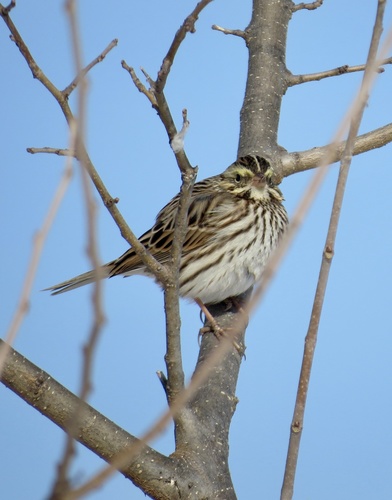 Savannah Sparrow
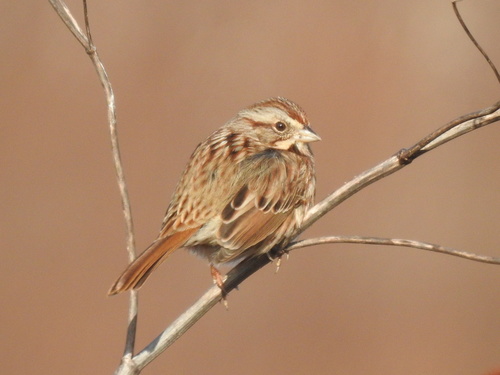 Song Sparrow
In short
The most reliable field mark between Savannah Sparrow and Song Sparrow is the presence of a crisp, pale supercilium (eyebrow) and often yellowish lores on Savannah Sparrow, which Song Sparrow lacks. Savannah Sparrow is generally smaller, more compact, and shows finer, more sharply defined streaks on the breast and flanks, while Song Sparrow is bulkier with heavier, blurrier streaking that often coalesces into a central breast spot. Both species are variable, but Savannah Sparrow tends to look neater and paler, especially in open grassland settings, whereas Song Sparrow appears more richly brown and is common in shrubby or marshy habitats. Both can be confusing in juvenile or worn plumages, but careful attention to face pattern and overall structure will usually separate them.
Identification tips
- Look for a pale supercilium (eyebrow) and yellowish lores: Savannah Sparrow almost always shows a crisp, pale line above the eye and sometimes yellow near the bill, especially in fresh plumage. Song Sparrow lacks yellow and has a more diffuse, brownish face.
- Check the breast streaking: Savannah Sparrow has fine, sharp streaks on a white background, usually not merging into a central spot. Song Sparrow has broader, blurrier streaks that often form a central dark spot on the breast.
- Assess overall size and shape: Savannah Sparrow is smaller, more compact, with a shorter, notched tail and a flat-topped head. Song Sparrow is bulkier, with a longer, rounder tail and a rounder head profile.
- Tail shape in flight: Savannah Sparrow's tail is short and notched; Song Sparrow's is longer and rounded, often pumped in flight or when perched.
- Face pattern: Savannah Sparrow's face is more contrasting, with a pale supercilium and often yellow lores. Song Sparrow's face is plainer, with brownish tones and no yellow.
- Habitat context: Savannah Sparrow prefers open grasslands and field edges; Song Sparrow is found in brush, marshes, and near water.
- Back color and streaking: Savannah Sparrow is generally paler and more evenly streaked above, while Song Sparrow is richer brown with less contrast and sometimes grayer on the mantle.
- Leg color: Both have pale legs, but Savannah Sparrow's are horn-colored; this is rarely diagnostic in the field.
- Bill structure: Savannah Sparrow's bill is shorter and finer, especially in northern and interior forms; Song Sparrow's bill is heavier and longer, especially in warmer climates.
- Juvenile/immature confusion: Young Savannah Sparrows still show the pale supercilium and neat face, while young Song Sparrows are duller and lack any yellow.
- Flight behavior: Savannah Sparrow flushes low and quickly drops into cover; Song Sparrow may fly higher and is more likely to perch up after flushing.
- Song and calls: Not covered in detail here, but Song Sparrow is named for its rich, variable song, often heard from an exposed perch. Savannah Sparrow's song is thinner and less musical.
- Subspecies variation: Both are variable, but only Savannah Sparrow shows yellow in the face. Darker coastal Savannah Sparrows can approach Song Sparrow in color but retain the facial pattern.
- Seasonal wear: Both species can appear drabber in winter or worn plumage, but the face pattern and streaking quality remain useful.
- When in doubt: Focus on face pattern (supercilium and yellow), breast streaking, and habitat for the most reliable separation.
Size
Song Sparrow is consistently larger and heavier than Savannah Sparrow, with an average body mass of 24.0 g versus 19.5 g for Savannah Sparrow [wikidata]. In the field, Song Sparrow appears bulkier and longer-bodied, with a rounder head and a proportionally longer, round-tipped tail. Savannah Sparrow is more petite, with a shorter, notched tail and a more compact, flat-headed look. These differences are subtle but noticeable when the two are seen side by side or with experience.
Plumage
- Juvenile and immature plumage: Both species are variable, but Savannah Sparrow juveniles and immatures retain the pale supercilium and often show a more contrasting, neat face pattern with yellowish lores (especially near the bill), even when streaking is less crisp. Song Sparrow juveniles are browner and duller overall, lacking any yellow and showing a more blurry, smudged look to the face and underparts.
- Adult plumage: Savannah Sparrow adults have a streaked brown back, white underparts with fine, sharp brown or blackish streaks on the breast and flanks, and a distinctive pale supercilium with possible yellow at the lores. Song Sparrow adults are more richly brown above, with broader, blurrier streaks below that often merge into a central breast spot. Song Sparrow lacks any yellow in the face and has a more uniform, brownish facial pattern with a less distinct supercilium.
- Wing and tail: Savannah Sparrow's flight feathers are blackish-brown with pale edges, and the tail is shorter and more notched. Song Sparrow's tail is longer, rounder, and the overall wing pattern is less contrasting.
Behaviour
Savannah Sparrow typically perches low or on the ground in open grasslands, often flushing with a short, direct flight and quickly dropping back into cover. Its movements are quick and purposeful. Song Sparrow is more likely to be seen perched conspicuously on shrubs, reeds, or low trees, often pumping its tail and moving with a slower, more deliberate manner. Song Sparrow is also more likely to sing from an exposed perch, while Savannah Sparrow tends to be more secretive.
Habitat
Savannah Sparrow is strongly associated with open grasslands, fields, and saltmarsh edges, rarely venturing into dense shrubbery. Song Sparrow is highly adaptable but prefers brushy, shrubby, or marshy habitats, often near water, and is less likely to be found in wide-open grasslands away from cover. If the bird is in a treeless field or coastal grassland, Savannah Sparrow is more likely; if in dense shrubs or marshes, Song Sparrow is the default.