

Sandwich Tern vs Black-throated Diver
Thalasseus sandvicensis versus Gavia arctica
Play a quiz with Sandwich Tern and Black-throated Diver
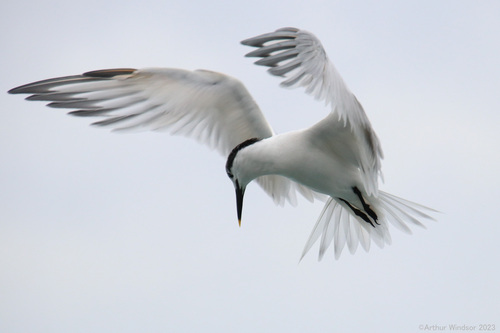 Sandwich Tern
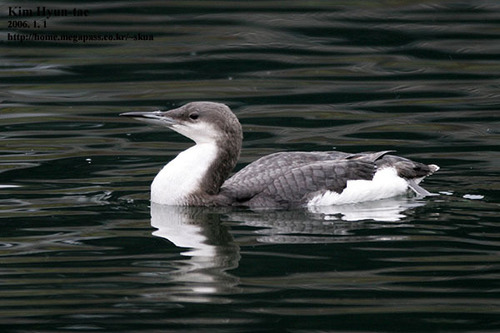 Black-throated Diver
In short
The most reliable field mark separating Sandwich Tern from Black-throated Diver is overall structure and flight style: Sandwich Tern is a slim, pale, buoyant seabird with long pointed wings and a sharp black bill with a yellow tip, while Black-throated Diver is a much larger, heavy-bodied waterbird with a thick, straight bill and a striking black-and-white checkered upperwing in breeding plumage. Juvenile Sandwich Terns in flight show a scaly pattern on the back and dark tail tips, while juvenile Black-throated Divers are overall browner and lack the tern's wing pattern. In all ages, the diver is much bulkier, with a longer neck and sits low in the water, while the tern is agile and often seen flying or hovering above the sea. Bill color and shape are immediate clues, but size and jizz are unmistakable in direct comparison.
Identification tips
- Size and bulk: Black-throated Diver is much larger and heavier than Sandwich Tern, with a long neck and thick body. Even distant birds show this contrast.
- Bill shape and color: Sandwich Tern has a thin, sharp black bill with a yellow tip (adult), or all-black in juveniles; Black-throated Diver has a thick, straight, all-black bill with no yellow.
- Flight style: Tern is buoyant, agile, with rapid wingbeats and often hovers; diver is heavy, with slow, deep wingbeats and neck outstretched.
- Wing pattern (juveniles): Juvenile Sandwich Tern shows a scaly pattern on the back and wings and a broad white margin on the inner web of the primaries, which can form a 'hook tip' as it wears. Juvenile Black-throated Diver is plain brown above with only a few white spots, lacking any scaly or hooked pattern.
- Tail: Sandwich Tern has a short, slightly forked tail with dark tips in juveniles; diver's tail is short and blackish, not forked.
- Head pattern (adults): Adult Sandwich Tern has a black cap (reduced to white forehead in winter); diver in breeding plumage has a grey head, black throat, and white necklace lines. In winter, diver's head is plainer and lacks the black throat.
- Upperwing (adults): Sandwich Tern is pale grey above with darkening primaries in summer; diver has blackish upperwing with high-contrast white squares on the mantle and scapulars in breeding plumage, but plainer in winter.
- Legs: Tern's legs are short and black; diver's are black with pale grey inner half, but usually hidden as diver sits low in water.
- Plumage seasonality: Sandwich Tern's black cap recedes to a white forehead in autumn/winter; diver loses black throat and most lines in winter, becoming less striking.
- Habitat: Tern is seen flying or perched on sandbars/coasts; diver is almost always on water, rarely seen flying except in migration.
- Behavior on water: Diver sits low, often dives; tern rarely lands on water, almost never swims.
- Voice: Tern's call is a harsh 'kear-ik'; diver gives haunting yodels or wails only on breeding grounds, otherwise silent.
- Flock size: Terns often in flocks; divers usually alone or in pairs.
- Jizz: Tern is slim, pointed, and buoyant; diver is thick-necked, heavy, and sits deep in water.
- Pitfalls: Juvenile Sandwich Tern's scaly back and dark tail tip can be mistaken for other terns but not for diver; diver's juvenile is plain and brown, not patterned like the tern.
Size
Sandwich Tern is a medium-large tern at 36–41 cm length and 95–105 cm wingspan, weighing 200–300 g [wikipedia]. In contrast, Black-throated Diver is much larger: 58–73 cm long, with a 100–130 cm wingspan, and weighs 1.3–3.4 kg [wikipedia]. The diver is more than twice as heavy and significantly longer and broader-winged than the tern. Even at a distance, the diver's bulk and long neck are obvious compared to the tern's slender, lightweight build.
Plumage
Juvenile and first-winter birds are most likely to be confused in flight. Juvenile Sandwich Terns show a scaly pattern on the back and wings, dark tips to the tail, and an all-blackish bill (sometimes with a yellowish base). Their upperwings are pale grey with a broad white margin on the inner web of the primaries, which can wear to a 'hook tip' in late summer. In contrast, juvenile Black-throated Divers are overall browner, resembling non-breeding adults, and lack the scaly or patterned upperwing of the tern; their upperparts are unpatterned except for a few white spots on the upperwing. Adult Sandwich Terns are very pale in flight, with pale grey upperwings and white underparts, black cap (reduced to white forehead in winter), and a black bill with a yellow tip. Adult Black-throated Divers in breeding plumage have a grey head and hindneck, black throat with a purple gloss, a necklace of white lines, and a blackish upperwing with high-contrast white squares on the mantle and scapulars. In non-breeding plumage, the diver loses the black throat and most white lines, becoming plainer above and white below. The diver's bill and legs are black, but the bill is thick and straight, unlike the tern's thin, sharp bill.
Behaviour
Sandwich Tern is agile and buoyant in flight, often seen hovering, plunge-diving, or flying in loose flocks above the sea. It perches on sandbars or rocks but rarely swims. Black-throated Diver is almost always seen swimming low in the water, diving for fish, or occasionally flying with slow, deep wingbeats. On land, divers are very awkward and rarely leave the water except to nest. Flight style is heavy and direct, with neck outstretched, unlike the tern's light, acrobatic flight.
Habitat
Sandwich Tern is a coastal species, breeding on sandy or shingle islands and foraging over inshore waters, rarely venturing far inland. Black-throated Diver breeds on freshwater lakes in northern Europe and Asia and winters along sheltered, ice-free coasts; it is almost always found on water, either lakes or sea, and never perches on sandbars or rocks like a tern. If seen inland, the diver is on a large lake, not flying over the beach.
Voice
Sandwich Tern gives a loud, grating 'kear-ik' or 'kerr ink' call, often heard in flight or at colonies. Black-throated Diver is generally silent away from breeding grounds, but on territory gives eerie, wailing or yodeling calls, very different from the tern's harsh, abrupt notes.