

Rüppell's Warbler vs Eastern Subalpine Warbler
Curruca ruppeli versus Curruca cantillans
Play a quiz with Rüppell's Warbler and Eastern Subalpine Warbler
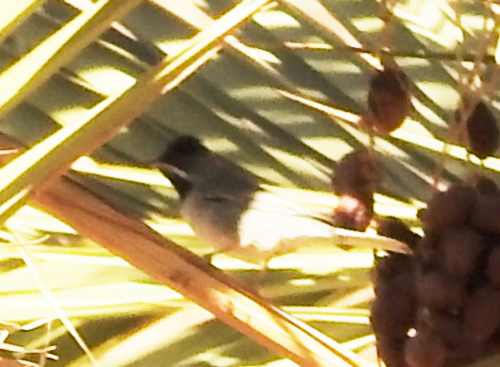 Rüppell's Warbler
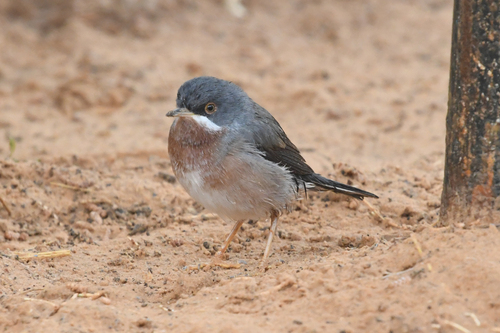 Eastern Subalpine Warbler
In short
The most reliable field mark between Rüppell's Warbler and Eastern Subalpine Warbler is the male head and throat pattern: male Rüppell's shows a black head and throat with a crisp white 'moustache', while male Eastern Subalpine has a grey head, blackish mask, and brick-red underparts sharply demarcated from a white belly. Females are trickier: Rüppell's female is greyer above with a pale throat, while Eastern Subalpine female is browner above and shows a pinkish flush below. Both species have a white malar streak, but its prominence and the surrounding coloration differ. Songs are also useful: Rüppell's is slower and deeper, Eastern Subalpine's is faster and more rattling. Immature/first-winter birds are not described in detail in the sources, so caution is needed with non-adult birds.
Identification tips
- Adult male head and throat pattern: Rüppell's male has a black head and throat with a sharp white malar streak; Eastern Subalpine male has a grey head, blackish mask, and brick-red throat/breast with a wide white submoustachial stripe. This is the single most reliable field mark for adult males.
- Underpart coloration in males: Rüppell's has paler grey underparts below the black throat; Eastern Subalpine has brick-red on the throat and breast, sharply demarcated from a white belly and paler flanks.
- Female upperparts: Rüppell's female is grey above with a brownish tinge; Eastern Subalpine female is browner above with a greyer head. Use this in combination with throat and underpart color.
- Female underparts: Rüppell's female has a pale throat and paler grey underparts; Eastern Subalpine female is whitish below with a pink flush, especially on the flanks and lower belly.
- White malar streak ('moustache'): Both species show this, but it is broader and more contrasting in Eastern Subalpine, especially in males. In Rüppell's, it is a sharp line separating black and grey.
- Bill and legs: Both have fine, pointed bills and brown legs; not useful for separation.
- Eye color: Rüppell's has red eyes; eye color is not specified for Eastern Subalpine in the sources, so use with caution.
- Song: Rüppell's has a slower, deeper rattle; Eastern Subalpine's is fast and rattling. Use song if seen poorly or in dense cover.
- Habitat: Both use dry, bushy areas; do not rely on habitat alone for separation in overlapping regions.
- Immature/first-winter birds: No diagnostic upperwing or juvenile marks are described in the sources. Exercise caution and avoid overconfidence when identifying non-adult birds.
- Structural jizz: Both are small, slim warblers with similar structure; jizz is not a reliable separator.
- Season and context: If in Greece, Turkey, or nearby islands in breeding season, Rüppell's is more likely; in southernmost Europe, especially west of Greece, Eastern Subalpine is more likely. However, both can overlap on migration.
- Plumage pitfalls: Beware of faded or worn males, which may lose the sharpness of head and throat contrast. Females and immatures are especially prone to confusion; use a combination of upperpart tone, underpart flush, and malar streak width.
- Subspecies variation: Eastern Subalpine has regional variation in male plumage, but all show the key contrast of brick-red throat/breast and sharply demarcated white belly.
- When in doubt: If the bird is not an obvious adult male, and you cannot see the head/throat pattern or underpart color clearly, consider the possibility of either species and do not over-commit.
Size
Both species are small Curruca warblers and are very similar in size, with Rüppell's described as slimmer than Sardinian Warbler, and Eastern Subalpine as a small Sylviid. There is no clear size or mass difference between these two, so structure and plumage are more useful than size for separation.
Plumage
- Adult Males: Rüppell's Warbler males have a black head and throat separated by a sharp white malar streak; the rest of the underparts are paler grey. Eastern Subalpine Warbler males have a grey head and back, a blackish mask on the lores and ear-coverts, a wide white submoustachial stripe, and brick-red coloration on the throat and breast, sharply set off from a white belly and paler flanks.
- Adult Females: Rüppell's females are grey-headed with a pale throat and a grey back tinged brownish. Eastern Subalpine females are browner above, with a greyer head, and whitish underparts with a pinkish flush. Both have a white malar streak, but it is broader and more contrasting in Eastern Subalpine.
- Immatures/Juveniles: The sources do not provide diagnostic details for immature or juvenile plumage or upperwing patterns for either species, so caution is needed when identifying birds outside adult breeding plumage.
- Shared Features: Both species have fine, pointed bills, brown legs, and red eyes (at least in Rüppell's). Both show the white malar streak, but the context and contrast differ.
Behaviour
No diagnostic behavioral differences are described between these two species in the sources. Both are typical small warblers, likely to be seen moving through low shrubs and bushes, and both are insectivorous with some berry consumption. No differences in flight style or foraging jizz are noted.
Habitat
Both species breed in the Mediterranean region, with Rüppell's Warbler found in Greece, Turkey, and nearby islands, and Eastern Subalpine Warbler in the southernmost areas of Europe. Both favor dry, open country with bushes or low shrubs for nesting. Habitat overlap is possible in southeastern Europe, so habitat alone is not a reliable separator.
Voice
Rüppell's Warbler has a slower, deeper rattle compared to the Eastern Subalpine Warbler. Eastern Subalpine's song is fast and rattling, similar to Lesser Whitethroat. If you hear a distinctly slow, deep rattle, Rüppell's is more likely; a fast, chattering rattle points to Eastern Subalpine. However, both songs are variations on the Curruca warbler theme and can be confused at a distance or in poor conditions.
Rüppell's Warbler · Eastern Subalpine Warbler · My Tricky Birds