

Motmot

Rufous Hummingbird vs Broad-tailed Hummingbird

Selasphorus rufus versus Selasphorus platycercus

Play a quiz with Rufous Hummingbird and Broad-tailed Hummingbird
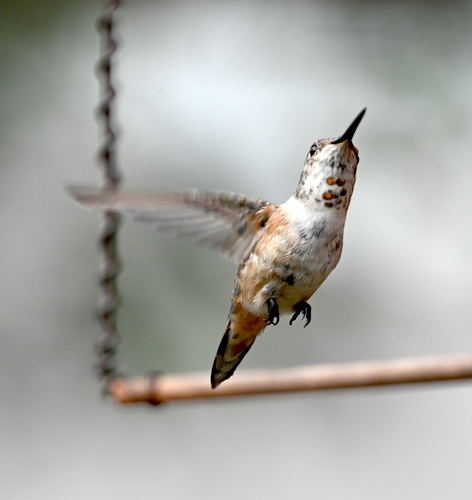
Rufous Hummingbird (Selasphorus rufus) Rufous Hummingbird
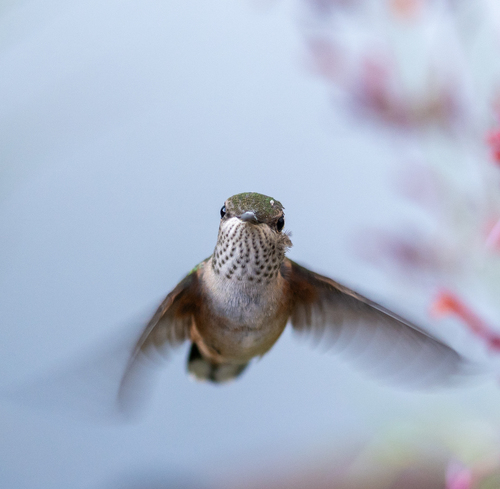
Broad-tailed Hummingbird (Selasphorus platycercus) Broad-tailed Hummingbird

Media

Loading…

In short

The most reliable field mark between Rufous and Broad-tailed Hummingbirds is the overall coloration and tail structure in adults, but beware: females and immatures of both species are extremely similar, and separating them in the field can be very challenging. Adult male Rufous Hummingbirds are typically rich rufous on the back, flanks, and tail, while adult male Broad-taileds have a green back and a rose-red gorget. Females of both species are best separated by subtle differences in tail pattern and back color, but overlap is considerable. Size and structure offer minor clues, but are not always reliable in the field. Vocalizations and habitat can help, but should not be used alone for identification.

Identification tips

  1. Adult male back color: Rufous males are usually rich rufous on the back, flanks, and tail; Broad-tailed males have a green back with little or no rufous. This is the quickest separation in good light.
  2. Gorget color (adult males): Rufous shows an orange-red gorget; Broad-tailed has a rose-red gorget. Both can appear dark in poor light, so use with caution.
  3. Tail structure (adult males): Rufous male has a notched second rectrix (R2), a subtle but reliable mark up close. Broad-tailed male's tail is more rounded and lacks this pronounced notch.
  4. Female/immature back and flank color: Both show green backs and rufous/cinnamon flanks, but Rufous females may show more extensive rufous, especially in the tail and flanks. Overlap is extensive; do not rely on this alone.
  5. Tail pattern (females/immatures): Both have dark tails with white tips and rufous bases. Rufous females may have more rufous at the tail base, but this is variable and not always visible.
  6. White eye ring (Broad-tailed female/immature): Broad-tailed females and immatures often show a clear white eye ring, more prominent than in Rufous. This is a helpful but not definitive mark.
  7. Cheek spots (Broad-tailed female/immature): Broad-tailed females show spotted cheeks, which are absent or less obvious in Rufous. Use this in combination with other marks.
  8. Mechanical wing trill (adult male Broad-tailed): If you hear a loud, insect-like wing trill in flight, it is a Broad-tailed male. Rufous males do not produce this sound.
  9. Size: Broad-tailed is slightly larger, but this is hard to judge unless birds are side by side.
  10. Aggressive behavior: Rufous males are especially aggressive and territorial, often chasing other hummingbirds. Broad-tailed males are also territorial but rely more on display.
  11. Habitat and elevation: Broad-tailed is more likely at higher elevations, especially in breeding season. Rufous is widespread, especially during migration.
  12. Migration timing: Rufous adults, especially males, migrate earlier than females and immatures. Broad-tailed males also arrive early on breeding grounds, but timing overlaps.
  13. Bill shape: Both have long, straight, slender bills; not useful for separation.
  14. Juvenile/immature separation: Juveniles and immatures are extremely difficult to separate in the field and are often best left as 'Selasphorus sp.' unless seen very well.
  15. Context: If in doubt, consider location, elevation, and season, but always prioritize direct field marks over range assumptions.

Size

Broad-tailed Hummingbird is slightly larger, averaging about 10 cm (4 in) in length with a wingspan of 13.3 cm (5.25 in) and a weight around 3.6 g. Rufous Hummingbird is smaller, at 7–9 cm (3–3.5 in) long, wingspan about 11 cm (4.5 in), and weight 2–5 g. The size difference is subtle and not always apparent in the field, especially when birds are not side by side. Both species show slight sexual dimorphism, with females being marginally larger than males.

Plumage

For adult males, Rufous Hummingbird shows a mostly rufous back, flanks, and tail, with an iridescent orange-red gorget. Some males have green on the back or crown, but the overall rufous tone dominates. Broad-tailed adult males have a bright rose-red gorget, iridescent green back, and a rounded black tail with green edges. Females and immatures of both species are very similar: green backs, white underparts, cinnamon/rufous flanks, and dark tails with white tips and rufous bases. Female Rufous may show more rufous in the tail and flanks, but this is variable and overlaps with Broad-tailed. A key mark for adult male Rufous is the 'notched' second rectrix (R2), which is less pronounced or absent in Broad-tailed. Broad-tailed females have a white eye ring and spotted cheeks, which are less prominent or absent in Rufous. Juvenile and immature birds are nearly indistinguishable in the field, especially in flight, and are often best left unidentified without close inspection.

Behaviour

Rufous Hummingbirds are notably aggressive and territorial, especially males, which defend flower-rich territories and often chase away other hummingbirds. Broad-tailed Hummingbirds are also territorial, but males use distinctive wing trills in display and territory defense. Both species hover and feed on nectar and insects, but Rufous males have shorter wings, leading to higher wingbeat frequencies and more energy-intensive hovering. Females of both species have longer wings for more efficient flight, as they range farther between food sources. In flight, Broad-tailed males produce a distinctive mechanical wing trill, absent in Rufous.

Habitat

Rufous Hummingbirds breed in western North America, often in open or shrubby habitats, and migrate long distances, including through the Rockies. Broad-tailed Hummingbirds favor highland regions from the western US and Canada to Mexico and Guatemala, often found in montane meadows, open woodlands, and high-elevation habitats. There is some overlap in migration corridors, but Broad-tailed is more associated with higher elevations, while Rufous can be found at a wider range of altitudes, especially during migration.

Voice

Broad-tailed Hummingbird males produce a distinctive mechanical 'wing trill' during flight and display, especially audible in the breeding season and up to 75 meters away. Their call is a sharp, repeated 'cheet'. Rufous Hummingbird does not produce a wing trill; its vocalizations are less distinctive and not emphasized in the notes. If you hear a loud, insect-like wing trill, you are likely hearing a Broad-tailed male.

Submit a better description

Use the same sections as the comparison. Your text is published immediately.

The most reliable field mark between Rufous and Broad-tailed Hummingbirds is the overall coloration and tail structure in adults, but beware: females and immatures of both species are extremely similar, and separating them in the field can be very challenging. Adult male Rufous Hummingbirds are typically rich rufous on the back, flanks, and tail, while adult male Broad-taileds have a green back and a rose-red gorget. Females of both species are best separated by subtle differences in tail pattern and back color, but overlap is considerable. Size and structure offer minor clues, but are not always reliable in the field. Vocalizations and habitat can help, but should not be used alone for identification.

  1. Adult male back color: Rufous males are usually rich rufous on the back, flanks, and tail; Broad-tailed males have a green back with little or no rufous. This is the quickest separation in good light.
  2. Gorget color (adult males): Rufous shows an orange-red gorget; Broad-tailed has a rose-red gorget. Both can appear dark in poor light, so use with caution.
  3. Tail structure (adult males): Rufous male has a notched second rectrix (R2), a subtle but reliable mark up close. Broad-tailed male's tail is more rounded and lacks this pronounced notch.
  4. Female/immature back and flank color: Both show green backs and rufous/cinnamon flanks, but Rufous females may show more extensive rufous, especially in the tail and flanks. Overlap is extensive; do not rely on this alone.
  5. Tail pattern (females/immatures): Both have dark tails with white tips and rufous bases. Rufous females may have more rufous at the tail base, but this is variable and not always visible.
  6. White eye ring (Broad-tailed female/immature): Broad-tailed females and immatures often show a clear white eye ring, more prominent than in Rufous. This is a helpful but not definitive mark.
  7. Cheek spots (Broad-tailed female/immature): Broad-tailed females show spotted cheeks, which are absent or less obvious in Rufous. Use this in combination with other marks.
  8. Mechanical wing trill (adult male Broad-tailed): If you hear a loud, insect-like wing trill in flight, it is a Broad-tailed male. Rufous males do not produce this sound.
  9. Size: Broad-tailed is slightly larger, but this is hard to judge unless birds are side by side.
  10. Aggressive behavior: Rufous males are especially aggressive and territorial, often chasing other hummingbirds. Broad-tailed males are also territorial but rely more on display.
  11. Habitat and elevation: Broad-tailed is more likely at higher elevations, especially in breeding season. Rufous is widespread, especially during migration.
  12. Migration timing: Rufous adults, especially males, migrate earlier than females and immatures. Broad-tailed males also arrive early on breeding grounds, but timing overlaps.
  13. Bill shape: Both have long, straight, slender bills; not useful for separation.
  14. Juvenile/immature separation: Juveniles and immatures are extremely difficult to separate in the field and are often best left as 'Selasphorus sp.' unless seen very well.
  15. Context: If in doubt, consider location, elevation, and season, but always prioritize direct field marks over range assumptions.

Broad-tailed Hummingbird is slightly larger, averaging about 10 cm (4 in) in length with a wingspan of 13.3 cm (5.25 in) and a weight around 3.6 g. Rufous Hummingbird is smaller, at 7–9 cm (3–3.5 in) long, wingspan about 11 cm (4.5 in), and weight 2–5 g. The size difference is subtle and not always apparent in the field, especially when birds are not side by side. Both species show slight sexual dimorphism, with females being marginally larger than males.

For adult males, Rufous Hummingbird shows a mostly rufous back, flanks, and tail, with an iridescent orange-red gorget. Some males have green on the back or crown, but the overall rufous tone dominates. Broad-tailed adult males have a bright rose-red gorget, iridescent green back, and a rounded black tail with green edges. Females and immatures of both species are very similar: green backs, white underparts, cinnamon/rufous flanks, and dark tails with white tips and rufous bases. Female Rufous may show more rufous in the tail and flanks, but this is variable and overlaps with Broad-tailed. A key mark for adult male Rufous is the 'notched' second rectrix (R2), which is less pronounced or absent in Broad-tailed. Broad-tailed females have a white eye ring and spotted cheeks, which are less prominent or absent in Rufous. Juvenile and immature birds are nearly indistinguishable in the field, especially in flight, and are often best left unidentified without close inspection.

Rufous Hummingbirds are notably aggressive and territorial, especially males, which defend flower-rich territories and often chase away other hummingbirds. Broad-tailed Hummingbirds are also territorial, but males use distinctive wing trills in display and territory defense. Both species hover and feed on nectar and insects, but Rufous males have shorter wings, leading to higher wingbeat frequencies and more energy-intensive hovering. Females of both species have longer wings for more efficient flight, as they range farther between food sources. In flight, Broad-tailed males produce a distinctive mechanical wing trill, absent in Rufous.

Rufous Hummingbirds breed in western North America, often in open or shrubby habitats, and migrate long distances, including through the Rockies. Broad-tailed Hummingbirds favor highland regions from the western US and Canada to Mexico and Guatemala, often found in montane meadows, open woodlands, and high-elevation habitats. There is some overlap in migration corridors, but Broad-tailed is more associated with higher elevations, while Rufous can be found at a wider range of altitudes, especially during migration.

Broad-tailed Hummingbird males produce a distinctive mechanical 'wing trill' during flight and display, especially audible in the breeding season and up to 75 meters away. Their call is a sharp, repeated 'cheet'. Rufous Hummingbird does not produce a wing trill; its vocalizations are less distinctive and not emphasized in the notes. If you hear a loud, insect-like wing trill, you are likely hearing a Broad-tailed male.

Discard your changes?

You have unsaved edits. If you leave now, those changes will be lost.

Rufous Hummingbird · Broad-tailed Hummingbird · My Tricky Birds