

Motmot

Rufous-backed Robin vs Pin-tailed Whydah

Turdus rufopalliatus versus Vidua macroura

Play a quiz with Rufous-backed Robin and Pin-tailed Whydah
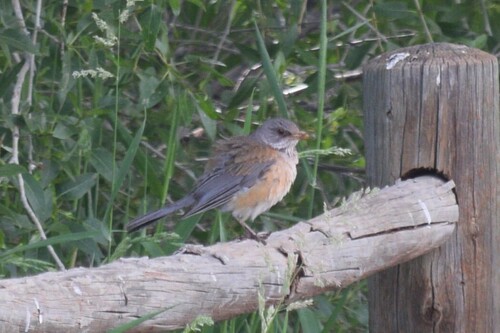
Rufous-backed Robin (Turdus rufopalliatus) Rufous-backed Robin
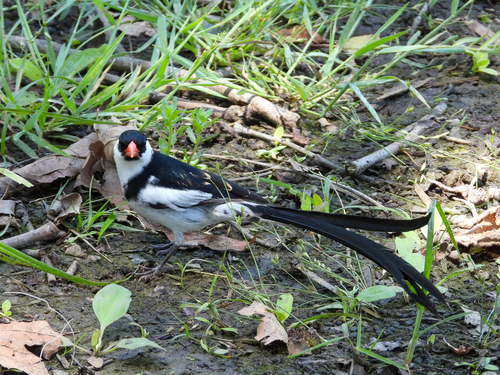
Pin-tailed Whydah (Vidua macroura) Pin-tailed Whydah

Media

Loading…

In short

The most reliable field mark is the Pin-tailed Whydah's extremely long, black tail streamers in breeding males—no robin ever shows this. For all ages and sexes, the Whydah is much smaller, with a short, conical red bill, while the Rufous-backed Robin is a large, thrush-shaped bird with a yellow bill and chestnut back. Juvenile robins have buffy stippling and streaks above, while young and female whydahs are streaky brown with a red or grayish bill. In flight, the robin is broad-winged and strong, the whydah quick and finch-like. If you see a bird with a bright red bill, check for the whydah's size and tail; a yellow bill and orange-chestnut underparts point to the robin.

Identification tips

  1. Tail shape and length: Breeding male Pin-tailed Whydahs have extremely long, black tail streamers (up to 20 cm), forming a pennant shape—no robin ever shows this. Females and non-breeding males lack the tail, so check other marks.
  2. Bill color and shape: Whydahs (all ages and sexes) have a short, conical, bright red bill (grayish in immatures); robins have a longer, yellow, thrush-like bill. Bill color is a quick check at any age.
  3. Size and structure: Rufous-backed Robin is much larger and bulkier, with a rounded, thrush-like body and strong legs. Whydah is small, delicate, and finch-like, even when the male's tail is long.
  4. Plumage—adults: Adult robins have a pale gray head, black lores, yellow eye-ring, chestnut back, orange-chestnut breast/flanks, and white belly/vent. Adult male whydahs (breeding) are black above, white below, with a black crown and long tail; females and non-breeding males are streaked brown above, whitish below, with buff flanks and a buff/black face.
  5. Plumage—juveniles: Juvenile robins are brownish-gray above with buffy stippling and streaks, and dark mottling below. Juvenile whydahs are streaked brown above, plainer than females, with a grayish bill and no tail streamers.
  6. Face pattern: Robin has a pale gray head with black lores and a yellow eye-ring; whydah females/immatures have a buff and black face pattern, lacking the robin's strong lores and eye-ring.
  7. Flight style: Robins fly with strong, direct wingbeats; whydahs are quick, fluttery, and finch-like, with breeding males often displaying their tails in flight.
  8. Habitat context: Robins are found in woodland edges and gardens with cover; whydahs prefer open grassland, scrub, or gardens, often near small finches.
  9. Association with other birds: Whydahs may be seen near waxbills or other estrildid finches, especially during breeding, as they are brood parasites. Robins are usually solitary or in loose groups.
  10. Underpart color: Robin's breast and flanks are orange-chestnut; whydah females/immatures are whitish with buff flanks, never orange.
  11. Back color: Robin's back is dull chestnut with gray wash; whydah females/immatures are streaked brown, males black above.
  12. Bill size: Robin's bill is longer and more slender than the whydah's stubby, finch-like bill.
  13. Perching posture: Robins perch upright, often on the ground or low branches; whydahs perch more horizontally and are often seen in weedy or grassy areas.
  14. Song: If heard, whydah's song is a rapid squeak and churr, while robin's is expected to be more melodious (not described in notes).
  15. Geographic range: In the Americas, robins are rare outside Mexico; whydahs are introduced and local in southern California, Puerto Rico, and a few other spots—check local abundance if unsure.

Size

Rufous-backed Robin is much larger, at 21.5–25.5 cm long and 72–85 g, with a wingspan around 40 cm. Pin-tailed Whydah is tiny by comparison: 12–13 cm long (excluding the male's tail streamers), and only 15.8 g. Even with the male whydah's tail streamers (which can add up to 20 cm), the body remains noticeably smaller and more delicate than the robin's robust, thrush-like frame.

Plumage

Juvenile Rufous-backed Robins are brownish-gray above with buffy stippling and streaks, and have dark mottling and barring below—giving a somewhat scaly look. Juvenile and female Pin-tailed Whydahs are streaked brown above, with a buff and black face pattern, whitish underparts, and buff flanks; their bills are red or grayish. Adult male whydahs in breeding plumage are unmistakable: black back and crown, white underparts and face, and very long black tail streamers. Female and non-breeding male whydahs lack the tail and are more subtly marked, but always have a short, conical red bill. Adult robins have a pale gray head, black lores, yellow eye-ring, chestnut back, orange-chestnut breast and flanks, and a yellow bill. Both sexes of robin are similar, though females are duller. Whydah immatures are plainer than females, with a grayish bill.

Behaviour

Rufous-backed Robins behave like typical thrushes: they hop on the ground, forage for insects and fruit, and perch upright. Their flight is strong and direct. Pin-tailed Whydahs are more finch-like, often seen flitting through grass or perching conspicuously. Breeding male whydahs perform elaborate hovering displays to show off their tails, and both sexes are more likely to be seen in open, grassy or weedy areas. Whydahs are brood parasites and may be seen near small finches, especially waxbills.

Habitat

Rufous-backed Robin is native to Mexico and a rare visitor to the southwestern US, favoring woodland edges, gardens, and areas with dense cover. Pin-tailed Whydah is native to sub-Saharan Africa but introduced in parts of the Americas, including southern California and Puerto Rico. It prefers open grassland, scrub, savannah, and gardens, often near populations of estrildid finches. The robin is rarely found in open grassland, while the whydah avoids dense woods.

Voice

Pin-tailed Whydah males sing from high perches, giving rapid squeaking and churring notes, especially during display flights. Rufous-backed Robin's song is not described in the provided notes, but as a thrush, it is expected to have a more melodious, varied song. Whydah's song is distinctive if heard, but not always diagnostic in the field without experience.

Submit a better description

Use the same sections as the comparison. Your text is published immediately.

The most reliable field mark is the Pin-tailed Whydah's extremely long, black tail streamers in breeding males—no robin ever shows this. For all ages and sexes, the Whydah is much smaller, with a short, conical red bill, while the Rufous-backed Robin is a large, thrush-shaped bird with a yellow bill and chestnut back. Juvenile robins have buffy stippling and streaks above, while young and female whydahs are streaky brown with a red or grayish bill. In flight, the robin is broad-winged and strong, the whydah quick and finch-like. If you see a bird with a bright red bill, check for the whydah's size and tail; a yellow bill and orange-chestnut underparts point to the robin.

  1. Tail shape and length: Breeding male Pin-tailed Whydahs have extremely long, black tail streamers (up to 20 cm), forming a pennant shape—no robin ever shows this. Females and non-breeding males lack the tail, so check other marks.
  2. Bill color and shape: Whydahs (all ages and sexes) have a short, conical, bright red bill (grayish in immatures); robins have a longer, yellow, thrush-like bill. Bill color is a quick check at any age.
  3. Size and structure: Rufous-backed Robin is much larger and bulkier, with a rounded, thrush-like body and strong legs. Whydah is small, delicate, and finch-like, even when the male's tail is long.
  4. Plumage—adults: Adult robins have a pale gray head, black lores, yellow eye-ring, chestnut back, orange-chestnut breast/flanks, and white belly/vent. Adult male whydahs (breeding) are black above, white below, with a black crown and long tail; females and non-breeding males are streaked brown above, whitish below, with buff flanks and a buff/black face.
  5. Plumage—juveniles: Juvenile robins are brownish-gray above with buffy stippling and streaks, and dark mottling below. Juvenile whydahs are streaked brown above, plainer than females, with a grayish bill and no tail streamers.
  6. Face pattern: Robin has a pale gray head with black lores and a yellow eye-ring; whydah females/immatures have a buff and black face pattern, lacking the robin's strong lores and eye-ring.
  7. Flight style: Robins fly with strong, direct wingbeats; whydahs are quick, fluttery, and finch-like, with breeding males often displaying their tails in flight.
  8. Habitat context: Robins are found in woodland edges and gardens with cover; whydahs prefer open grassland, scrub, or gardens, often near small finches.
  9. Association with other birds: Whydahs may be seen near waxbills or other estrildid finches, especially during breeding, as they are brood parasites. Robins are usually solitary or in loose groups.
  10. Underpart color: Robin's breast and flanks are orange-chestnut; whydah females/immatures are whitish with buff flanks, never orange.
  11. Back color: Robin's back is dull chestnut with gray wash; whydah females/immatures are streaked brown, males black above.
  12. Bill size: Robin's bill is longer and more slender than the whydah's stubby, finch-like bill.
  13. Perching posture: Robins perch upright, often on the ground or low branches; whydahs perch more horizontally and are often seen in weedy or grassy areas.
  14. Song: If heard, whydah's song is a rapid squeak and churr, while robin's is expected to be more melodious (not described in notes).
  15. Geographic range: In the Americas, robins are rare outside Mexico; whydahs are introduced and local in southern California, Puerto Rico, and a few other spots—check local abundance if unsure.

Rufous-backed Robin is much larger, at 21.5–25.5 cm long and 72–85 g, with a wingspan around 40 cm. Pin-tailed Whydah is tiny by comparison: 12–13 cm long (excluding the male's tail streamers), and only 15.8 g. Even with the male whydah's tail streamers (which can add up to 20 cm), the body remains noticeably smaller and more delicate than the robin's robust, thrush-like frame.

Juvenile Rufous-backed Robins are brownish-gray above with buffy stippling and streaks, and have dark mottling and barring below—giving a somewhat scaly look. Juvenile and female Pin-tailed Whydahs are streaked brown above, with a buff and black face pattern, whitish underparts, and buff flanks; their bills are red or grayish. Adult male whydahs in breeding plumage are unmistakable: black back and crown, white underparts and face, and very long black tail streamers. Female and non-breeding male whydahs lack the tail and are more subtly marked, but always have a short, conical red bill. Adult robins have a pale gray head, black lores, yellow eye-ring, chestnut back, orange-chestnut breast and flanks, and a yellow bill. Both sexes of robin are similar, though females are duller. Whydah immatures are plainer than females, with a grayish bill.

Rufous-backed Robins behave like typical thrushes: they hop on the ground, forage for insects and fruit, and perch upright. Their flight is strong and direct. Pin-tailed Whydahs are more finch-like, often seen flitting through grass or perching conspicuously. Breeding male whydahs perform elaborate hovering displays to show off their tails, and both sexes are more likely to be seen in open, grassy or weedy areas. Whydahs are brood parasites and may be seen near small finches, especially waxbills.

Rufous-backed Robin is native to Mexico and a rare visitor to the southwestern US, favoring woodland edges, gardens, and areas with dense cover. Pin-tailed Whydah is native to sub-Saharan Africa but introduced in parts of the Americas, including southern California and Puerto Rico. It prefers open grassland, scrub, savannah, and gardens, often near populations of estrildid finches. The robin is rarely found in open grassland, while the whydah avoids dense woods.

Pin-tailed Whydah males sing from high perches, giving rapid squeaking and churring notes, especially during display flights. Rufous-backed Robin's song is not described in the provided notes, but as a thrush, it is expected to have a more melodious, varied song. Whydah's song is distinctive if heard, but not always diagnostic in the field without experience.

Discard your changes?

You have unsaved edits. If you leave now, those changes will be lost.

Rufous-backed Robin · Pin-tailed Whydah · My Tricky Birds