

Ruddy Quail-Dove vs White-tipped Dove
Geotrygon montana versus Leptotila verreauxi
Play a quiz with Ruddy Quail-Dove and White-tipped Dove
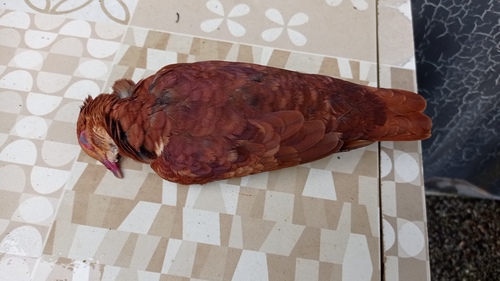 Ruddy Quail-Dove
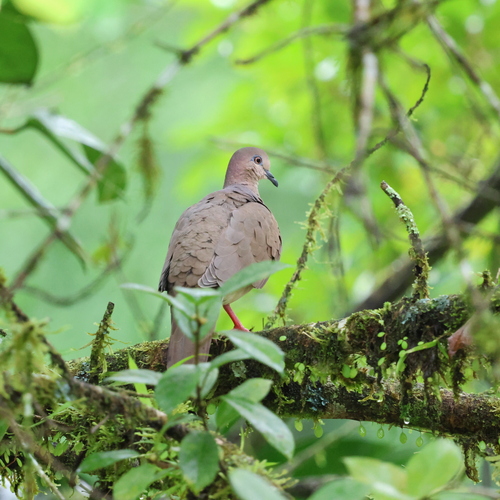 White-tipped Dove
In short
The most reliable field mark to separate Ruddy Quail-Dove from White-tipped Dove is overall coloration: Ruddy Quail-Dove is rich rufous on the back, wings, and face, while White-tipped Dove is much paler with grey-brown upperparts and a distinctive white-tipped tail visible in flight or from below. Ruddy Quail-Dove shows a uniform rusty tone, especially on the wings and face, whereas White-tipped Dove has a pale grey or whitish forehead, throat, and underparts. In perched or walking birds, focus on the facial color and tail tip; in flight, the white tip to the tail of White-tipped Dove is a key separator. Both species are similar in size, but their structure and behavior differ subtly.
Identification tips
- Overall coloration: Ruddy Quail-Dove is rich rufous on the back, wings, and face, creating a uniform rusty appearance. White-tipped Dove is grey-brown above with a pale grey or whitish face and underparts.
- Tail tip: White-tipped Dove has a broad white tip to the tail, visible from below or in flight. Ruddy Quail-Dove lacks this feature; its tail is uniformly colored.
- Facial pattern: Ruddy Quail-Dove shows a strong rufous facial mask, while White-tipped Dove has a pale grey or whitish forehead and throat, with no rufous mask.
- Underparts: White-tipped Dove is whitish below, often with a pinkish or buff wash on the chest. Ruddy Quail-Dove is lighter brown on the breast and rump but never truly whitish.
- Eye-ring color: White-tipped Dove usually has a red or blue eye-ring (blue in much of Amazonia and northern South America, red elsewhere), but this varies regionally and overlaps with similar species, so use with caution. Eye-ring color is not specified for Ruddy Quail-Dove.
- Bill color: White-tipped Dove has a black bill; bill color for Ruddy Quail-Dove is not described, so this is not a primary field mark.
- Underwing coverts: White-tipped Dove has rufous underwing coverts, but these are rarely visible except in flight or when preening. Ruddy Quail-Dove's underwing is not described.
- Flight view: In flight, White-tipped Dove shows a broad white tail tip; Ruddy Quail-Dove does not. Both have fast, direct flight, but the tail pattern is diagnostic.
- Behavior: White-tipped Dove is wary, usually alone or in pairs, and flushes with noisy wingbeats. Ruddy Quail-Dove's behavior is not detailed, but both are ground foragers.
- Habitat: Both can occur in similar habitats, but White-tipped Dove is more likely in open woodlands and edges; Ruddy Quail-Dove may prefer denser cover.
- Vocalization: White-tipped Dove's deep, hollow two-note call (ooo-wooooo) is distinctive. Ruddy Quail-Dove's voice is not described, so use vocalizations mainly to confirm White-tipped Dove.
- Size: Both species are similar in length (Ruddy Quail-Dove 19–28 cm, White-tipped Dove about 28 cm) and mass (White-tipped Dove 155 g), so size is not a reliable separator in the field.
- Sex/age differences: No age-specific or sex-specific plumage differences are described for either species in the notes; use adult field marks for all ages.
- Common pitfalls: Immature or poorly seen White-tipped Doves may appear browner, but the white tail tip and pale face usually remain visible. Ruddy Quail-Dove's uniform rufous tones are unique among similar-sized doves in the region.
- When in doubt: Prioritize the combination of overall rufous coloration (Ruddy Quail-Dove) versus pale face and white tail tip (White-tipped Dove), especially in flight or with good side views.
Size
Both species are similar in length, with Ruddy Quail-Dove ranging from 19–28 cm and White-tipped Dove about 28 cm [wikipedia]. White-tipped Dove is typically heavier (about 155 g) and may appear slightly bulkier, but in the field, size overlap is substantial and not a reliable separator. Use plumage and structure over size for identification.
Plumage
- Adults: Ruddy Quail-Dove is uniformly rich rufous on the back, wings, and facial mask, with lighter brown on the breast, rump, and an undereye stripe. White-tipped Dove has grey-brown upperparts and wings, a pale grey or whitish forehead and throat, and whitish underparts shading to pinkish or buff on the chest. The underwing coverts are rufous in White-tipped Dove, but this is not usually visible unless the bird is in flight or preening. The tail of White-tipped Dove is broadly tipped with white, best seen from below or in flight—this is absent in Ruddy Quail-Dove. Eye-ring color in White-tipped Dove varies (red or blue depending on region), but is not a reliable field mark everywhere. Bill is black in White-tipped Dove; bill color is not specified for Ruddy Quail-Dove in the notes.
- Juveniles/Immatures: No age-specific wing pattern or juvenile marks are described for either species in the sources. Focus on overall coloration and tail pattern for all ages.
Behaviour
White-tipped Dove is typically seen alone or in pairs, is wary, and stays within its territory year-round. Its flight is fast and direct with regular wingbeats and noticeable wing clattering, typical of pigeons. Ruddy Quail-Dove behavior is not detailed in the notes, but both species forage on the ground. White-tipped Dove may be more likely to flush with a clattering flight, while Ruddy Quail-Dove's behavior is not specified as distinctive.
Habitat
Ruddy Quail-Dove is found throughout the West Indies, Central America, and tropical South America, sometimes as a vagrant in Florida and southern Texas. White-tipped Dove inhabits a wide variety of woodland habitats in the Neotropics. Both species can overlap in range and habitat, so context is not a strong separator, but White-tipped Dove is more likely in open woodlands and edges, while Ruddy Quail-Dove may prefer denser cover.
Voice
White-tipped Dove gives a deep, hollow two-note call: an introductory hoot followed by a longer, more audible, hollow note (ooo-wooooo). This call is used for territory, mate attraction, and contact. No vocalization information is provided for Ruddy Quail-Dove in the notes, so voice is only useful for confirming White-tipped Dove.