

Ruddy-capped Nightingale-Thrush vs Grey-cheeked Thrush
Catharus frantzii versus Catharus minimus
Play a quiz with Ruddy-capped Nightingale-Thrush and Grey-cheeked Thrush
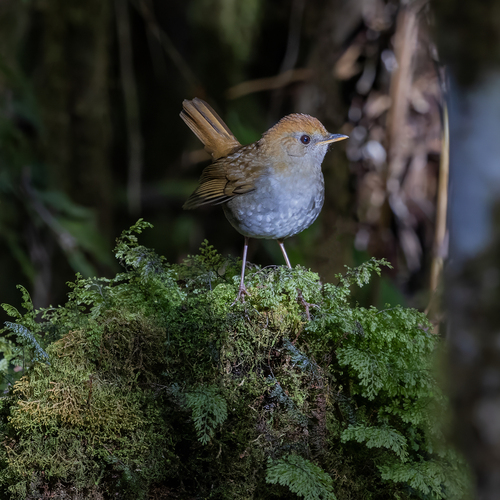 Ruddy-capped Nightingale-Thrush
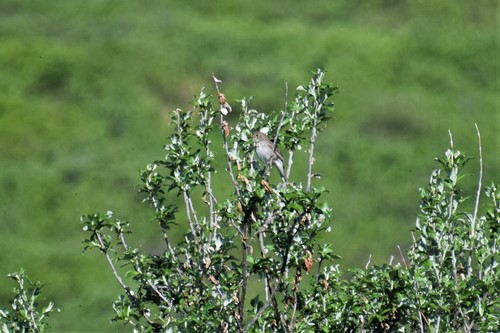 Grey-cheeked Thrush
In short
The most reliable field mark to separate Ruddy-capped Nightingale-Thrush from Grey-cheeked Thrush is the presence of rich rufous or russet tones on the crown, tail, and uppertail coverts of the Ruddy-capped, which are never shown by the drab gray-brown Grey-cheeked. In flight or perched, the Ruddy-capped’s warm reddish tones and silvery white underwing contrast with the Grey-cheeked’s overall gray-brown, dusky flanks, and the classic white-dark-white underwing pattern. Juveniles of both species are more muted, but the Ruddy-capped still shows a sooty face and olive or reddish bars below, while the Grey-cheeked remains grayish and lacks any rufous. Both are similar in size, but their ranges do not overlap: Ruddy-capped is a Central American resident, while Grey-cheeked is a northern migrant. Use plumage and context together for best separation.
Identification tips
- Rufous or russet crown and tail (all ages): Only Ruddy-capped Nightingale-Thrush shows a rich rufous or russet crown, tail, and uppertail coverts. Grey-cheeked Thrush is always gray-brown above and never shows rufous.
- Grayish face vs. sooty or olive face (juveniles): Juvenile Ruddy-capped has a sooty face and olive or reddish tones on the crown and upperparts, while juvenile Grey-cheeked is grayish and lacks any rufous or sooty tones.
- Underparts pattern (all ages): Ruddy-capped shows a whitish chin and throat with dark flecks, pale gray breast with olive tinge and flecks, and whitish belly with olive or olive-brown bars in juveniles. Grey-cheeked has dusky flanks and a generally drab, grayish underpart pattern without barring or rufous.
- Underwing pattern (adults): Grey-cheeked Thrush shows the classic Catharus white-dark-white underwing pattern, best seen in flight. Ruddy-capped has silvery white undersides to the flight feathers, but not the same bold underwing pattern.
- Partial pale eyering (adults): Grey-cheeked Thrush may show a partial pale eyering, but Ruddy-capped does not have a strong eyering.
- Bill color: Ruddy-capped has a blackish upper mandible and orange-yellow lower mandible, but this is subtle and not easily seen in the field. Grey-cheeked’s bill is not described as distinctive.
- Leg color: Ruddy-capped’s legs are pale pink to grayish or brownish pink; Grey-cheeked’s leg color is not diagnostic.
- Size and structure: Both are similar in size and shape; do not rely on structure for separation.
- Behavior: Both species skulk in dense undergrowth and forage on or near the ground; behavior is not a reliable separator.
- Habitat and range: Ruddy-capped is found only in highland forests from Mexico to Panama. Grey-cheeked breeds in boreal and Arctic shrublands and migrates through North America. If you are in Central America’s highlands, it is Ruddy-capped; in North America, especially during migration, it is Grey-cheeked.
- Vocalizations: Not diagnostic between these two species with current information.
- Sexes: Both species are sexually monomorphic; plumage does not vary by sex.
- Subspecies variation: Ruddy-capped has several subspecies with minor differences in upperpart and underpart tones, but all retain the rufous crown and tail. Grey-cheeked’s subspecies differ only in range, not in field marks.
- Pitfalls: Do not confuse the olive or rufous tones of Ruddy-capped with the gray-brown of Grey-cheeked, especially in poor light. Juveniles are more muted, but the presence or absence of rufous remains key.
- When in doubt: Use a combination of rufous crown/tail (Ruddy-capped), gray-brown overall (Grey-cheeked), and geographic context for the most reliable identification.
Size
Both species are very close in size: Ruddy-capped Nightingale-Thrush measures about 15–18 cm in length and weighs around 30 g, while Grey-cheeked Thrush is 15–17 cm and weighs 26–30 g. There is no meaningful size difference in the field. Both have similar proportions typical of Catharus thrushes, so structure is not a reliable separator.
Plumage
- Juveniles and immatures: Juvenile Ruddy-capped Nightingale-Thrushes have a dark olive-brown to reddish brown crown and upperparts, a sooty face, and olive or olive-brown barring on the whitish lower underparts. Juvenile Grey-cheeked Thrushes are grayish overall, with a grayish face and dusky flanks, lacking any rufous or reddish tones.
- Adults: Ruddy-capped Nightingale-Thrush adults show a rich rufous to russet crown, deep rufous-brown tail and uppertail coverts, brownish-olive back with a russet wash, and a grayish face. The chin and throat are whitish with dark flecks, and the breast is pale gray with olive tinge and flecks. Grey-cheeked Thrush adults are drab gray-brown above, with a grayish face, partial pale eyering, grayish area between the eye and bill, and extensively dusky flanks. There is no rufous or russet anywhere on the Grey-cheeked.
- Wings/flight: Ruddy-capped has silvery white undersides to the flight feathers, but Grey-cheeked shows the classic Catharus white-dark-white underwing pattern. Both lack strong wingbars.
- Iris, bill, legs: Both have dark irises. Ruddy-capped has a blackish upper mandible and orange-yellow lower mandible, with pale pink to grayish or brownish pink legs; these are not strong field marks compared to plumage.
Behaviour
Ruddy-capped Nightingale-Thrush typically forages singly or in pairs, close to or on the ground in dense undergrowth, and may follow army ant swarms. Grey-cheeked Thrush is secretive, foraging in low, dense shrubs or on the ground, and is rarely seen in high densities. Both are shy and skulk in thick cover, so behavior is not a strong separator.
Habitat
Ruddy-capped Nightingale-Thrush is a resident of highland forests from Mexico to Panama, always in montane or cloud forest habitats. Grey-cheeked Thrush breeds in northern boreal forests and low Arctic shrublands, and migrates through a wide range of wooded habitats in North America. Their ranges do not overlap: seeing one in Central America’s highlands points to Ruddy-capped, while a bird in the boreal north or on migration in North America is Grey-cheeked.
Voice
No direct comparison is available between these two species’ vocalizations in the notes. Grey-cheeked Thrush is noted for its complex, burry, flute-like song, but this is most useful when comparing to Bicknell’s Thrush. Ruddy-capped Nightingale-Thrush’s voice is not described here. Vocalizations are not a reliable separator for these two in the field based on current notes.
Ruddy-capped Nightingale-Thrush · Grey-cheeked Thrush · My Tricky Birds