

Motmot

Rudd's Lark vs Eastern Clapper Lark

Heteromirafra ruddi versus Corypha fasciolata

Play a quiz with Rudd's Lark and Eastern Clapper Lark
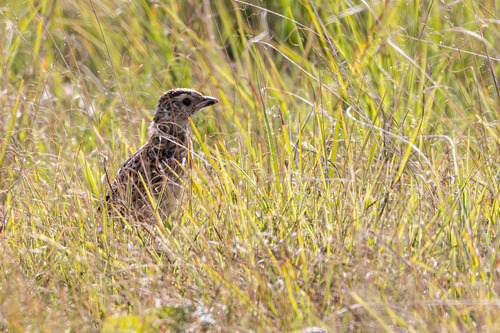
Rudd's Lark (Heteromirafra ruddi) Rudd's Lark
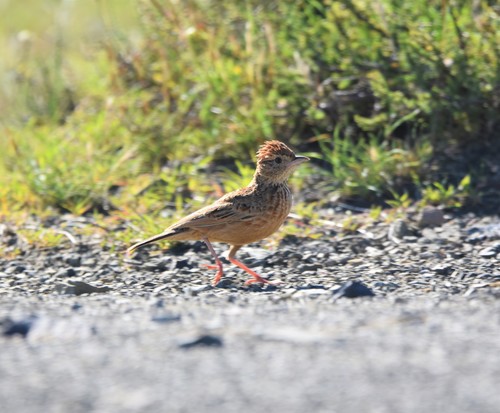
Eastern Clapper Lark (Corypha fasciolata) Eastern Clapper Lark

Media

Loading…

In short

The best field mark for separating Rudd's Lark from Eastern Clapper Lark is the latter's distinctive display flight, which features loud wing clapping and a parachuting descent—behavior Rudd's Lark does not show. In plumage, Eastern Clapper Lark stands out with rich rufous underparts and a brown (sometimes greyer) upperpart, while Rudd's Lark is more uniformly brown and adapted to high-altitude grasslands. Structurally, Eastern Clapper Lark has a strong bill and a slightly longer body. Habitat is also a strong clue: Rudd's Lark is restricted to high-altitude grasslands in South Africa, whereas Eastern Clapper Lark prefers drier, open country and is more widespread in southern Africa.

Identification tips

  1. Display flight: Eastern Clapper Lark performs a dramatic display with rapid wing clapping and a parachuting descent with trailing legs—if seen, this is diagnostic and rules out Rudd's Lark (all ages/seasons).
  2. Underparts color: Eastern Clapper Lark shows rich rufous underparts, especially in good light; Rudd's Lark is more uniformly brown below (adults and immatures).
  3. Upperparts tone: Eastern Clapper Lark has brown upperparts, sometimes greyer in the north; Rudd's Lark is more consistently brown and less contrasting overall.
  4. Bill structure: Eastern Clapper Lark has a strong, prominent bill, which can be a useful structural cue if seen well; Rudd's Lark's bill is less robust.
  5. Crown color: Eastern Clapper Lark has a brown crown; this is less distinctive in Rudd's Lark, which is more uniformly colored.
  6. Habitat: Rudd's Lark is restricted to high-altitude grasslands in South Africa—if you are in this habitat, consider Rudd's first. Eastern Clapper Lark prefers dry, open country and is more widespread.
  7. Behavior on ground: Both species feed on the ground, but Eastern Clapper Lark is more likely to be seen skulking and solitary, especially outside the display period.
  8. Vocalization: If you hear a rising 'pooooeeeee' call, especially during a display flight, it is Eastern Clapper Lark. Rudd's Lark's vocalizations are not described here.
  9. Flight style: Outside display, flight jizz may be similar, but the absence of wing clapping and parachuting should make you cautious about claiming Eastern Clapper Lark.
  10. Local abundance: Eastern Clapper Lark is more widespread and may be more common in suitable dry habitats; Rudd's Lark is local and rare, so context matters.
  11. Plumage pitfalls: In poor light or at a distance, the rufous underparts of Eastern Clapper Lark may be hard to see—look for the strong bill and display behavior.
  12. Age/season: No specific juvenile or immature wing pattern differences are noted, so rely on overall tone, structure, and especially behavior and habitat for young birds.
  13. Group size: Both species are generally not gregarious, so flocking is not a useful separator.
  14. Sex differences: No sexual dimorphism is described for either species in the notes.
  15. When in doubt: If you cannot see the underparts well and there is no display, use habitat and bill structure as your main clues.

Size

Eastern Clapper Lark is about 15 cm long and described as a small passerine. There is no direct size data for Rudd's Lark in the provided notes, but both are small larks and likely similar in size. The strong bill of the Eastern Clapper Lark may make it appear slightly bulkier in the head, but size alone is not a reliable separator in the field.

Plumage

Eastern Clapper Lark is notable for its rich rufous underparts and brown crown, with brown upperparts that can appear greyer in the northern part of its range. Its plumage is generally warmer and more contrasting than Rudd's Lark. Rudd's Lark, by contrast, is more uniformly brown and lacks the strong rufous tones below. No age-specific wing or upperwing pattern differences are described for either species in the notes, so juvenile and immature birds are likely to be separated best by overall tone and habitat context rather than detailed wing pattern. The strong bill of Eastern Clapper Lark is also a useful structural cue.

Behaviour

Eastern Clapper Lark is famous for its display flight: it ascends with rapid wing flapping (often producing a clapping sound), then parachutes down with trailing legs. This behavior is diagnostic and not shown by Rudd's Lark. When not displaying, Eastern Clapper Lark is skulking and solitary, feeding on the ground. Rudd's Lark is also a ground-dweller but is associated with high-altitude grasslands and does not perform wing-clapping displays.

Habitat

Rudd's Lark is endemic to high-altitude grasslands of South Africa and is not found in drier, more open habitats. Eastern Clapper Lark, in contrast, prefers dry, open country and is more widespread across southern Africa. If the bird is seen in a high-altitude grassland, Rudd's Lark is more likely; in dry, open areas, especially at lower elevations, Eastern Clapper Lark is the better bet.

Voice

Eastern Clapper Lark has a distinctive ascending call described as 'pooooeeeee,' often given during its display flight. No vocalization information is provided for Rudd's Lark in the notes, so voice is only a separator if the display call is heard.

Submit a better description

Use the same sections as the comparison. Your text is published immediately.

The best field mark for separating Rudd's Lark from Eastern Clapper Lark is the latter's distinctive display flight, which features loud wing clapping and a parachuting descent—behavior Rudd's Lark does not show. In plumage, Eastern Clapper Lark stands out with rich rufous underparts and a brown (sometimes greyer) upperpart, while Rudd's Lark is more uniformly brown and adapted to high-altitude grasslands. Structurally, Eastern Clapper Lark has a strong bill and a slightly longer body. Habitat is also a strong clue: Rudd's Lark is restricted to high-altitude grasslands in South Africa, whereas Eastern Clapper Lark prefers drier, open country and is more widespread in southern Africa.

  1. Display flight: Eastern Clapper Lark performs a dramatic display with rapid wing clapping and a parachuting descent with trailing legs—if seen, this is diagnostic and rules out Rudd's Lark (all ages/seasons).
  2. Underparts color: Eastern Clapper Lark shows rich rufous underparts, especially in good light; Rudd's Lark is more uniformly brown below (adults and immatures).
  3. Upperparts tone: Eastern Clapper Lark has brown upperparts, sometimes greyer in the north; Rudd's Lark is more consistently brown and less contrasting overall.
  4. Bill structure: Eastern Clapper Lark has a strong, prominent bill, which can be a useful structural cue if seen well; Rudd's Lark's bill is less robust.
  5. Crown color: Eastern Clapper Lark has a brown crown; this is less distinctive in Rudd's Lark, which is more uniformly colored.
  6. Habitat: Rudd's Lark is restricted to high-altitude grasslands in South Africa—if you are in this habitat, consider Rudd's first. Eastern Clapper Lark prefers dry, open country and is more widespread.
  7. Behavior on ground: Both species feed on the ground, but Eastern Clapper Lark is more likely to be seen skulking and solitary, especially outside the display period.
  8. Vocalization: If you hear a rising 'pooooeeeee' call, especially during a display flight, it is Eastern Clapper Lark. Rudd's Lark's vocalizations are not described here.
  9. Flight style: Outside display, flight jizz may be similar, but the absence of wing clapping and parachuting should make you cautious about claiming Eastern Clapper Lark.
  10. Local abundance: Eastern Clapper Lark is more widespread and may be more common in suitable dry habitats; Rudd's Lark is local and rare, so context matters.
  11. Plumage pitfalls: In poor light or at a distance, the rufous underparts of Eastern Clapper Lark may be hard to see—look for the strong bill and display behavior.
  12. Age/season: No specific juvenile or immature wing pattern differences are noted, so rely on overall tone, structure, and especially behavior and habitat for young birds.
  13. Group size: Both species are generally not gregarious, so flocking is not a useful separator.
  14. Sex differences: No sexual dimorphism is described for either species in the notes.
  15. When in doubt: If you cannot see the underparts well and there is no display, use habitat and bill structure as your main clues.

Eastern Clapper Lark is about 15 cm long and described as a small passerine. There is no direct size data for Rudd's Lark in the provided notes, but both are small larks and likely similar in size. The strong bill of the Eastern Clapper Lark may make it appear slightly bulkier in the head, but size alone is not a reliable separator in the field.

Eastern Clapper Lark is notable for its rich rufous underparts and brown crown, with brown upperparts that can appear greyer in the northern part of its range. Its plumage is generally warmer and more contrasting than Rudd's Lark. Rudd's Lark, by contrast, is more uniformly brown and lacks the strong rufous tones below. No age-specific wing or upperwing pattern differences are described for either species in the notes, so juvenile and immature birds are likely to be separated best by overall tone and habitat context rather than detailed wing pattern. The strong bill of Eastern Clapper Lark is also a useful structural cue.

Eastern Clapper Lark is famous for its display flight: it ascends with rapid wing flapping (often producing a clapping sound), then parachutes down with trailing legs. This behavior is diagnostic and not shown by Rudd's Lark. When not displaying, Eastern Clapper Lark is skulking and solitary, feeding on the ground. Rudd's Lark is also a ground-dweller but is associated with high-altitude grasslands and does not perform wing-clapping displays.

Rudd's Lark is endemic to high-altitude grasslands of South Africa and is not found in drier, more open habitats. Eastern Clapper Lark, in contrast, prefers dry, open country and is more widespread across southern Africa. If the bird is seen in a high-altitude grassland, Rudd's Lark is more likely; in dry, open areas, especially at lower elevations, Eastern Clapper Lark is the better bet.

Eastern Clapper Lark has a distinctive ascending call described as 'pooooeeeee,' often given during its display flight. No vocalization information is provided for Rudd's Lark in the notes, so voice is only a separator if the display call is heard.

Discard your changes?

You have unsaved edits. If you leave now, those changes will be lost.

Rudd's Lark · Eastern Clapper Lark · My Tricky Birds