

rudd's lark vs eastern clapper lark
Heteromirafra ruddi versus Corypha fasciolata
Jogue um quiz com rudd's lark e eastern clapper lark
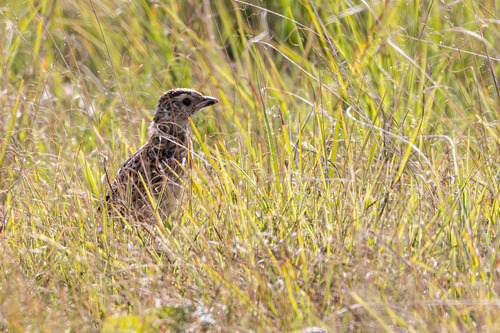 rudd's lark
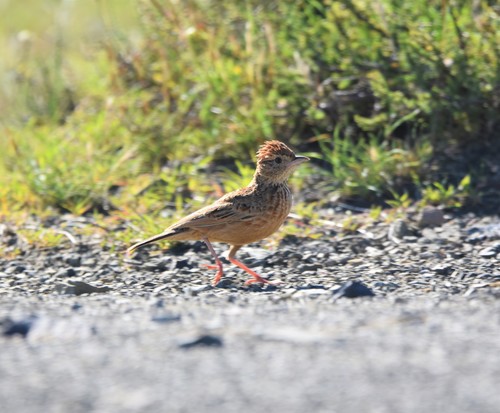 eastern clapper lark
Em resumo
A melhor marca de campo para separar o rudd's lark do eastern clapper lark é o voo de exibição distinto deste último, que apresenta um forte bater de asas e uma descida em paraquedas—comportamento que o rudd's lark não exibe. Em plumagem, o eastern clapper lark se destaca com partes inferiores ruivas ricas e uma parte superior marrom (às vezes mais cinza), enquanto o rudd's lark é mais uniformemente marrom e adaptado a pastagens de alta altitude. Estruturalmente, o eastern clapper lark tem um bico forte e um corpo ligeiramente mais longo. O habitat também é uma pista forte: o rudd's lark é restrito a pastagens de alta altitude na África do Sul, enquanto o eastern clapper lark prefere áreas secas e abertas e é mais amplamente distribuído no sul da África.
Dicas de identificação
- Voo de exibição: O eastern clapper lark realiza uma exibição dramática com rápido bater de asas e uma descida em paraquedas com pernas arrastadas—se visto, isso é diagnóstico e elimina o rudd's lark (todas as idades/estações).
- Cor das partes inferiores: O eastern clapper lark apresenta partes inferiores ruivas ricas, especialmente em boa luz; o rudd's lark é mais uniformemente marrom abaixo (adultos e imaturos).
- Tom das partes superiores: O eastern clapper lark tem partes superiores marrons, às vezes mais cinzas no norte; o rudd's lark é mais consistentemente marrom e menos contrastante no geral.
- Estrutura do bico: O eastern clapper lark tem um bico forte e proeminente, que pode ser uma pista estrutural útil se visto bem; o bico do rudd's lark é menos robusto.
- Cor da coroa: O eastern clapper lark tem uma coroa marrom; isso é menos distintivo no rudd's lark, que é mais uniformemente colorido.
- Habitat: O rudd's lark é restrito a pastagens de alta altitude na África do Sul—se você estiver neste habitat, considere primeiro o rudd's. O eastern clapper lark prefere áreas secas e abertas e é mais amplamente distribuído.
- Comportamento no solo: Ambas as espécies se alimentam no solo, mas o eastern clapper lark é mais propenso a ser visto se escondendo e solitário, especialmente fora do período de exibição.
- Vocalização: Se você ouvir um chamado ascendente 'pooooeeeee', especialmente durante um voo de exibição, é o eastern clapper lark. As vocalizações do rudd's lark não são descritas aqui.
- Estilo de voo: Fora da exibição, o estilo de voo pode ser semelhante, mas a ausência de bater de asas e descida em paraquedas deve fazer você ter cautela ao afirmar que é o eastern clapper lark.
- Abundância local: O eastern clapper lark é mais amplamente distribuído e pode ser mais comum em habitats secos adequados; o rudd's lark é local e raro, então o contexto importa.
- Armadilhas de plumagem: Em luz fraca ou à distância, as partes inferiores ruivas do eastern clapper lark podem ser difíceis de ver—procure o bico forte e o comportamento de exibição.
- Idade/estação: Nenhuma diferença específica de padrão de asa juvenil ou imaturo é notada, então confie no tom geral, estrutura e especialmente comportamento e habitat para aves jovens.
- Tamanho do grupo: Ambas as espécies geralmente não são gregárias, então formar bandos não é um separador útil.
- Diferenças sexuais: Nenhum dimorfismo sexual é descrito para qualquer uma das espécies nas notas.
- Quando em dúvida: Se você não consegue ver bem as partes inferiores e não há exibição, use habitat e estrutura do bico como suas principais pistas.
Tamanho
O eastern clapper lark tem cerca de 15 cm de comprimento e é descrito como um pequeno passeriforme. Não há dados diretos de tamanho para o rudd's lark nas notas fornecidas, mas ambos são pequenos alvéolos e provavelmente semelhantes em tamanho. O bico forte do eastern clapper lark pode fazê-lo parecer ligeiramente mais robusto na cabeça, mas o tamanho sozinho não é um separador confiável em campo.
Plumagem
O eastern clapper lark é notável por suas partes inferiores ruivas ricas e coroa marrom, com partes superiores marrons que podem parecer mais cinzas na parte norte de sua distribuição. Sua plumagem é geralmente mais quente e contrastante do que a do rudd's lark. O rudd's lark, por outro lado, é mais uniformemente marrom e carece dos fortes tons ruivos abaixo. Nenhuma diferença específica de padrão de asa ou parte superior é descrita para qualquer uma das espécies nas notas, então aves juvenis e imaturas provavelmente serão separadas melhor pelo tom geral e contexto de habitat em vez de padrão detalhado de asa. O bico forte do eastern clapper lark também é uma pista estrutural útil.
Comportamento
O eastern clapper lark é famoso por seu voo de exibição: ele sobe com um rápido bater de asas (geralmente produzindo um som de bater), depois desce em paraquedas com pernas arrastadas. Esse comportamento é diagnóstico e não é mostrado pelo rudd's lark. Quando não está exibindo, o eastern clapper lark é discreto e solitário, alimentando-se no solo. O rudd's lark também é um habitante do solo, mas está associado a pastagens de alta altitude e não realiza exibições de bater de asas.
Habitat
O rudd's lark é endêmico das pastagens de alta altitude da África do Sul e não é encontrado em habitats mais secos e abertos. O eastern clapper lark, em contraste, prefere áreas secas e abertas e é mais amplamente distribuído por toda a África do Sul. Se a ave for vista em uma pastagem de alta altitude, o rudd's lark é mais provável; em áreas secas e abertas, especialmente em elevações mais baixas, o eastern clapper lark é a melhor aposta.
Voz
O eastern clapper lark tem um chamado ascendente distinto descrito como 'pooooeeeee', frequentemente emitido durante seu voo de exibição. Nenhuma informação de vocalização é fornecida para o rudd's lark nas notas, então a voz é apenas um separador se o chamado de exibição for ouvido.