

Rock Partridge vs Little Grebe
Alectoris graeca versus Tachybaptus ruficollis
Play a quiz with Rock Partridge and Little Grebe
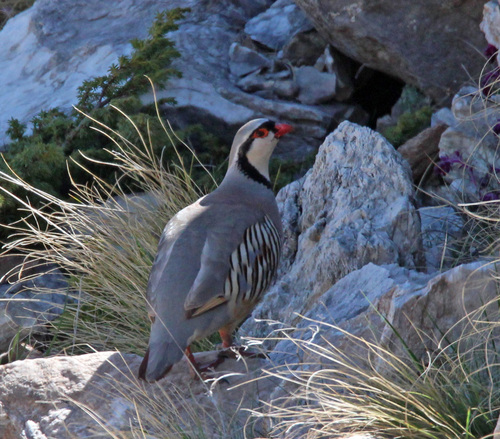 Rock Partridge
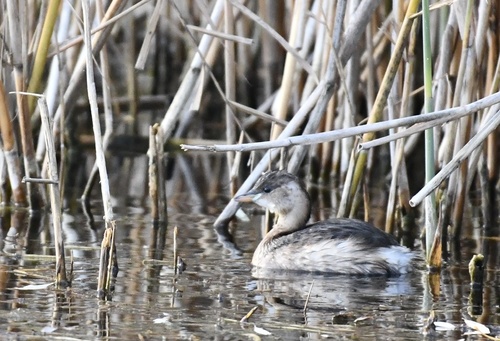 Little Grebe
In short
The most reliable way to separate Rock Partridge from Little Grebe is by overall structure and habitat: Rock Partridge is a heavy, round, terrestrial gamebird with a short bill and red legs, while Little Grebe is a small, aquatic bird with a pointed bill and sits low in the water. Juvenile Little Grebes show black-and-white streaks on the face and neck, which are never present in Rock Partridge of any age. In flight, Rock Partridge has rounded wings and prefers to run rather than fly, whereas Little Grebe is rarely seen flying and is almost always on water. Plumage, bill shape, and leg color are all helpful, but context and behavior are often the quickest clues.
Identification tips
- Juvenile face pattern: Juvenile Little Grebe has black-and-white streaks on the cheeks and neck, and a yellow bill with a black tip—never seen in Rock Partridge of any age.
- Bill shape: Rock Partridge has a short, stout bill suited to seeds and vegetation; Little Grebe has a pointed, slender bill adapted for catching aquatic prey.
- Leg color: Rock Partridge has red legs, visible when walking or running; Little Grebe's legs are not usually visible, but are not red.
- Gorget and face: Rock Partridge has a sharply defined black gorget on a white face; Little Grebe never shows a gorget or white face.
- Flank pattern: Rock Partridge shows rufous streaks on the flanks; Little Grebe's flanks are plain, with rufous only in breeding plumage and never streaked.
- Neck and cheek color: Breeding Little Grebe has rich rufous on the neck and cheeks, but this is not sharply defined like the partridge's gorget; in non-breeding plumage, the grebe is buff and plain.
- Body shape and stance: Rock Partridge is rotund and upright, often seen standing or running on land; Little Grebe is compact, sits low in the water, and rarely stands upright.
- Flight behavior: Rock Partridge prefers to run but will fly short distances on rounded wings if flushed; Little Grebe is rarely seen in flight, and if so, is usually flying low over water.
- Habitat context: Birds seen on water are almost certainly Little Grebes; those on rocky ground or hillsides are Rock Partridges.
- Vocalizations: Listen for the partridge's loud, repetitive 'chakera' call versus the grebe's trilled, whinnying 'weet-weet-weet'.
- Rear end shape: In winter, Little Grebe shows a 'powder puff' rear end on water, a look never matched by the partridge.
- Size impression: Rock Partridge is much larger and heavier than Little Grebe; even at a distance, the partridge looks bulkier.
- Leg visibility: If you see long, red legs, it's a partridge; grebe legs are short and set far back, rarely visible.
- Foraging behavior: Rock Partridge pecks at the ground for seeds; Little Grebe dives for aquatic prey.
- Seasonal pitfalls: In non-breeding season, Little Grebe loses its rufous neck and becomes plainer, but still lacks the partridge's facial pattern and terrestrial habits.
Size
Rock Partridge is much larger and heavier (body mass around 632.5 g) compared to the much smaller Little Grebe (no direct mass given, but all grebes are much lighter than partridges). The partridge is robust and rotund, while the grebe is compact and sits low in the water, appearing almost like a floating 'powder puff' in winter. Even at a distance, the bulk and stance of Rock Partridge are very different from the dainty, buoyant look of Little Grebe.
Plumage
Juvenile Little Grebes are distinctive with black-and-white streaks on the cheeks and sides of the neck, and a yellow bill with a black tip; these features fade as they age, with the bill turning black in adults. Rock Partridge juveniles and adults never show such facial streaking or yellow bills. Adult Rock Partridge has a light brown back, grey breast, buff belly, and a sharply defined black gorget on a white face, with rufous-streaked flanks and red legs. Little Grebe adults in breeding plumage are dark above with rich rufous on the neck, cheeks, and flanks, and a bright yellow gape; in non-breeding and juvenile plumage, they are buff with a darker back and cap. The grebe never shows the partridge's black gorget or streaked flanks. In flight, Rock Partridge shows rounded wings and is reluctant to fly, while Little Grebe's upperwing pattern is not described but is rarely seen in flight.
Behaviour
Rock Partridge is a terrestrial bird, preferring to run when disturbed and only flying short distances if necessary. It is almost always seen on the ground, often in rocky or scrubby terrain. Little Grebe, by contrast, is an aquatic species, spending nearly all its time on water, diving frequently and rarely coming to land except at the nest. Its behavior is more about quick dives and swimming than running or walking.
Habitat
Rock Partridge is native to southern Europe and is found in rocky hillsides, scrub, and open country, always on land. Little Grebe is a water bird, found on lakes, ponds, and slow rivers. If the bird is on open water, it is almost certainly a Little Grebe; if on dry land or rocky slopes, it is a Rock Partridge.
Voice
Rock Partridge gives a noisy, repeated 'ga-ga-ga-ga-chakera-chakera-chakera' call, which is loud and distinctive. Little Grebe's breeding call is a trilled, repeated 'weet-weet-weet' or 'wee-wee-wee', reminiscent of a horse whinnying. The calls are very different and diagnostic if heard well.