

Rock Dove vs Common Woodpigeon
Columba livia versus Columba palumbus
Play a quiz with Rock Dove and Common Woodpigeon
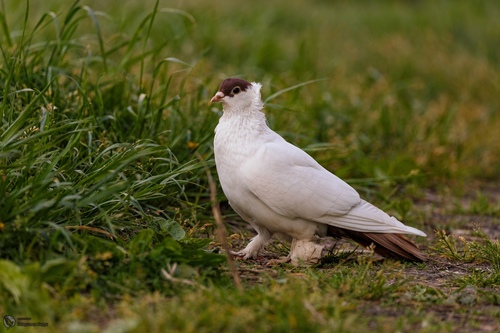 Rock Dove
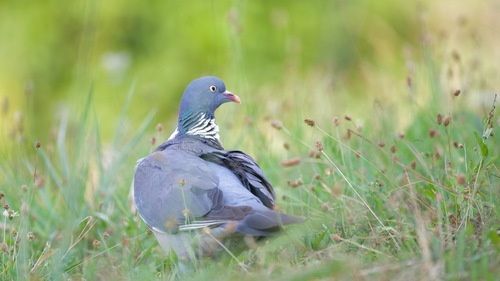 Common Woodpigeon
In short
The most reliable field mark to separate Rock Dove from Common Woodpigeon is the presence of a bold white neck patch and white wing bars on the Woodpigeon, which are never shown by Rock Dove. In flight, Woodpigeon also flashes a broad white wing band and has a pinkish breast, while Rock Dove shows two narrow black wing bars and a white rump. Juvenile Woodpigeons lack the neck patch but are still larger and paler than Rock Doves, with a more uniform wing. Structurally, Woodpigeon is much bulkier and longer-tailed, with a pale yellow eye, compared to the Rock Dove's red-brown iris. Both species are widespread and can occur in mixed flocks, but careful attention to these field marks will prevent confusion.
Identification tips
- White neck patch (adult Woodpigeon only): Look for a bold white patch on the side of the neck; Rock Dove never shows this. Juvenile Woodpigeon lacks it, so check other marks in young birds.
- White wing bar (Woodpigeon): In flight and at rest, Woodpigeon shows a broad white wing band across the upperwing; Rock Dove shows two narrow black wing bars instead.
- Pinkish breast (Woodpigeon): Adult Woodpigeon has a pinkish or mauve breast, contrasting with the more uniform grey of Rock Dove.
- White rump (Rock Dove): Rock Dove shows a conspicuous white rump in flight, especially from above; Woodpigeon lacks this.
- Wing pattern in juveniles: Juvenile Woodpigeon has a plain grey wing without the Rock Dove's black bars; this is a key check in summer/autumn when young birds are common.
- Tail band: Both species have a dark tail band, but Rock Dove's is sharper and the tail is shorter; Woodpigeon has a longer, more graduated tail.
- Eye colour: Rock Dove has a red-brown iris; Woodpigeon has a pale yellow eye. This is visible at close range or in good light.
- Bill and cere: Rock Dove's bill is grey-black with a small, pale cere; Woodpigeon has a slightly longer, pale-tipped bill and lacks the prominent cere of feral pigeons.
- Iridescence: Rock Dove shows greenish to purplish iridescence on the neck (less in females and juveniles); Woodpigeon has a green and white neck patch (adults) but less overall gloss.
- Size and structure: Woodpigeon is much larger, bulkier, and longer-tailed; Rock Dove is more compact and agile.
- Flight style: Woodpigeon flies with slower, deeper wingbeats and glides with wings held stiff; Rock Dove is quicker and more maneuverable, often gliding with wings slightly raised.
- Voice: Woodpigeon's call is a loud, repetitive five-note phrase; Rock Dove's is a softer, wavering coo. Listen for these in wooded areas (Woodpigeon) or urban settings (Rock Dove).
- Habitat context: In rocky coastal areas, especially in the far north and west of Scotland, Rock Dove is more likely. In farmland, woodlands, and large parks, expect Woodpigeon.
- Flock composition: Mixed flocks can occur, but Woodpigeon tends to dominate in rural and woodland settings, while Rock Dove (especially feral) is more urban.
- Seasonal changes: In summer, Woodpigeon's head may appear darker; juvenile Woodpigeons lack neck patches, so rely on size, wing pattern, and structure.
Size
Common Woodpigeon is distinctly larger and heavier than Rock Dove. Woodpigeon measures 38–44.5 cm in length with a wingspan of 68–80 cm and a mass of 300–615 g, while Rock Dove is 30–35 cm long, wingspan 62–68 cm, and mass around 280.5 g (wild type). Woodpigeon appears bulkier, with a longer tail and broader wings, and stands taller when perched. This size difference is obvious in direct comparison or mixed flocks.
Plumage
- Juveniles: Juvenile Woodpigeons lack the white neck patch but are still larger, with a pale, uniform grey plumage and a greyer bill. Their wings lack the Rock Dove's two sharp black bars, instead showing a more even grey. Juvenile Rock Doves are similar to adults, with two black wing bars and a white rump, but are duller and less glossy, especially females.
- Adults: Adult Woodpigeon is easily identified by its white neck patch (absent in Rock Dove) and broad white wing bar visible in flight and at rest. The breast is pinkish, and the head is generally darker in summer. Rock Dove adults have a bluish-grey head, neck, and chest with greenish/purplish iridescence, two black wing bars, a white rump, and a black tail band. The iris is red-brown in Rock Dove, pale yellow in Woodpigeon. The bill of Rock Dove is grey-black with a small off-white cere, while Woodpigeon has a slightly longer, pale-tipped bill.
Behaviour
Both species are gregarious, especially outside the breeding season, but Woodpigeon often forms even larger flocks. Both take off with a loud clatter, but Woodpigeon's flight is heavier and more direct, with occasional sharp flicks and a distinctive gliding display with wings held stiff. Rock Dove is a strong flier but glides more frequently, and its wingbeats are generally quicker and more agile. Woodpigeon displays include walking along branches with wings down and tail outstretched, while Rock Dove displays involve bowing, tail fanning, and wing clapping.
Habitat
Rock Dove is most often found in urban areas, cliffs, and rocky habitats, especially in its wild form, but feral birds are ubiquitous in cities. Woodpigeon prefers woodlands, parks, gardens, and farmland, often nesting in trees and foraging in open fields. While both can be seen in towns and gardens, Woodpigeon is more likely in wooded or agricultural settings, and Rock Dove (especially wild type) is tied to rocky coasts and cliffs.
Voice
Rock Dove gives a soft, slightly wavering coo ('crruoo-u'), with variations for alarm and nest calls. Woodpigeon has a distinctive, repetitive five-note call, often described as 'coo-COO-coo, coo-coo', which is louder and more far-carrying than the Rock Dove's. Both species take off noisily, but Woodpigeon's wing claps are especially sharp during display flights.