

Motmot

Ringed Kingfisher vs Belted Kingfisher

Megaceryle torquata versus Megaceryle alcyon

Play a quiz with Ringed Kingfisher and Belted Kingfisher
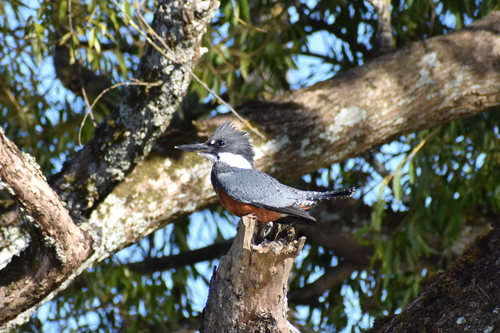
Ringed Kingfisher (Megaceryle torquata) Ringed Kingfisher

Belted Kingfisher (Megaceryle alcyon) Belted Kingfisher

Media

Loading…

In short

The most reliable field mark to separate Ringed Kingfisher from Belted Kingfisher is overall size and underpart coloration: Ringed is much larger and bulkier, with males showing rich rusty-brown underparts, while Belted is noticeably smaller and never has fully rufous underparts in males. Females of both species have some rufous, but the pattern and extent differ. In flight or perched, Ringed's massive bill and bulk stand out, while Belted is more compact. Juvenile Belted Kingfishers can show rufous on the belly, which can confuse, but the extent and pattern are not as extensive as in Ringed males. Voice and flight style also help, with Ringed giving deeper, louder rattles.

Identification tips

  1. Size is the first check: Ringed Kingfisher is nearly twice the mass of Belted and appears much bulkier, especially in direct comparison or when perched.
  2. Bill structure: Ringed has a massive, straight bill longer than its head, with a slightly yellowish lower mandible; Belted's bill is heavy but shorter and all dark with a gray base.
  3. Adult male underparts: Ringed male has extensive rusty-brown underparts from breast to vent; Belted male always has clean white underparts with a single blue breast band—never extensive rufous.
  4. Adult female underparts: Belted female shows a blue breast band and a rufous band across the upper belly and flanks; Ringed female lacks the rufous band, instead showing a bluish-gray breast band above a whitish band.
  5. Juvenile confusion: Juvenile Belted Kingfishers of both sexes show a rufous band on the upper belly, but it's always a band, never the full underparts; juvenile male Belted's rufous is mottled, and juvenile female's is thinner than adult female's.
  6. Crest and collar: Both have a shaggy crest and white collar, but Ringed's is more obvious due to its larger size.
  7. Upperwing pattern: Belted shows small white spots on the wing coverts and flight feathers; Ringed is more uniform blue-gray above, with only subtle spotting in some subspecies.
  8. Tail shape: Both have squared tails, but Ringed's is longer and more robust.
  9. Flight style: Ringed flies with slow, powerful wingbeats and appears heavy; Belted is quicker, often hovering before diving.
  10. Voice: Ringed's call is a deep, booming rattle; Belted's is a sharper, higher-pitched rattle.
  11. Perching behavior: Ringed is less agile, often shuffling awkwardly between perches; Belted moves more nimbly.
  12. Habitat context: In overlap zones, Ringed prefers the most open, exposed perches along large rivers or lakes; Belted is more versatile in habitat choice.
  13. Iris color: Both have dark-brown irises—this is not a useful separator.
  14. Feet and claws: Both have syndactyl feet, but this is not visible in the field.
  15. Sexual dimorphism: Both species show sex-based plumage differences, but the pattern and extent of rufous on the underparts is the key separator—Ringed male is extensively rusty, Belted female only has a rufous band.

Size

Ringed Kingfisher is dramatically larger and heavier than Belted Kingfisher. Ringed averages 305–341 g (nearly double the Belted's 147 g), with a much longer bill (males 75–94 mm vs. Belted's proportionally shorter bill) and longer wings and tail. Even at a distance, Ringed appears bulkier, with a deeper chest and heavier build. Belted is stocky but clearly smaller, with a more compact impression. If both are seen together, the size difference is striking.

Plumage

Juvenile Belted Kingfishers of both sexes show a rufous band on the upper belly, but this is always limited to a band and never covers the entire underparts as in adult male Ringed Kingfisher. Juvenile male Belted shows a mottled rufous band, while juvenile female Belted has a thinner rufous band than adult females. Adult male Ringed Kingfisher has rusty-brown underparts from breast to vent, with a white throat and undertail coverts; adult female Ringed has a bluish-gray breast band above a whitish band, lacking the extensive rufous. Adult Belted Kingfisher males have clean white underparts with a single blue breast band; females have a blue breast band and a rufous band across the upper belly and flanks. Both species have a shaggy crest and a white collar, but Ringed's is more prominent due to its size. In flight, both show blue-gray upperparts, but Ringed is darker and more uniform, while Belted has small white spots on the wing coverts and flight feathers. Subspecific variation in Ringed can add spotting or dusky underwing coverts, but these are subtle and rarely diagnostic in the field.

Behaviour

Ringed Kingfisher is less agile on land, shuffling awkwardly between perches, and tends to fly with slow, powerful wingbeats, often covering long distances over open water or land. Belted Kingfisher is more active and agile, frequently hovering over water before diving and moving more nimbly between perches. Both species are conspicuous and noisy, but Ringed's flight is heavier and more deliberate, matching its size.

Habitat

Both species are found along rivers, lakes, and other water bodies, but their ranges only overlap in southernmost Texas and parts of Central America. Ringed Kingfisher prefers larger, open waterways and is more likely to be seen along broad rivers or open lakeshores. Belted Kingfisher is widespread across North America and adapts to smaller streams, ponds, and even coastal habitats. In overlap zones, Ringed often selects the most open, exposed perches.

Voice

Ringed Kingfisher gives a loud, deep, rattling call, lower-pitched and more resonant than Belted Kingfisher's. Belted Kingfisher's rattle is higher-pitched and sharper. Both species are noisy, but Ringed's voice carries farther and is more booming. Juvenile Ringed can give harsh 'klek' or 'kek' calls, but these are rarely heard unless the bird is disturbed.

Submit a better description

Use the same sections as the comparison. Your text is published immediately.

The most reliable field mark to separate Ringed Kingfisher from Belted Kingfisher is overall size and underpart coloration: Ringed is much larger and bulkier, with males showing rich rusty-brown underparts, while Belted is noticeably smaller and never has fully rufous underparts in males. Females of both species have some rufous, but the pattern and extent differ. In flight or perched, Ringed's massive bill and bulk stand out, while Belted is more compact. Juvenile Belted Kingfishers can show rufous on the belly, which can confuse, but the extent and pattern are not as extensive as in Ringed males. Voice and flight style also help, with Ringed giving deeper, louder rattles.

  1. Size is the first check: Ringed Kingfisher is nearly twice the mass of Belted and appears much bulkier, especially in direct comparison or when perched.
  2. Bill structure: Ringed has a massive, straight bill longer than its head, with a slightly yellowish lower mandible; Belted's bill is heavy but shorter and all dark with a gray base.
  3. Adult male underparts: Ringed male has extensive rusty-brown underparts from breast to vent; Belted male always has clean white underparts with a single blue breast band—never extensive rufous.
  4. Adult female underparts: Belted female shows a blue breast band and a rufous band across the upper belly and flanks; Ringed female lacks the rufous band, instead showing a bluish-gray breast band above a whitish band.
  5. Juvenile confusion: Juvenile Belted Kingfishers of both sexes show a rufous band on the upper belly, but it's always a band, never the full underparts; juvenile male Belted's rufous is mottled, and juvenile female's is thinner than adult female's.
  6. Crest and collar: Both have a shaggy crest and white collar, but Ringed's is more obvious due to its larger size.
  7. Upperwing pattern: Belted shows small white spots on the wing coverts and flight feathers; Ringed is more uniform blue-gray above, with only subtle spotting in some subspecies.
  8. Tail shape: Both have squared tails, but Ringed's is longer and more robust.
  9. Flight style: Ringed flies with slow, powerful wingbeats and appears heavy; Belted is quicker, often hovering before diving.
  10. Voice: Ringed's call is a deep, booming rattle; Belted's is a sharper, higher-pitched rattle.
  11. Perching behavior: Ringed is less agile, often shuffling awkwardly between perches; Belted moves more nimbly.
  12. Habitat context: In overlap zones, Ringed prefers the most open, exposed perches along large rivers or lakes; Belted is more versatile in habitat choice.
  13. Iris color: Both have dark-brown irises—this is not a useful separator.
  14. Feet and claws: Both have syndactyl feet, but this is not visible in the field.
  15. Sexual dimorphism: Both species show sex-based plumage differences, but the pattern and extent of rufous on the underparts is the key separator—Ringed male is extensively rusty, Belted female only has a rufous band.

Ringed Kingfisher is dramatically larger and heavier than Belted Kingfisher. Ringed averages 305–341 g (nearly double the Belted's 147 g), with a much longer bill (males 75–94 mm vs. Belted's proportionally shorter bill) and longer wings and tail. Even at a distance, Ringed appears bulkier, with a deeper chest and heavier build. Belted is stocky but clearly smaller, with a more compact impression. If both are seen together, the size difference is striking.

Juvenile Belted Kingfishers of both sexes show a rufous band on the upper belly, but this is always limited to a band and never covers the entire underparts as in adult male Ringed Kingfisher. Juvenile male Belted shows a mottled rufous band, while juvenile female Belted has a thinner rufous band than adult females. Adult male Ringed Kingfisher has rusty-brown underparts from breast to vent, with a white throat and undertail coverts; adult female Ringed has a bluish-gray breast band above a whitish band, lacking the extensive rufous. Adult Belted Kingfisher males have clean white underparts with a single blue breast band; females have a blue breast band and a rufous band across the upper belly and flanks. Both species have a shaggy crest and a white collar, but Ringed's is more prominent due to its size. In flight, both show blue-gray upperparts, but Ringed is darker and more uniform, while Belted has small white spots on the wing coverts and flight feathers. Subspecific variation in Ringed can add spotting or dusky underwing coverts, but these are subtle and rarely diagnostic in the field.

Ringed Kingfisher is less agile on land, shuffling awkwardly between perches, and tends to fly with slow, powerful wingbeats, often covering long distances over open water or land. Belted Kingfisher is more active and agile, frequently hovering over water before diving and moving more nimbly between perches. Both species are conspicuous and noisy, but Ringed's flight is heavier and more deliberate, matching its size.

Both species are found along rivers, lakes, and other water bodies, but their ranges only overlap in southernmost Texas and parts of Central America. Ringed Kingfisher prefers larger, open waterways and is more likely to be seen along broad rivers or open lakeshores. Belted Kingfisher is widespread across North America and adapts to smaller streams, ponds, and even coastal habitats. In overlap zones, Ringed often selects the most open, exposed perches.

Ringed Kingfisher gives a loud, deep, rattling call, lower-pitched and more resonant than Belted Kingfisher's. Belted Kingfisher's rattle is higher-pitched and sharper. Both species are noisy, but Ringed's voice carries farther and is more booming. Juvenile Ringed can give harsh 'klek' or 'kek' calls, but these are rarely heard unless the bird is disturbed.

Discard your changes?

You have unsaved edits. If you leave now, those changes will be lost.

Ringed Kingfisher · Belted Kingfisher · My Tricky Birds