

Motmot

クビワヤマセミ 対 アメリカヤマセミ

Megaceryle torquata 対 Megaceryle alcyon

クビワヤマセミとアメリカヤマセミのクイズ
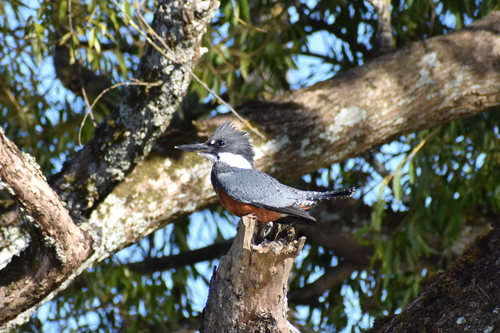
クビワヤマセミ (Megaceryle torquata) クビワヤマセミ
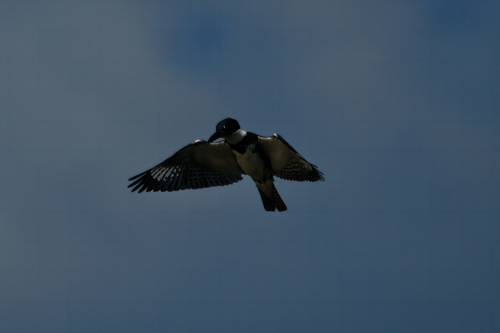
アメリカヤマセミ (Megaceryle alcyon) アメリカヤマセミ

メディア

読み込み中…

要点

クビワヤマセミとアメリカヤマセミを区別する最も信頼できるフィールドマークは、全体のサイズと腹部の色合いです:クビワははるかに大きくてずっしりとしており、オスは豊かな錆色の腹部を示しますが、アメリカは明らかに小さく、オスには完全に赤褐色の腹部はありません。両種のメスにはいくらかの赤褐色がありますが、パターンと範囲は異なります。飛んでいるときや止まっているとき、クビワの巨大なクチバシと体格が目立ちますが、アメリカはよりコンパクトです。幼鳥のアメリカヤマセミは腹部に赤褐色を示すことがありますが、範囲とパターンはクビワのオスほど広範ではありません。声と飛行スタイルも役立ち、クビワはより深く、より大きな音を出します。

識別のコツ

  1. Size is the first check: クビワヤマセミはアメリカヤマセミのほぼ2倍の質量を持ち、特に直接比較や止まっているときに、はるかにずっしりと見えます。
  2. Bill structure: クビワは頭よりも長い巨大で真っ直ぐなクチバシを持ち、下顎はやや黄色味があります;アメリカのクチバシは重いですが短く、全体が暗く灰色の基部を持っています。
  3. Adult male underparts: クビワのオスは胸から肛門まで広範な錆色の腹部を持っています;アメリカのオスは常に清潔な白い腹部を持ち、単一の青い胸帯があります—決して広範な赤褐色はありません。
  4. Adult female underparts: アメリカのメスは青い胸帯と腹部の上部と側面に赤褐色の帯を示します;クビワのメスは赤褐色の帯がなく、代わりに白っぽい帯の上に青灰色の胸帯を示します。
  5. Juvenile confusion: 両性の幼鳥アメリカヤマセミは腹部の上部に赤褐色の帯を示しますが、これは常に帯に限られ、クビワのオスのように全体の腹部を覆うことはありません;幼鳥のオスのアメリカの赤褐色はまだらで、幼鳥のメスのものは成鳥のメスよりも薄いです。
  6. Crest and collar: 両方とも毛羽立った冠と白い襟を持っていますが、クビワの方がその大きさのためにより目立ちます。
  7. Upperwing pattern: アメリカは翼の覆羽と飛行羽に小さな白い斑点を示します;クビワは上面がより均一な青灰色で、いくつかの亜種ではわずかな斑点があります。
  8. Tail shape: 両方とも四角い尾を持っていますが、クビワの方が長くて頑丈です。
  9. Flight style: クビワは遅くて力強い羽ばたきで飛び、重そうに見えます;アメリカはより速く、しばしばダイビングの前にホバリングします。
  10. Voice: クビワの鳴き声は深く、轟音のような音です;アメリカの声はより鋭く、高い音です。
  11. Perching behavior: クビワはあまり機敏ではなく、止まり木の間を不器用に移動します;アメリカはより敏捷に動きます。
  12. Habitat context: 重複ゾーンでは、クビワは広い川や湖の沿岸に最も開けた、露出した止まり木を好みます;アメリカは生息地の選択においてより多様です。
  13. Iris color: 両方とも暗褐色の虹彩を持っています—これは有用な区別ではありません。
  14. Feet and claws: 両方とも合指足を持っていますが、これはフィールドでは見えません。
  15. Sexual dimorphism: 両種は性に基づく羽毛の違いを示しますが、腹部の赤褐色のパターンと範囲が主要な区別点です—クビワのオスは広範に錆色で、アメリカのメスは赤褐色の帯しか持っていません。

大きさ

クビワヤマセミはアメリカヤマセミよりも劇的に大きく、重いです。クビワは305–341 g(アメリカの147 gのほぼ2倍)で、はるかに長いクチバシ(オスは75–94 mm対アメリカの相対的に短いクチバシ)と長い翼と尾を持っています。距離があっても、クビワはずっしりとして見え、胸が深く、体格が重いです。アメリカはずんぐりしていますが、明らかに小さく、よりコンパクトな印象を与えます。両方が一緒に見られると、サイズの違いは際立ちます。

羽色

両性の幼鳥アメリカヤマセミは腹部の上部に赤褐色の帯を示しますが、これは常に帯に限られ、成鳥のオスのクビワヤマセミのように全体の腹部を覆うことはありません。幼鳥のオスのアメリカはまだらの赤褐色の帯を示し、幼鳥のメスは成鳥のメスよりも薄い赤褐色の帯を持っています。成鳥のオスのクビワヤマセミは胸から肛門まで錆色の腹部を持ち、白い喉と尾の覆羽があります;成鳥のメスのクビワは白っぽい帯の上に青灰色の胸帯を持ち、広範な赤褐色がありません。成鳥のアメリカヤマセミのオスは清潔な白い腹部と単一の青い胸帯を持ち、メスは青い胸帯と腹部の上部と側面に赤褐色の帯を持っています。両種は毛羽立った冠と白い襟を持っていますが、クビワの方がそのサイズのためにより目立ちます。飛行中、両方とも青灰色の上面を示しますが、クビワはより暗く、より均一で、アメリカは翼の覆羽と飛行羽に小さな白い斑点を持っています。クビワの亜種の変異は斑点や暗い下羽の覆羽を加えることがありますが、これらは微妙で、フィールドでは診断的であることは稀です。

行動

クビワヤマセミは陸上ではあまり機敏ではなく、止まり木の間を不器用に移動し、遅くて力強い羽ばたきで飛ぶ傾向があり、しばしば開けた水面や陸を長距離飛びます。アメリカヤマセミはより活発で機敏であり、水の上でホバリングしてからダイビングし、止まり木の間をより敏捷に移動します。両種は目立ち、騒がしいですが、クビワの飛行はより重く、より意図的で、そのサイズに見合っています。

生息環境

両種は川、湖、その他の水域に見られますが、彼らの分布はテキサス南部と中央アメリカの一部でのみ重なります。クビワヤマセミはより大きく開けた水路を好み、広い川や開けた湖岸で見られる可能性が高いです。アメリカヤマセミは北アメリカ全体に広がっており、小さな流れ、池、さらには沿岸生息地に適応します。重複ゾーンでは、クビワはしばしば最も開けた、露出した止まり木を選びます。

声

クビワヤマセミは大きく、深い、ガラガラとした鳴き声を出し、アメリカヤマセミのものよりも低音で共鳴します。アメリカヤマセミのガラガラは高音で鋭いです。両種は騒がしいですが、クビワの声はより遠くまで届き、より轟音です。幼鳥のクビワは厳しい「クレク」や「ケク」という鳴き声を出すことがありますが、これらは鳥が驚かされない限り、めったに聞かれません。

より良い説明を送る

比較と同じ項目を使ってください。文章はすぐに公開されます。

The most reliable field mark to separate Ringed Kingfisher from Belted Kingfisher is overall size and underpart coloration: Ringed is much larger and bulkier, with males showing rich rusty-brown underparts, while Belted is noticeably smaller and never has fully rufous underparts in males. Females of both species have some rufous, but the pattern and extent differ. In flight or perched, Ringed's massive bill and bulk stand out, while Belted is more compact. Juvenile Belted Kingfishers can show rufous on the belly, which can confuse, but the extent and pattern are not as extensive as in Ringed males. Voice and flight style also help, with Ringed giving deeper, louder rattles.

  1. Size is the first check: Ringed Kingfisher is nearly twice the mass of Belted and appears much bulkier, especially in direct comparison or when perched.
  2. Bill structure: Ringed has a massive, straight bill longer than its head, with a slightly yellowish lower mandible; Belted's bill is heavy but shorter and all dark with a gray base.
  3. Adult male underparts: Ringed male has extensive rusty-brown underparts from breast to vent; Belted male always has clean white underparts with a single blue breast band—never extensive rufous.
  4. Adult female underparts: Belted female shows a blue breast band and a rufous band across the upper belly and flanks; Ringed female lacks the rufous band, instead showing a bluish-gray breast band above a whitish band.
  5. Juvenile confusion: Juvenile Belted Kingfishers of both sexes show a rufous band on the upper belly, but it's always a band, never the full underparts; juvenile male Belted's rufous is mottled, and juvenile female's is thinner than adult female's.
  6. Crest and collar: Both have a shaggy crest and white collar, but Ringed's is more obvious due to its larger size.
  7. Upperwing pattern: Belted shows small white spots on the wing coverts and flight feathers; Ringed is more uniform blue-gray above, with only subtle spotting in some subspecies.
  8. Tail shape: Both have squared tails, but Ringed's is longer and more robust.
  9. Flight style: Ringed flies with slow, powerful wingbeats and appears heavy; Belted is quicker, often hovering before diving.
  10. Voice: Ringed's call is a deep, booming rattle; Belted's is a sharper, higher-pitched rattle.
  11. Perching behavior: Ringed is less agile, often shuffling awkwardly between perches; Belted moves more nimbly.
  12. Habitat context: In overlap zones, Ringed prefers the most open, exposed perches along large rivers or lakes; Belted is more versatile in habitat choice.
  13. Iris color: Both have dark-brown irises—this is not a useful separator.
  14. Feet and claws: Both have syndactyl feet, but this is not visible in the field.
  15. Sexual dimorphism: Both species show sex-based plumage differences, but the pattern and extent of rufous on the underparts is the key separator—Ringed male is extensively rusty, Belted female only has a rufous band.

Ringed Kingfisher is dramatically larger and heavier than Belted Kingfisher. Ringed averages 305–341 g (nearly double the Belted's 147 g), with a much longer bill (males 75–94 mm vs. Belted's proportionally shorter bill) and longer wings and tail. Even at a distance, Ringed appears bulkier, with a deeper chest and heavier build. Belted is stocky but clearly smaller, with a more compact impression. If both are seen together, the size difference is striking.

Juvenile Belted Kingfishers of both sexes show a rufous band on the upper belly, but this is always limited to a band and never covers the entire underparts as in adult male Ringed Kingfisher. Juvenile male Belted shows a mottled rufous band, while juvenile female Belted has a thinner rufous band than adult females. Adult male Ringed Kingfisher has rusty-brown underparts from breast to vent, with a white throat and undertail coverts; adult female Ringed has a bluish-gray breast band above a whitish band, lacking the extensive rufous. Adult Belted Kingfisher males have clean white underparts with a single blue breast band; females have a blue breast band and a rufous band across the upper belly and flanks. Both species have a shaggy crest and a white collar, but Ringed's is more prominent due to its size. In flight, both show blue-gray upperparts, but Ringed is darker and more uniform, while Belted has small white spots on the wing coverts and flight feathers. Subspecific variation in Ringed can add spotting or dusky underwing coverts, but these are subtle and rarely diagnostic in the field.

Ringed Kingfisher is less agile on land, shuffling awkwardly between perches, and tends to fly with slow, powerful wingbeats, often covering long distances over open water or land. Belted Kingfisher is more active and agile, frequently hovering over water before diving and moving more nimbly between perches. Both species are conspicuous and noisy, but Ringed's flight is heavier and more deliberate, matching its size.

Both species are found along rivers, lakes, and other water bodies, but their ranges only overlap in southernmost Texas and parts of Central America. Ringed Kingfisher prefers larger, open waterways and is more likely to be seen along broad rivers or open lakeshores. Belted Kingfisher is widespread across North America and adapts to smaller streams, ponds, and even coastal habitats. In overlap zones, Ringed often selects the most open, exposed perches.

Ringed Kingfisher gives a loud, deep, rattling call, lower-pitched and more resonant than Belted Kingfisher's. Belted Kingfisher's rattle is higher-pitched and sharper. Both species are noisy, but Ringed's voice carries farther and is more booming. Juvenile Ringed can give harsh 'klek' or 'kek' calls, but these are rarely heard unless the bird is disturbed.

変更を破棄しますか?

保存していない編集があります。今離れると失われます。

クビワヤマセミ · アメリカヤマセミ · 苦手な鳥