

Motmot

Ring-necked Dove vs Emerald-spotted Wood-Dove

Streptopelia capicola versus Turtur chalcospilos

Play a quiz with Ring-necked Dove and Emerald-spotted Wood-Dove
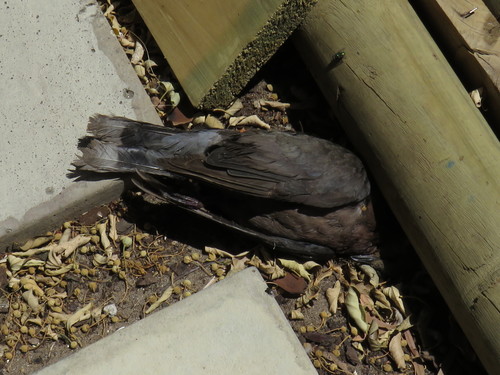
Ring-necked Dove (Streptopelia capicola) Ring-necked Dove
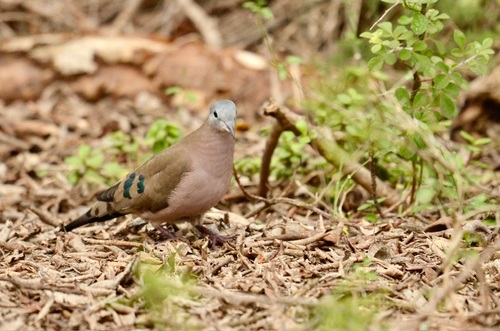
Emerald-spotted Wood-Dove (Turtur chalcospilos) Emerald-spotted Wood-Dove

Media

Loading…

In short

The most reliable field mark to separate Ring-necked Dove from Emerald-spotted Wood-Dove is the presence of bold metallic green spots on the folded wings of the wood-dove, visible both perched and in flight, and entirely absent in the Ring-necked Dove. Immature birds of both species can be duller, but even then, the wood-dove retains some green spotting, while the Ring-necked Dove never shows green. Size is also a strong clue: Ring-necked Dove is much larger and longer-tailed, with a more upright, pigeon-like stance, while Emerald-spotted Wood-Dove is noticeably smaller and more compact. In flight, Ring-necked Dove shows prominent white tips to the tail, while the wood-dove has blackish tail bands and lacks the white tail corners. Vocalizations differ markedly, with the Ring-necked Dove giving a rhythmic three-syllable croon and the wood-dove producing a more complex, multi-part cooing sequence.

Identification tips

  1. Green wing spots (all ages): Only Emerald-spotted Wood-Dove shows metallic green spots on the folded wings, visible even in immatures (though duller). Ring-necked Dove never shows green on the wings.
  2. Tail pattern in flight: Ring-necked Dove has slate-grey tail feathers with conspicuous white tips and a white crissum, especially obvious in flight or when fanned. Emerald-spotted Wood-Dove has blackish tail bands and lacks prominent white corners.
  3. Size and structure: Ring-necked Dove is much larger, longer-tailed, and more upright in posture. Wood-dove is small, plump, and compact, with a shorter tail and rounder body.
  4. Neck collar: Adult Ring-necked Dove shows a clear black half-collar on the hindneck; this is absent or faint in immatures. Emerald-spotted Wood-Dove lacks any collar at all.
  5. Head and crown color: Ring-necked Dove has a grey crown (not pink), while Emerald-spotted Wood-Dove has a bluish-grey crown and nape, fading to pinkish-grey on the throat.
  6. Underparts: Ring-necked Dove is paler below, often with a pinkish or lavender wash, and a white lower belly and crissum. Emerald-spotted Wood-Dove has mauve-pink underparts, becoming whiter on the belly.
  7. Bill color: Both have dark bills, but the wood-dove's bill is blackish with a red base, which may be visible at close range.
  8. Eye color: Not strongly diagnostic here, as both have dark eyes (unlike some other doves in the region).
  9. Juvenile/immature marks: Immature Ring-necked Doves are duller overall, lack a collar, and have buff edges to upperparts and wing coverts. Immature wood-doves have duller green spots and buff fringes, but still show some green.
  10. Flight style: Ring-necked Dove is strong, direct, and often noisy in flight, with loud wing claps and prominent tail pattern. Wood-dove is quieter, with a more fluttery, low flight, and less obvious tail pattern.
  11. Flocking behavior: Large, noisy flocks suggest Ring-necked Dove; solitary or paired birds in woodland are more likely wood-doves.
  12. Habitat context: In open farmland, towns, or savanna, Ring-necked Dove is more likely. In drier woodland or bush, especially away from human habitation, check for wood-dove.
  13. Vocalization: Persistent, rhythmic three-syllable crooning is Ring-necked Dove. A softer, multipart cooing sequence is Emerald-spotted Wood-Dove.
  14. Tail length and shape: Ring-necked Dove has a longer, more wedge-shaped tail; wood-dove's tail is shorter and more squared-off.
  15. Plumage variability: Ring-necked Dove shows more individual variation in overall darkness, but never develops green wing spots. If you see green, it's a wood-dove, regardless of shade.

Size

Ring-necked Dove is substantially larger, weighing on average 153.5 g and measuring 25–26.5 cm in length, compared to the Emerald-spotted Wood-Dove's 56.0 g and 20 cm length. This size difference is obvious in the field: Ring-necked Dove appears long-tailed and robust, while Emerald-spotted Wood-Dove is small, plump, and compact. The difference in mass is nearly threefold, making direct comparison straightforward when both are seen together or near familiar objects.

Plumage

Immature and adult Emerald-spotted Wood-Doves always show at least some green metallic spots on the folded wings, though these are duller and less extensive in juveniles. They also have buff fringes to the feathers when young. In contrast, Ring-necked Dove immatures are duller overall, lack any green on the wings, and show buff edges to the upperparts and wing coverts, with broad greyish-white edging below. Adult Ring-necked Doves are grey-brown above with lavender on the nape, paler below with a pinkish wash, and have a conspicuous black half-collar on the hindneck (missing or faint in immatures). Their tail is slate grey with white tips and a white crissum, especially obvious in flight. Emerald-spotted Wood-Dove adults have a bluish-grey crown and nape, pinkish-grey throat, mauve-pink underparts, and a blackish tail band, with the green wing spots as the standout feature. Both sexes are similar in both species, though female wood-doves may be slightly duller.

Behaviour

Ring-necked Doves are often seen alone or in pairs, but can form large, noisy flocks around water or roosts, and are conspicuous in flight with loud wing claps. They display by steep, flapping ascents and gliding descents with spread wings and tail. Emerald-spotted Wood-Doves are less gregarious, usually solitary or in pairs, but may gather at waterholes. They forage quietly on the ground and are generally more retiring, rarely forming large flocks. Both species build flimsy stick nests in trees or shrubs, but the Ring-necked Dove is more likely to reuse old nests and nest higher (2–10 m).

Habitat

Both species occur in open habitats across eastern and southern Africa, but Ring-necked Dove is more adaptable, found in a wide range of open country, including savanna, farmland, and suburban areas. Emerald-spotted Wood-Dove prefers open, drier deciduous woodland and secondary growth, and is absent from evergreen rainforest and true semidesert. Where ranges overlap, Ring-necked Dove is often more conspicuous and abundant in open, human-modified landscapes, while the wood-dove keeps to bushier or woodland edges.

Voice

Ring-necked Dove gives a loud, rhythmic, three-syllable croon, often transcribed as "uk-carrroooo" and repeated persistently, day or night. This call is deep, carrying, and instantly recognizable within its range. Emerald-spotted Wood-Dove has a more complex song: two soft, long coos, followed by a slow series of descending coos for about 10 seconds, then a burst of rapid, fading coos for 4 seconds. The wood-dove's call is softer, less rhythmic, and more musical, lacking the repetitive pattern of the Ring-necked Dove.

Submit a better description

Use the same sections as the comparison. Your text is published immediately.

The most reliable field mark to separate Ring-necked Dove from Emerald-spotted Wood-Dove is the presence of bold metallic green spots on the folded wings of the wood-dove, visible both perched and in flight, and entirely absent in the Ring-necked Dove. Immature birds of both species can be duller, but even then, the wood-dove retains some green spotting, while the Ring-necked Dove never shows green. Size is also a strong clue: Ring-necked Dove is much larger and longer-tailed, with a more upright, pigeon-like stance, while Emerald-spotted Wood-Dove is noticeably smaller and more compact. In flight, Ring-necked Dove shows prominent white tips to the tail, while the wood-dove has blackish tail bands and lacks the white tail corners. Vocalizations differ markedly, with the Ring-necked Dove giving a rhythmic three-syllable croon and the wood-dove producing a more complex, multi-part cooing sequence.

  1. Green wing spots (all ages): Only Emerald-spotted Wood-Dove shows metallic green spots on the folded wings, visible even in immatures (though duller). Ring-necked Dove never shows green on the wings.
  2. Tail pattern in flight: Ring-necked Dove has slate-grey tail feathers with conspicuous white tips and a white crissum, especially obvious in flight or when fanned. Emerald-spotted Wood-Dove has blackish tail bands and lacks prominent white corners.
  3. Size and structure: Ring-necked Dove is much larger, longer-tailed, and more upright in posture. Wood-dove is small, plump, and compact, with a shorter tail and rounder body.
  4. Neck collar: Adult Ring-necked Dove shows a clear black half-collar on the hindneck; this is absent or faint in immatures. Emerald-spotted Wood-Dove lacks any collar at all.
  5. Head and crown color: Ring-necked Dove has a grey crown (not pink), while Emerald-spotted Wood-Dove has a bluish-grey crown and nape, fading to pinkish-grey on the throat.
  6. Underparts: Ring-necked Dove is paler below, often with a pinkish or lavender wash, and a white lower belly and crissum. Emerald-spotted Wood-Dove has mauve-pink underparts, becoming whiter on the belly.
  7. Bill color: Both have dark bills, but the wood-dove's bill is blackish with a red base, which may be visible at close range.
  8. Eye color: Not strongly diagnostic here, as both have dark eyes (unlike some other doves in the region).
  9. Juvenile/immature marks: Immature Ring-necked Doves are duller overall, lack a collar, and have buff edges to upperparts and wing coverts. Immature wood-doves have duller green spots and buff fringes, but still show some green.
  10. Flight style: Ring-necked Dove is strong, direct, and often noisy in flight, with loud wing claps and prominent tail pattern. Wood-dove is quieter, with a more fluttery, low flight, and less obvious tail pattern.
  11. Flocking behavior: Large, noisy flocks suggest Ring-necked Dove; solitary or paired birds in woodland are more likely wood-doves.
  12. Habitat context: In open farmland, towns, or savanna, Ring-necked Dove is more likely. In drier woodland or bush, especially away from human habitation, check for wood-dove.
  13. Vocalization: Persistent, rhythmic three-syllable crooning is Ring-necked Dove. A softer, multipart cooing sequence is Emerald-spotted Wood-Dove.
  14. Tail length and shape: Ring-necked Dove has a longer, more wedge-shaped tail; wood-dove's tail is shorter and more squared-off.
  15. Plumage variability: Ring-necked Dove shows more individual variation in overall darkness, but never develops green wing spots. If you see green, it's a wood-dove, regardless of shade.

Ring-necked Dove is substantially larger, weighing on average 153.5 g and measuring 25–26.5 cm in length, compared to the Emerald-spotted Wood-Dove's 56.0 g and 20 cm length. This size difference is obvious in the field: Ring-necked Dove appears long-tailed and robust, while Emerald-spotted Wood-Dove is small, plump, and compact. The difference in mass is nearly threefold, making direct comparison straightforward when both are seen together or near familiar objects.

Immature and adult Emerald-spotted Wood-Doves always show at least some green metallic spots on the folded wings, though these are duller and less extensive in juveniles. They also have buff fringes to the feathers when young. In contrast, Ring-necked Dove immatures are duller overall, lack any green on the wings, and show buff edges to the upperparts and wing coverts, with broad greyish-white edging below. Adult Ring-necked Doves are grey-brown above with lavender on the nape, paler below with a pinkish wash, and have a conspicuous black half-collar on the hindneck (missing or faint in immatures). Their tail is slate grey with white tips and a white crissum, especially obvious in flight. Emerald-spotted Wood-Dove adults have a bluish-grey crown and nape, pinkish-grey throat, mauve-pink underparts, and a blackish tail band, with the green wing spots as the standout feature. Both sexes are similar in both species, though female wood-doves may be slightly duller.

Ring-necked Doves are often seen alone or in pairs, but can form large, noisy flocks around water or roosts, and are conspicuous in flight with loud wing claps. They display by steep, flapping ascents and gliding descents with spread wings and tail. Emerald-spotted Wood-Doves are less gregarious, usually solitary or in pairs, but may gather at waterholes. They forage quietly on the ground and are generally more retiring, rarely forming large flocks. Both species build flimsy stick nests in trees or shrubs, but the Ring-necked Dove is more likely to reuse old nests and nest higher (2–10 m).

Both species occur in open habitats across eastern and southern Africa, but Ring-necked Dove is more adaptable, found in a wide range of open country, including savanna, farmland, and suburban areas. Emerald-spotted Wood-Dove prefers open, drier deciduous woodland and secondary growth, and is absent from evergreen rainforest and true semidesert. Where ranges overlap, Ring-necked Dove is often more conspicuous and abundant in open, human-modified landscapes, while the wood-dove keeps to bushier or woodland edges.

Ring-necked Dove gives a loud, rhythmic, three-syllable croon, often transcribed as "uk-carrroooo" and repeated persistently, day or night. This call is deep, carrying, and instantly recognizable within its range. Emerald-spotted Wood-Dove has a more complex song: two soft, long coos, followed by a slow series of descending coos for about 10 seconds, then a burst of rapid, fading coos for 4 seconds. The wood-dove's call is softer, less rhythmic, and more musical, lacking the repetitive pattern of the Ring-necked Dove.

Discard your changes?

You have unsaved edits. If you leave now, those changes will be lost.

Ring-necked Dove · Emerald-spotted Wood-Dove · My Tricky Birds