

Motmot

Rifleman vs New Zealand Fantail

Acanthisitta chloris versus Rhipidura fuliginosa

Play a quiz with Rifleman and New Zealand Fantail
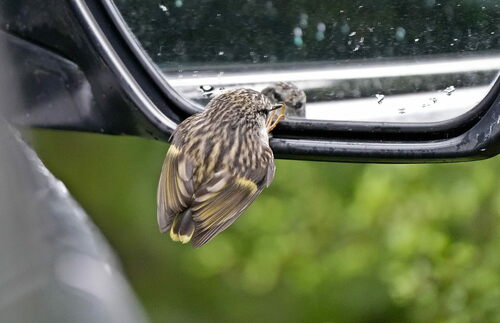
Rifleman (Acanthisitta chloris) Rifleman
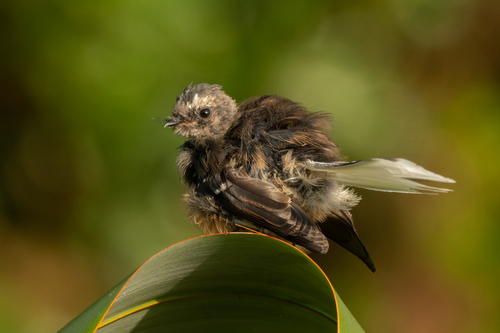
New Zealand Fantail (Rhipidura fuliginosa) New Zealand Fantail

Media

Loading…

In short

The most reliable field mark separating Rifleman from New Zealand Fantail is the tail: Rifleman has a very short, stubby tail, while the Fantail has an extremely long, broad, and often fanned tail that is about half its total length. In flight or perched, the Fantail’s tail is unmistakable and often spread, showing white edges or (in some morphs) all dark. Rifleman is tiny, compact, and greenish above, with a thin, upturned bill, while Fantail is larger, more active, and shows strong contrast between its dark upperparts, white throat, and yellowish/orange belly. Juvenile Fantails are browner but still show the long tail. Both are small insectivores, but their structure and movement are strikingly different.

Identification tips

  1. Tail length and shape: Rifleman always has a very short, stubby tail; Fantail has a long, broad, and often fanned tail that is about half its body length. This is the single most reliable field mark at all ages and seasons.
  2. Tail pattern: Fantail (except black morph) shows white outer tail feathers when fanned; Rifleman’s tail is black with a whitish tip but is so short it is rarely a focus in the field.
  3. Body shape and jizz: Rifleman is tiny, compact, and round-bodied, with a short neck and a hunched posture. Fantail is longer, more slender, and appears larger due to its tail.
  4. Bill shape: Rifleman has a thin, slightly upturned, awl-like bill for probing bark; Fantail has a broader, flatter bill suited for catching insects in flight.
  5. Flight style: Rifleman flies in short, direct bursts with a humming wingbeat and rarely crosses open space. Fantail flits, fans its tail, and is almost always in motion, often sallying out to catch insects.
  6. Perched behavior: Fantail is restless, flicking and fanning its tail constantly. Rifleman is more methodical, creeping up trunks and branches.
  7. Plumage – upperparts: Male Rifleman is bright green above; female is brownish with ochre flecks. Fantail is mid to dark grey or brown above, never green.
  8. Plumage – underparts: Rifleman is white below (sometimes with yellow wash); Fantail is yellowish/orange below with a white throat and a dark chest band.
  9. Facial markings: Both have white eyebrow stripes, but Fantail’s is more pronounced above the eye and is often accompanied by a white throat and dark chest band. Rifleman’s eyebrow is subtler.
  10. Sexual dimorphism: Rifleman shows some sex differences (male greener, female browner with longer bill and hind claw); Fantail sexes are similar in plumage.
  11. Juvenile confusion: Juvenile Fantails are browner and less sharply marked but still have the long tail; juvenile Rifleman resembles adults in structure and tail length.
  12. Black morph Fantail: Rarely, Fantail appears all dark except for a white spot behind the eye; still shows the long, fanned tail and active behavior.
  13. Habitat context: Rifleman is more likely in dense, mature forest interiors; Fantail is common in a wider range of wooded and open habitats, including gardens.
  14. Abundance and approachability: Fantail is much more likely to approach people and is common in disturbed areas; Rifleman is shy, local, and less likely in open or urban habitats.
  15. Voice: Fantail’s metallic 'cheek' call is distinctive; Rifleman’s call is not described here, so use structure and behavior first.

Size

Rifleman is New Zealand’s smallest endemic bird, reaching only 7–9 cm in length and weighing around 6–7 g. The Fantail is much larger in length (16 cm), mostly due to its long tail, though its body mass is only slightly higher (about 7.2 g). When seen side by side, the Fantail appears much longer and more elongated, while Rifleman is compact and stubby.

Plumage

Juvenile and adult Fantails are always recognized by their long, fan-shaped tail with white outer feathers (except in the rare black morph, which is all dark except for a white spot behind the eye). Adults have a mid to dark grey or brown back, white throat, yellowish/orange belly, and a dark chest band. Juveniles are browner and less sharply marked, but still show the long tail. Rifleman males are bright green above with a yellow-green rump, black and white wings with a yellow band, and a white eyebrow; females are browner and more somber, with ochre flecks. Both sexes have a very short tail and white underparts (sometimes with a yellow wash). The short, rounded wings and tiny tail of Rifleman contrast strongly with the Fantail’s long, fanned tail and more contrasting plumage. No age of Fantail ever shows the stubby tail of Rifleman, and no Rifleman ever shows the Fantail’s tail pattern or length.

Behaviour

Fantails are almost constantly in motion, flitting from perch to perch, often fanning and flicking their tail, and frequently following people to catch disturbed insects. They are bold and conspicuous, often coming close to observers. Rifleman, in contrast, creeps up tree trunks and branches in a spiral, searching for insects in a treecreeper-like fashion, and is more likely to be seen gliding short distances between trees rather than flitting or sallying. Rifleman flight is rapid and direct, with a humming wingbeat, and they rarely cross open spaces.

Habitat

Both species are found in New Zealand forests, but Rifleman is more specialized, preferring thinly wooded forests and often high-altitude beech or lowland podocarp forests depending on the island. Fantails are more generalist, found in a wide range of wooded habitats including gardens and urban areas, and are much more likely to be seen in open or edge habitats. Rifleman tends to stay in dense cover and rarely ventures far from trees.

Voice

Fantail has a distinctive, metallic 'cheek' call, often repeated rapidly in a chattering series. Rifleman’s vocalizations are not described in the provided notes, so voice is not a reliable separator based on current information.

Submit a better description

Use the same sections as the comparison. Your text is published immediately.

The most reliable field mark separating Rifleman from New Zealand Fantail is the tail: Rifleman has a very short, stubby tail, while the Fantail has an extremely long, broad, and often fanned tail that is about half its total length. In flight or perched, the Fantail’s tail is unmistakable and often spread, showing white edges or (in some morphs) all dark. Rifleman is tiny, compact, and greenish above, with a thin, upturned bill, while Fantail is larger, more active, and shows strong contrast between its dark upperparts, white throat, and yellowish/orange belly. Juvenile Fantails are browner but still show the long tail. Both are small insectivores, but their structure and movement are strikingly different.

  1. Tail length and shape: Rifleman always has a very short, stubby tail; Fantail has a long, broad, and often fanned tail that is about half its body length. This is the single most reliable field mark at all ages and seasons.
  2. Tail pattern: Fantail (except black morph) shows white outer tail feathers when fanned; Rifleman’s tail is black with a whitish tip but is so short it is rarely a focus in the field.
  3. Body shape and jizz: Rifleman is tiny, compact, and round-bodied, with a short neck and a hunched posture. Fantail is longer, more slender, and appears larger due to its tail.
  4. Bill shape: Rifleman has a thin, slightly upturned, awl-like bill for probing bark; Fantail has a broader, flatter bill suited for catching insects in flight.
  5. Flight style: Rifleman flies in short, direct bursts with a humming wingbeat and rarely crosses open space. Fantail flits, fans its tail, and is almost always in motion, often sallying out to catch insects.
  6. Perched behavior: Fantail is restless, flicking and fanning its tail constantly. Rifleman is more methodical, creeping up trunks and branches.
  7. Plumage – upperparts: Male Rifleman is bright green above; female is brownish with ochre flecks. Fantail is mid to dark grey or brown above, never green.
  8. Plumage – underparts: Rifleman is white below (sometimes with yellow wash); Fantail is yellowish/orange below with a white throat and a dark chest band.
  9. Facial markings: Both have white eyebrow stripes, but Fantail’s is more pronounced above the eye and is often accompanied by a white throat and dark chest band. Rifleman’s eyebrow is subtler.
  10. Sexual dimorphism: Rifleman shows some sex differences (male greener, female browner with longer bill and hind claw); Fantail sexes are similar in plumage.
  11. Juvenile confusion: Juvenile Fantails are browner and less sharply marked but still have the long tail; juvenile Rifleman resembles adults in structure and tail length.
  12. Black morph Fantail: Rarely, Fantail appears all dark except for a white spot behind the eye; still shows the long, fanned tail and active behavior.
  13. Habitat context: Rifleman is more likely in dense, mature forest interiors; Fantail is common in a wider range of wooded and open habitats, including gardens.
  14. Abundance and approachability: Fantail is much more likely to approach people and is common in disturbed areas; Rifleman is shy, local, and less likely in open or urban habitats.
  15. Voice: Fantail’s metallic 'cheek' call is distinctive; Rifleman’s call is not described here, so use structure and behavior first.

Rifleman is New Zealand’s smallest endemic bird, reaching only 7–9 cm in length and weighing around 6–7 g. The Fantail is much larger in length (16 cm), mostly due to its long tail, though its body mass is only slightly higher (about 7.2 g). When seen side by side, the Fantail appears much longer and more elongated, while Rifleman is compact and stubby.

Juvenile and adult Fantails are always recognized by their long, fan-shaped tail with white outer feathers (except in the rare black morph, which is all dark except for a white spot behind the eye). Adults have a mid to dark grey or brown back, white throat, yellowish/orange belly, and a dark chest band. Juveniles are browner and less sharply marked, but still show the long tail. Rifleman males are bright green above with a yellow-green rump, black and white wings with a yellow band, and a white eyebrow; females are browner and more somber, with ochre flecks. Both sexes have a very short tail and white underparts (sometimes with a yellow wash). The short, rounded wings and tiny tail of Rifleman contrast strongly with the Fantail’s long, fanned tail and more contrasting plumage. No age of Fantail ever shows the stubby tail of Rifleman, and no Rifleman ever shows the Fantail’s tail pattern or length.

Fantails are almost constantly in motion, flitting from perch to perch, often fanning and flicking their tail, and frequently following people to catch disturbed insects. They are bold and conspicuous, often coming close to observers. Rifleman, in contrast, creeps up tree trunks and branches in a spiral, searching for insects in a treecreeper-like fashion, and is more likely to be seen gliding short distances between trees rather than flitting or sallying. Rifleman flight is rapid and direct, with a humming wingbeat, and they rarely cross open spaces.

Both species are found in New Zealand forests, but Rifleman is more specialized, preferring thinly wooded forests and often high-altitude beech or lowland podocarp forests depending on the island. Fantails are more generalist, found in a wide range of wooded habitats including gardens and urban areas, and are much more likely to be seen in open or edge habitats. Rifleman tends to stay in dense cover and rarely ventures far from trees.

Fantail has a distinctive, metallic 'cheek' call, often repeated rapidly in a chattering series. Rifleman’s vocalizations are not described in the provided notes, so voice is not a reliable separator based on current information.

Discard your changes?

You have unsaved edits. If you leave now, those changes will be lost.

Rifleman · New Zealand Fantail · My Tricky Birds