

Rifleman vs New Zealand Fantail
Acanthisitta chloris contro Rhipidura fuliginosa
Fai un quiz con Rifleman e New Zealand Fantail
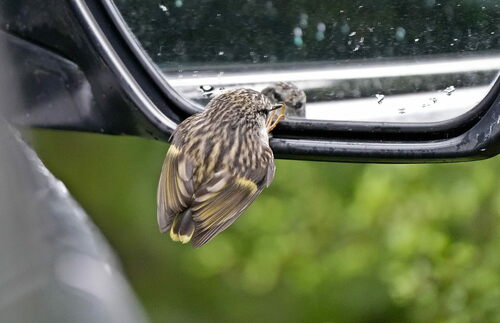 Rifleman
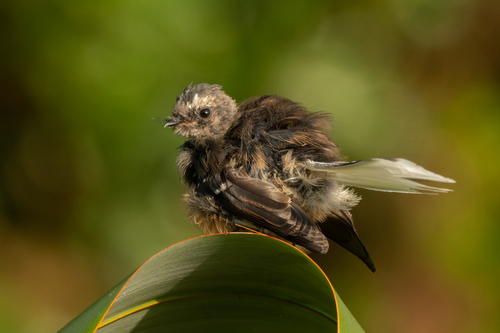 New Zealand Fantail
In breve
Il segno di campo più affidabile che separa il Rifleman dal New Zealand Fantail è la coda: il Rifleman ha una coda molto corta e tozza, mentre il Fantail ha una coda estremamente lunga, ampia e spesso aperta che è circa la metà della sua lunghezza totale. In volo o posato, la coda del Fantail è inconfondibile e spesso aperta, mostrando bordi bianchi o (in alcune forme) completamente scura. Il Rifleman è minuscolo, compatto e verdastro sopra, con un becco sottile e rivolto verso l'alto, mentre il Fantail è più grande, più attivo e mostra un forte contrasto tra le sue parti superiori scure, la gola bianca e il ventre giallastro/arancione. I Fantail juvenili sono più marroni ma mostrano comunque la lunga coda. Entrambi sono piccoli insettivori, ma la loro struttura e movimento sono sorprendentemente diversi.
Consigli di identificazione
- Tail length and shape: Il Rifleman ha sempre una coda molto corta e tozza; il Fantail ha una coda lunga, ampia e spesso aperta che è circa la metà della lunghezza del corpo. Questo è il segno di campo più affidabile in tutte le età e stagioni.
- Tail pattern: Il Fantail (eccetto la forma nera) mostra piume esterne bianche quando è aperto; la coda del Rifleman è nera con una punta biancastra ma è così corta che raramente è un punto focale sul campo.
- Body shape and jizz: Il Rifleman è minuscolo, compatto e con corpo rotondo, con un collo corto e una postura curvata. Il Fantail è più lungo, più snodato e appare più grande a causa della sua coda.
- Bill shape: Il Rifleman ha un becco sottile, leggermente rivolto verso l'alto, simile a un punteruolo per sondare la corteccia; il Fantail ha un becco più ampio e piatto adatto per catturare insetti in volo.
- Flight style: Il Rifleman vola in brevi esplosioni dirette con un battito d'ali ronzante e raramente attraversa spazi aperti. Il Fantail svolazza, apre la sua coda ed è quasi sempre in movimento, spesso lanciandosi per catturare insetti.
- Perched behavior: Il Fantail è irrequieto, muovendo e aprendo costantemente la sua coda. Il Rifleman è più metodico, strisciando su tronchi e rami.
- Plumage – upperparts: Il maschio Rifleman è di un verde brillante sopra; la femmina è marrone con macchie ocra. Il Fantail è grigio medio-scuro o marrone sopra, mai verde.
- Plumage – underparts: Il Rifleman è bianco sotto (a volte con una sfumatura gialla); il Fantail è giallastro/arancione sotto con una gola bianca e una banda scura sul petto.
- Facial markings: Entrambi hanno strisce bianche sopra gli occhi, ma quella del Fantail è più pronunciata sopra l'occhio ed è spesso accompagnata da una gola bianca e una banda scura sul petto. L'arcata sopracciliare del Rifleman è più sottile.
- Sexual dimorphism: Il Rifleman mostra alcune differenze sessuali (maschio più verde, femmina più marrone con becco più lungo e artiglio posteriore); i sessi del Fantail sono simili nel piumaggio.
- Juvenile confusion: I Fantail juvenili sono più marroni e meno marcati ma mostrano comunque la lunga coda; il Rifleman giovanile assomiglia agli adulti nella struttura e nella lunghezza della coda.
- Black morph Fantail: Raramente, il Fantail appare completamente scuro tranne che per una macchia bianca dietro l'occhio; mostra comunque la lunga coda aperta e un comportamento attivo.
- Habitat context: Il Rifleman è più probabile trovarlo in interni di foreste dense e mature; il Fantail è comune in una gamma più ampia di habitat boschivi e aperti, inclusi i giardini.
- Abundance and approachability: Il Fantail è molto più probabile che si avvicini alle persone ed è comune in aree disturbate; il Rifleman è timido, locale e meno probabile in habitat aperti o urbani.
- Voice: Il richiamo metallico 'guancia' del Fantail è distintivo; il richiamo del Rifleman non è descritto qui, quindi usa prima la struttura e il comportamento.
Taglia
Il Rifleman è il più piccolo uccello endemico della Nuova Zelanda, raggiungendo solo 7–9 cm di lunghezza e pesando circa 6–7 g. Il Fantail è molto più grande in lunghezza (16 cm), principalmente a causa della sua lunga coda, anche se la sua massa corporea è solo leggermente superiore (circa 7,2 g). Quando visti fianco a fianco, il Fantail appare molto più lungo e allungato, mentre il Rifleman è compatto e tozzo.
Piumaggio
I Fantail juvenili e adulti sono sempre riconosciuti dalla loro lunga coda a forma di ventaglio con piume esterne bianche (eccetto nella rara forma nera, che è completamente scura tranne che per una macchia bianca dietro l'occhio). Gli adulti hanno un dorso grigio medio-scuro o marrone, gola bianca, ventre giallastro/arancione e una banda scura sul petto. I juvenili sono più marroni e meno marcati, ma mostrano comunque la lunga coda. I maschi Rifleman sono di un verde brillante sopra con un posteriore giallo-verde, ali nere e bianche con una banda gialla e un'arcata sopracciliare bianca; le femmine sono più marroni e più sobrie, con macchie ocra. Entrambi i sessi hanno una coda molto corta e parti inferiori bianche (a volte con una sfumatura gialla). Le ali corte e arrotondate e la piccola coda del Rifleman contrastano fortemente con la lunga coda aperta del Fantail e il piumaggio più contrastante. Nessuna età del Fantail mostra mai la coda tozza del Rifleman, e nessun Rifleman mostra mai il modello o la lunghezza della coda del Fantail.
Comportamento
I Fantail sono quasi costantemente in movimento, svolazzando da un posatoio all'altro, spesso aprendo e muovendo la loro coda, e seguendo frequentemente le persone per catturare insetti disturbati. Sono audaci e appariscenti, spesso avvicinandosi agli osservatori. Il Rifleman, al contrario, striscia su tronchi e rami in modo spirale, cercando insetti in modo simile a un cerchio, ed è più probabile essere visto scivolare brevi distanze tra gli alberi piuttosto che svolazzare o lanciarsi. Il volo del Rifleman è rapido e diretto, con un battito d'ali ronzante, e raramente attraversano spazi aperti.
Habitat
Entrambe le specie si trovano nelle foreste della Nuova Zelanda, ma il Rifleman è più specializzato, preferendo foreste poco alberate e spesso foreste di faggio ad alta quota o foreste di podocarpo di pianura a seconda dell'isola. I Fantail sono più generalisti, trovati in una vasta gamma di habitat boschivi, inclusi giardini e aree urbane, e sono molto più probabili da vedere in habitat aperti o di margine. Il Rifleman tende a rimanere in copertura densa e raramente si avventura lontano dagli alberi.
Voce
Il Fantail ha un richiamo distintivo e metallico 'guancia', spesso ripetuto rapidamente in una serie di chiacchiere. Le vocalizzazioni del Rifleman non sono descritte nelle note fornite, quindi la voce non è un separatore affidabile basato sulle informazioni attuali.