

Motmot

Red-throated Diver vs Great Northern Diver

Gavia stellata versus Gavia immer

Play a quiz with Red-throated Diver and Great Northern Diver
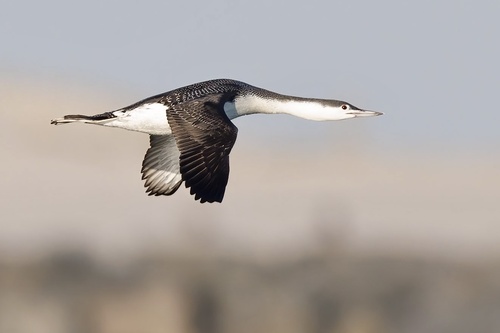
Red-throated Diver (Gavia stellata) Red-throated Diver
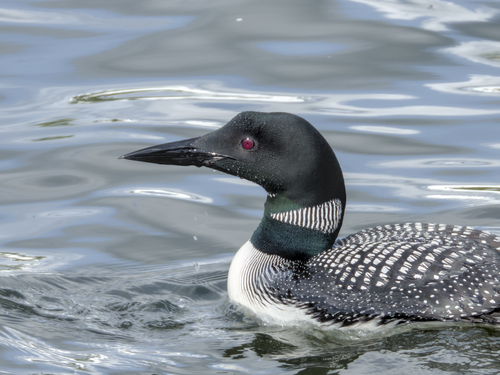
Great Northern Diver (Gavia immer) Great Northern Diver

Media

Loading…

In short

The most reliable field mark between Red-throated Diver and Great Northern Diver is size and structure: Red-throated is much smaller, slimmer, and has a finer bill, while Great Northern is bulkier with a heavier, dagger-like bill. Juvenile and non-breeding birds can be tricky, but Red-throated shows a hunchbacked flight silhouette with drooping head/neck, and its feet barely project past the tail, unlike the more powerful, level flight of Great Northern. In all plumages, Great Northern is darker and more solidly marked above, especially on the head and neck, while Red-throated is paler and more delicate. Use these differences in combination, especially on distant or flying birds.

Identification tips

  1. Size is the first check: If the bird is large, heavy, and goose-like, it's Great Northern; if it's noticeably smaller and more delicate, it's Red-throated. This works at all ages and seasons.
  2. Bill shape: Red-throated has a thin, straight, often slightly upturned bill, usually pale grey in juveniles and non-breeding adults. Great Northern's bill is thick, dagger-like, and usually held level or slightly uptilted, always heavier than Red-throated at any age.
  3. Flight silhouette: Red-throated flies with a drooping head and neck, giving a hunchbacked look; feet barely extend beyond the tail. Great Northern flies with a level neck and head, and its feet project more clearly past the tail. This is especially useful for distant birds in flight.
  4. Wingbeat: Red-throated has quicker, deeper wingbeats; Great Northern's are slower and more powerful.
  5. Juvenile plumage: Red-throated juveniles are browner above, with heavy speckling on the neck sides and a paler, browner-tinged belly. Great Northern juveniles are darker, with a dark nape and blackish upperparts, and a white throat and cheeks. The contrast is stronger in Great Northern.
  6. Adult winter plumage: Red-throated is paler overall, with a plain grey face and neck, and a fine bill. Great Northern is darker, with a dark crown, nape, and neck, and a heavier bill. The contrast between the dark neck and pale cheeks is sharper in Great Northern.
  7. Breeding plumage: Red-throated has a grey head and neck with a red throat patch; Great Northern is black-headed with a greenish, bluish, or purplish sheen and bold white checkering on the back. This is diagnostic in spring/summer.
  8. Neck pattern: In all plumages, Great Northern has a more solidly dark neck, while Red-throated is paler and more uniform.
  9. Bill color in juveniles: Red-throated's bill is pale grey; Great Northern's is darker and heavier.
  10. Head shape: Red-throated's head is small and rounded; Great Northern's is larger with a bulging forecrown and steeper forehead.
  11. On water posture: Red-throated sits higher, with a more horizontal body and neck outstretched; Great Northern sits lower, bulkier, and often with a slightly uptilted bill.
  12. Habitat context: On small inland lakes or shallow coastal bays, Red-throated is more likely; on large lakes or exposed sea, Great Northern is favored.
  13. Group size: Red-throated can be in small groups; Great Northern is usually solitary or in pairs.
  14. Confusion risk: In poor light or at long range, size and structure are more reliable than plumage. Beware of juvenile Great Northern appearing paler on the face, but the bill and bulk remain distinctive.
  15. When in doubt: Use a combination of size, bill shape, flight profile, and habitat to separate them, especially for immature or non-breeding birds.

Size

Red-throated Diver is dramatically smaller and lighter (about 1,600g) than Great Northern Diver (about 5,000g). In the field, this translates to a much more delicate, slender appearance for Red-throated, with a shorter neck and smaller head. Great Northern is large, heavy-bodied, and long-necked, with a noticeably bigger bill and more imposing presence on the water or in flight. If seen together, the size gap is obvious, but even singly, Red-throated looks more like a large grebe, while Great Northern is almost goose-sized.

Plumage

Juvenile and first-winter Red-throated Divers are dark brown to grey above, with a darker forehead and neck heavily speckled on the sides, and a paler, browner-tinged belly. Their bills are pale grey and often paler than adults. Juvenile Great Northern Divers are darker overall, with a dark grey to black head, neck, and upperparts, and a white throat, cheeks, and underparts. Their nape is a dark brownish-grey, often looking darker than the pale-edged black feathers elsewhere. In first-winter, Great Northern's bill may look less robust than adults, but still heavier than Red-throated. By second winter, Great Northern resembles breeding adults but lacks white spots on the wing coverts. In flight, Red-throated shows a thin, angular wing and a drooping neck, while Great Northern is broader-winged and more level-necked. Adult breeding plumage is strikingly different: Red-throated has a grey head and neck with a red throat patch, while Great Northern is black-headed with a greenish or bluish sheen and bold white checkering on the back.

Behaviour

Red-throated Diver is more agile and buoyant, often seen swimming with its neck outstretched and diving with a quick, deep wingbeat in flight. Its flight is hunchbacked, with the head and neck drooping below the body axis. Great Northern Diver is heavier and more powerful, flying with a level neck and strong, steady wingbeats. On water, Great Northern sits lower and appears bulkier, often with a slightly uptilted bill. Both species dive for fish, but Red-throated is more likely to be seen in smaller groups or alone, while Great Northern is typically solitary or in pairs.

Habitat

Red-throated Diver breeds mainly in Arctic regions and winters along northern coasts, often using smaller inland lakes for breeding and sheltered coastal waters in winter. Great Northern Diver prefers larger lakes for breeding and is more likely to be found on big, deep freshwater bodies or exposed coastal waters in winter. In migration and winter, both can occur on the sea, but Red-throated is more tolerant of shallow, sheltered bays, while Great Northern favors deeper, more open water.

Submit a better description

Use the same sections as the comparison. Your text is published immediately.

The most reliable field mark between Red-throated Diver and Great Northern Diver is size and structure: Red-throated is much smaller, slimmer, and has a finer bill, while Great Northern is bulkier with a heavier, dagger-like bill. Juvenile and non-breeding birds can be tricky, but Red-throated shows a hunchbacked flight silhouette with drooping head/neck, and its feet barely project past the tail, unlike the more powerful, level flight of Great Northern. In all plumages, Great Northern is darker and more solidly marked above, especially on the head and neck, while Red-throated is paler and more delicate. Use these differences in combination, especially on distant or flying birds.

  1. Size is the first check: If the bird is large, heavy, and goose-like, it's Great Northern; if it's noticeably smaller and more delicate, it's Red-throated. This works at all ages and seasons.
  2. Bill shape: Red-throated has a thin, straight, often slightly upturned bill, usually pale grey in juveniles and non-breeding adults. Great Northern's bill is thick, dagger-like, and usually held level or slightly uptilted, always heavier than Red-throated at any age.
  3. Flight silhouette: Red-throated flies with a drooping head and neck, giving a hunchbacked look; feet barely extend beyond the tail. Great Northern flies with a level neck and head, and its feet project more clearly past the tail. This is especially useful for distant birds in flight.
  4. Wingbeat: Red-throated has quicker, deeper wingbeats; Great Northern's are slower and more powerful.
  5. Juvenile plumage: Red-throated juveniles are browner above, with heavy speckling on the neck sides and a paler, browner-tinged belly. Great Northern juveniles are darker, with a dark nape and blackish upperparts, and a white throat and cheeks. The contrast is stronger in Great Northern.
  6. Adult winter plumage: Red-throated is paler overall, with a plain grey face and neck, and a fine bill. Great Northern is darker, with a dark crown, nape, and neck, and a heavier bill. The contrast between the dark neck and pale cheeks is sharper in Great Northern.
  7. Breeding plumage: Red-throated has a grey head and neck with a red throat patch; Great Northern is black-headed with a greenish, bluish, or purplish sheen and bold white checkering on the back. This is diagnostic in spring/summer.
  8. Neck pattern: In all plumages, Great Northern has a more solidly dark neck, while Red-throated is paler and more uniform.
  9. Bill color in juveniles: Red-throated's bill is pale grey; Great Northern's is darker and heavier.
  10. Head shape: Red-throated's head is small and rounded; Great Northern's is larger with a bulging forecrown and steeper forehead.
  11. On water posture: Red-throated sits higher, with a more horizontal body and neck outstretched; Great Northern sits lower, bulkier, and often with a slightly uptilted bill.
  12. Habitat context: On small inland lakes or shallow coastal bays, Red-throated is more likely; on large lakes or exposed sea, Great Northern is favored.
  13. Group size: Red-throated can be in small groups; Great Northern is usually solitary or in pairs.
  14. Confusion risk: In poor light or at long range, size and structure are more reliable than plumage. Beware of juvenile Great Northern appearing paler on the face, but the bill and bulk remain distinctive.
  15. When in doubt: Use a combination of size, bill shape, flight profile, and habitat to separate them, especially for immature or non-breeding birds.

Red-throated Diver is dramatically smaller and lighter (about 1,600g) than Great Northern Diver (about 5,000g). In the field, this translates to a much more delicate, slender appearance for Red-throated, with a shorter neck and smaller head. Great Northern is large, heavy-bodied, and long-necked, with a noticeably bigger bill and more imposing presence on the water or in flight. If seen together, the size gap is obvious, but even singly, Red-throated looks more like a large grebe, while Great Northern is almost goose-sized.

Juvenile and first-winter Red-throated Divers are dark brown to grey above, with a darker forehead and neck heavily speckled on the sides, and a paler, browner-tinged belly. Their bills are pale grey and often paler than adults. Juvenile Great Northern Divers are darker overall, with a dark grey to black head, neck, and upperparts, and a white throat, cheeks, and underparts. Their nape is a dark brownish-grey, often looking darker than the pale-edged black feathers elsewhere. In first-winter, Great Northern's bill may look less robust than adults, but still heavier than Red-throated. By second winter, Great Northern resembles breeding adults but lacks white spots on the wing coverts. In flight, Red-throated shows a thin, angular wing and a drooping neck, while Great Northern is broader-winged and more level-necked. Adult breeding plumage is strikingly different: Red-throated has a grey head and neck with a red throat patch, while Great Northern is black-headed with a greenish or bluish sheen and bold white checkering on the back.

Red-throated Diver is more agile and buoyant, often seen swimming with its neck outstretched and diving with a quick, deep wingbeat in flight. Its flight is hunchbacked, with the head and neck drooping below the body axis. Great Northern Diver is heavier and more powerful, flying with a level neck and strong, steady wingbeats. On water, Great Northern sits lower and appears bulkier, often with a slightly uptilted bill. Both species dive for fish, but Red-throated is more likely to be seen in smaller groups or alone, while Great Northern is typically solitary or in pairs.

Red-throated Diver breeds mainly in Arctic regions and winters along northern coasts, often using smaller inland lakes for breeding and sheltered coastal waters in winter. Great Northern Diver prefers larger lakes for breeding and is more likely to be found on big, deep freshwater bodies or exposed coastal waters in winter. In migration and winter, both can occur on the sea, but Red-throated is more tolerant of shallow, sheltered bays, while Great Northern favors deeper, more open water.

Discard your changes?

You have unsaved edits. If you leave now, those changes will be lost.

Red-throated Diver · Great Northern Diver · My Tricky Birds