

Red-necked Nightjar vs Eurasian Nightjar
Caprimulgus ruficollis versus Caprimulgus europaeus
Play a quiz with Red-necked Nightjar and Eurasian Nightjar
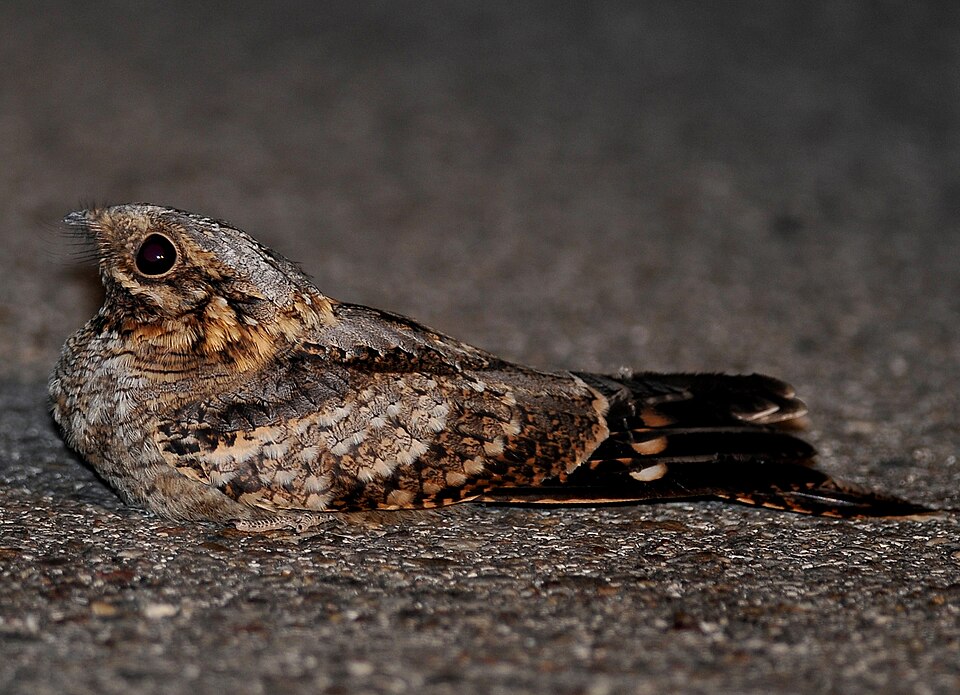 Red-necked Nightjar
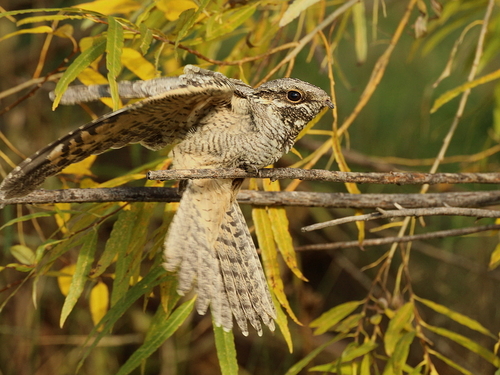 Eurasian Nightjar
In short
The most reliable way to separate Red-necked Nightjar from Eurasian Nightjar is by size and the presence of a bold rufous neck-collar on the Red-necked. Red-necked is distinctly larger, longer-tailed, and has more extensive white on the wings and tail in both sexes. In flight, Eurasian Nightjar males show white patches on the primaries and tail tips, while Red-necked of both sexes have white in these areas. The Red-necked's overall plumage is warmer and more variegated, with a broad, conspicuous rufous collar, whereas Eurasian is colder grey-brown with a narrower buff collar. These differences are most apparent in good light or when the birds are perched, but careful observation of size, collar color, and wing/tail markings will usually clinch the ID.
Identification tips
- Size and Structure: Red-necked Nightjar is noticeably larger and longer-tailed than Eurasian Nightjar. In direct comparison, look for a bulkier, more elongated bird in flight or perched.
- Rufous Neck-collar: Red-necked shows a broad, conspicuous rufous (chestnut) collar around the neck, visible in both sexes and all ages. Eurasian has a much narrower, paler buff collar, often less obvious.
- White in Wing and Tail: Red-necked has prominent white spots on the wings and tail sides in both sexes, while Eurasian Nightjar males have a white wing patch (across three primaries) and white tail tips, but females lack these white areas entirely. If you see a female-type bird with white in the wing or tail, it's Red-necked.
- Overall Plumage Tone: Red-necked is warmer and more variegated, with lichen-grey, buff, chestnut, and black barring and streaking. Eurasian is colder grey-brown, less variegated, and lacks the rich chestnut tones.
- Underparts: Red-necked's underparts are more heavily barred, giving a more patterned look; Eurasian's are browner and plainer below, with less contrast.
- Flight Jizz: Red-necked flies with strong, deliberate wingbeats and long glides, appearing larger and more powerful. Eurasian is lighter, more buoyant, and fluttery in flight.
- Perched Posture: Both perch lengthwise, but Red-necked's larger size and longer tail may be apparent if seen well.
- Song: Red-necked gives a repetitive "kyok-kyok-kyok..." that rises and falls; Eurasian produces a continuous churring trill. If you hear a song that varies in volume with head movement, suspect Red-necked.
- Wing-clapping: Both species can wing-clap, but Red-necked's is a sharp crack over the back, often during courtship.
- Habitat: In Iberia and NW Africa, Red-necked prefers open sandy heaths with scattered trees or bushes; Eurasian is more generalist and widespread.
- Sex Differences: Only male Eurasian Nightjars show white in the wing and tail; both sexes of Red-necked do. This is crucial for separating female/immature birds.
- Geographic Range: Red-necked is restricted to SW Europe and NW Africa; Eurasian is widespread across Europe and Asia. Out of range, default to Eurasian unless strong evidence for Red-necked.
- Vagrancy: Red-necked is a rare vagrant north of its range; check for rufous collar and size if suspected.
- Moult Timing: Not usually diagnostic in the field, but Eurasian adults and immatures may show moult gaps in late summer/autumn, while Red-necked timing is less well documented.
- Pitfalls: Immature Eurasian Nightjars resemble adult females and lack white in wing/tail, so can be confused with female Red-necked. Use size, collar color, and overall warmth of plumage to separate.
Size
Red-necked Nightjar is the largest European nightjar, with a body mass around 84g and a length of 32 cm, compared to Eurasian Nightjar's 24.5–28 cm length and lighter mass (males 51–101g, females 67–95g). Red-necked also has a longer tail and broader wingspan (64 cm vs. Eurasian's 52–59 cm). In the field, Red-necked appears bulkier and more elongated, especially in flight. Eurasian is noticeably smaller and more compact, with shorter tail and wings.
Plumage
- Juvenile/First-autumn birds: No detailed age-specific upperwing pattern differences are described for juveniles, but fledged young Eurasian Nightjars resemble adult females (greyer, less white in wing/tail).
- Adults: Red-necked Nightjar has a striking rufous (chestnut) neck-collar, lichen-grey upperparts heavily barred and streaked with buff, chestnut, and black, and both sexes show white spots on the wings, tail sides, and throat. Eurasian Nightjar is colder grey-brown above, with a narrower pale buff hindneck collar, and in males, a white wing patch across three primaries and white tips to the two outer tail feathers; females lack these white patches. Red-necked's white in the wing and tail is more extensive and present in both sexes, while Eurasian's is restricted to males. Red-necked's underparts are more heavily barred, and the overall impression is warmer and more variegated, while Eurasian is plainer and greyer.
Behaviour
Both species are crepuscular and nocturnal, with silent, buoyant, moth-like flight. Red-necked Nightjar's flight is described as strong and deliberate, alternating between wingbeats and glides, while Eurasian Nightjar's is very buoyant and noiseless. Both perch lengthwise on branches or rails and are highly cryptic when roosting. Red-necked may be more likely to sing from a post and uses mechanical wing-clapping during courtship, as does Eurasian, but the context and frequency may differ slightly.
Habitat
Red-necked Nightjar breeds in open sandy heaths with trees or bushes, mainly in Iberia and North Africa, and winters in tropical West Africa. Eurasian Nightjar has a much broader breeding range, across most of Europe and the Palearctic to Mongolia and NW China, and occupies a wider variety of open habitats. In Iberia and NW Africa, both can occur, but Red-necked is restricted to the southwest, while Eurasian is more widespread. Habitat overlap is possible in southern Europe, but Red-necked prefers sandier, more open terrain.
Voice
Red-necked Nightjar's song is a repetitive mechanical "kyok-kyok-kyok..." that rises and falls as the bird turns its head, and it also produces a sharp wing-clap during courtship. Eurasian Nightjar's song is a long, sustained churring trill, sometimes lasting up to 10 minutes, with occasional bubbling trills and wing-clapping. The churring of Eurasian is more continuous and mechanical, while Red-necked's is more broken and varies with head movement. Both species can be ventriloquial and difficult to locate by sound alone, but the song structure is different.