

Red-flanked Bluetail vs Taiga Flycatcher
Tarsiger cyanurus versus Ficedula albicilla
Play a quiz with Red-flanked Bluetail and Taiga Flycatcher
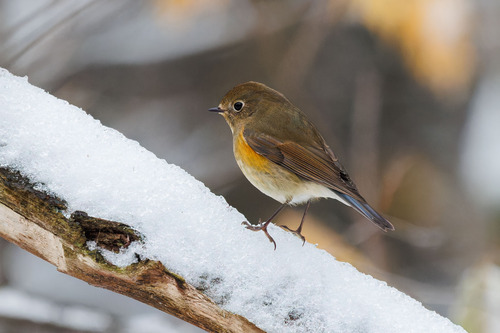 Red-flanked Bluetail
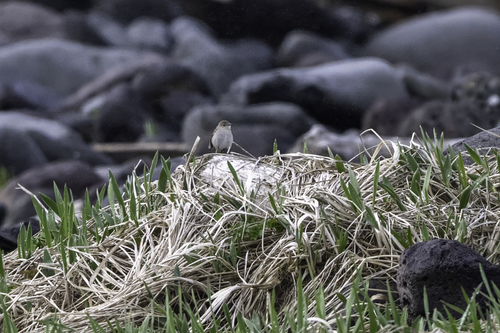 Taiga Flycatcher
In short
The most reliable field mark to separate Red-flanked Bluetail from Taiga Flycatcher is the presence of a blue tail and rump in all ages and sexes of the bluetail, versus the Taiga Flycatcher's blackish tail with white flanks. In addition, only the bluetail shows obvious orange-red flanks and a white throat, while the flycatcher lacks orange on the flanks and instead has a buffish breast and mostly white underparts. Females and immatures of both can be confusing, but the bluetail always shows some blue in the tail and rump, while the flycatcher never does. Structural differences are subtle, but the bluetail is slightly slimmer and more upright, while the flycatcher often appears more compact. Vocalizations and habitat can help, but plumage—especially tail and flank color—is the safest field cue.
Identification tips
- Tail color is key: Red-flanked Bluetail always shows a blue tail and rump, even in females and immatures. Taiga Flycatcher never shows blue in the tail; instead, its tail is blackish with white flanks. This is the single most reliable mark in all ages and sexes.
- Flank color: Bluetail has orange-red flanks (often bright in males, duller but still present in females/immatures). Taiga Flycatcher lacks orange on the flanks; its sides are plain or buffish.
- Throat and underparts: Bluetail has a white throat and greyish-white underparts. Taiga Flycatcher has a buffish breast and mostly white underparts; adult males in breeding plumage show an orange-red throat patch, but this does not extend onto the breast as in some similar species.
- Upperparts: Adult male bluetail has dark blue upperparts; females and immatures are brown above but always with blue tail/rump. Taiga Flycatcher females/immatures are brown above with no blue.
- Ear coverts and neck: Male Taiga Flycatcher in breeding plumage shows blue-tinged grey on the ear coverts and neck sides, which bluetail lacks.
- Bill and legs: Both species have small, thin black bills and slender black legs—this is not a useful separator.
- Posture and jizz: Bluetail often appears slimmer and more upright, frequently flicking its tail like a redstart. Taiga Flycatcher is more compact and less upright, with less pronounced tail-flicking.
- Flight views: In flight, look for the bluetail's blue tail and orange flanks versus the flycatcher's blackish tail with white flanks. No distinctive wing patterns are described for either species in immature plumage.
- Voice: Bluetail gives a 'tacc' call and melancholy trill; Taiga Flycatcher's calls are not detailed here but are generally higher-pitched and less musical. Use with caution unless familiar with both.
- Habitat: Both can occur in similar wooded habitats, but bluetail prefers mixed coniferous forests, while flycatcher breeds in taiga and winters in a variety of wooded areas. Not diagnostic in vagrancy situations.
- Season and sex: Adult male bluetail is unmistakable with blue upperparts and orange flanks. Female/immature bluetail can be confused with flycatcher, but always check for blue in the tail/rump and orange flanks.
- Pitfalls: Female and immature bluetails are the most likely to be confused with Taiga Flycatcher, especially in dull light or poor views. Always prioritize tail color and flank color over general brownness above.
- Size: Both are similar in size and structure; do not rely on size for separation.
- Context: If seen in Europe in late autumn or winter, both are rare vagrants—do not assume based on location alone.
- Summary tip: If you see blue in the tail or orange on the flanks, it's a Red-flanked Bluetail. If the tail is blackish with white flanks and no blue or orange, it's a Taiga Flycatcher.
Size
Red-flanked Bluetail averages about 14.5 g in body mass, making it similar in size to a Common Redstart and slightly smaller and slimmer than a European Robin [wikidata]. Taiga Flycatcher is not given a precise mass here, but is generally comparable in size and structure to the bluetail, though it may appear a bit more compact and less elongated. In the field, size alone is not a reliable separator between these two species.
Plumage
For all ages and sexes, Red-flanked Bluetail shows a blue tail and rump—even in females and immatures, where the rest of the upperparts are brown. The bluetail also has orange-red flanks, a white throat, and greyish-white underparts. Adult males add dark blue upperparts, but females and immatures are plainer brown above. In contrast, Taiga Flycatcher never shows blue in the tail or rump; instead, it has a blackish tail with white flanks and brown upperparts in females and immatures. The breast is buffish and the underparts mostly white. Adult male Taiga Flycatchers in breeding plumage have a restricted orange-red throat patch (not extending to the breast), with blue-tinged grey on the ear coverts and neck sides. Juvenile and immature plumages are not described in detail for either species, but the consistent blue tail/rump in bluetail versus blackish tail with white flanks in flycatcher is a key mark at all ages. The bluetail's orange flanks are unique and diagnostic when visible.
Behaviour
Red-flanked Bluetail behaves much like a Common Redstart, often flicking its tail and sallying from a perch to catch insects. It tends to perch upright and may sing from treetops. Taiga Flycatcher is also an active, flycatching species, but may appear a bit more compact and less upright. Both species are agile and can be seen making short flights from perches, but the bluetail's tail-flicking is more pronounced and reminiscent of redstarts.
Habitat
Red-flanked Bluetail breeds in mixed coniferous forests with undergrowth across northern Asia and northeastern Europe, and winters in southeastern Asia, the Himalayas, and northern Indochina [wikipedia]. Taiga Flycatcher breeds in taiga forests from eastern Russia to Siberia and Mongolia, and winters in South and Southeast Asia. Both can occur as vagrants in Europe. In areas of overlap, habitat alone is not diagnostic, but bluetail is more associated with coniferous and mixed forests, while flycatcher is tied to taiga and can be found in a broader range of wooded habitats in winter.
Voice
Red-flanked Bluetail gives a typical chat-like 'tacc' call and the male sings a melancholy trill from treetops [wikipedia]. Taiga Flycatcher's vocalizations are not described in detail here, but are generally higher-pitched and less musical than bluetail. Voice may help with experience, but is not the most reliable separator without good recordings.