

Red-eyed Dove vs Woodland Kingfisher
Streptopelia semitorquata versus Halcyon senegalensis
Play a quiz with Red-eyed Dove and Woodland Kingfisher
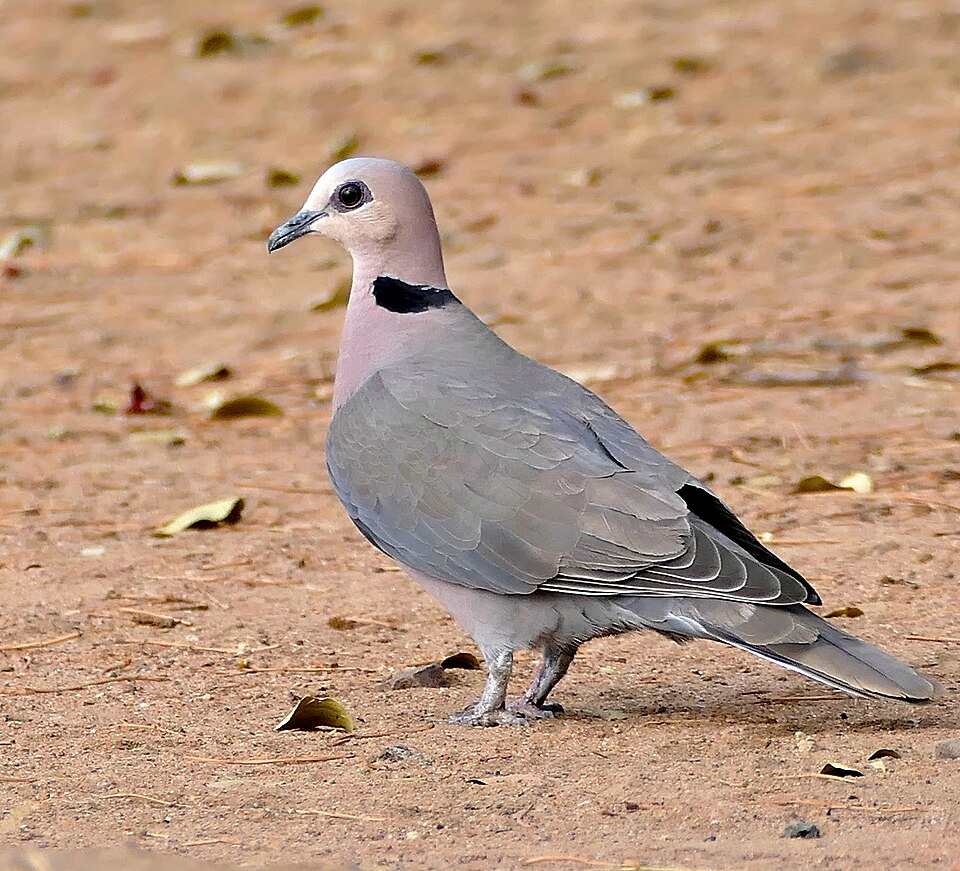 Red-eyed Dove
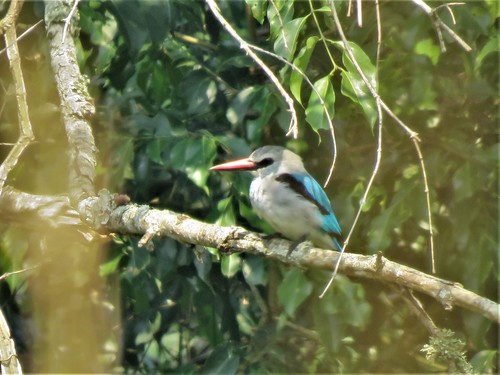 Woodland Kingfisher
In short
The most reliable field mark to separate Red-eyed Dove from Woodland Kingfisher is overall shape and structure: the dove is a large, heavy-bodied pigeon with a small head and long tail, while the kingfisher is a compact, short-tailed bird with a large, strikingly colored bill. In flight, the dove shows broad, rounded wings with dark primaries and a generally uniform, muted coloration, while the kingfisher flashes electric blue upperparts and black-and-white patterned wings. Juvenile doves are duller and browner but still pigeon-shaped, whereas juvenile kingfishers are similar to adults but have a brown bill. Both species may be found in wooded habitats, but the kingfisher is often seen perched conspicuously or sallying for prey, while the dove is more likely to be seen feeding quietly or flying between trees.
Identification tips
- Overall shape and structure: Red-eyed Dove is a large, heavy-bodied pigeon with a small head and long, broad tail. Woodland Kingfisher is smaller, with a compact body, short tail, and a very large, thick, bicolored bill (red above, black below).
- Bill color and shape: Dove has a small, black bill; kingfisher has a massive, dagger-like bill that is red above and black below in adults. Juvenile kingfishers have a brown bill, but it remains large and prominent.
- Plumage color (adults): Dove is mostly muted: bluish-grey forehead, darker crown, mauve-pink to wine-red neck and breast, greyish-brown upperparts, black primaries, and a black half-collar. Kingfisher is bright blue above (back, wings, tail), white below, with black shoulders and a dark stripe through the eye.
- Wing pattern in flight: Dove shows broad, rounded wings with dark primaries and a generally uniform, muted coloration. Kingfisher flashes electric blue upperparts and black-and-white wings, with white underwing coverts and a faint white wingbar.
- Eye and facial features: Dove's iris can be red, orange, or yellowish, with purplish-red orbital skin. Kingfisher has a dark stripe through the eye (lores), giving a masked appearance.
- Juvenile differences: Juvenile doves are duller and browner but retain pigeon proportions. Juvenile kingfishers are also duller but still show blue on the back and wings and have a brown bill.
- Leg color: Dove has purplish-red legs; kingfisher has dark grey legs and feet.
- Tail shape: Dove's tail is long and broad; kingfisher's tail is short and square.
- Behavior: Dove is typically quiet, feeding alone or in pairs, and flies with regular beats and flicks. Kingfisher is more conspicuous, often perches in the open, and may display wings or attack intruders.
- Habitat context: Both can be found in wooded areas, but kingfisher is more likely near open woodland or water and perches conspicuously; dove is more often in denser cover or on the ground.
- Size impression: Dove is much larger and heavier than kingfisher; use this if seen together or with familiar species for scale.
- Flight style: Dove's flight is strong and direct with regular wingbeats; kingfisher's is rapid and direct, but the bird appears more compact in flight.
- Neck collar: Dove has a black half-collar on the neck (sometimes indistinct); kingfisher lacks any collar.
- Pitfalls: Dull juveniles of both species may lack some adult brightness, but structure and bill size remain reliable. Blue tones on the kingfisher are never matched by the dove.
- Perched posture: Dove sits upright, often with a hunched, rounded appearance; kingfisher perches more horizontally, often on exposed branches.
Size
Red-eyed Dove is significantly larger and heavier, with a body mass around 235 g and a length of about 30 cm, making it the largest of the 'ringneck' doves. Woodland Kingfisher is smaller and more compact, at about 23 cm in length and much lighter (exact mass not given, but kingfishers are generally much lighter than similarly sized doves). The dove's body is bulkier with a proportionally small head, while the kingfisher has a stocky build but a disproportionately large, thick bill.
Plumage
- Juvenile/immature birds: Juvenile Red-eyed Doves are duller and browner than adults, but retain the overall pigeon shape and lack any blue or bright coloration. Juvenile Woodland Kingfishers are also duller than adults and have a brown bill, but still show blue tones on the back and wings, and white underparts.
- Adults: Red-eyed Dove has a pale bluish-grey forehead, darker crown, dark mauve-pink to wine-red neck and breast, greyish-brown upperparts, black primaries, and a black half-collar on the neck. The iris can be red, orange, or yellowish, with purplish-red orbital skin and legs. Woodland Kingfisher is strikingly different: bright blue back, wing panel, and tail, white head, neck, and underparts, black shoulders, and a large, bicolored bill (red upper, black lower). In flight, the kingfisher shows black primaries and secondaries with white underwing coverts, and a faint white wingbar. The dove's wing pattern is more uniform and lacks any blue or white flashes.
- Key in flight: Dove shows broad, rounded wings with dark primaries and a generally muted appearance; kingfisher flashes blue upperparts and black-and-white wings.
Behaviour
Red-eyed Dove is typically seen alone or in pairs, feeding quietly on the ground or in trees, and is not particularly gregarious. Its flight is quick with regular beats and occasional sharp flicks, typical of pigeons. Woodland Kingfisher, in contrast, is aggressively territorial, often perches conspicuously, and performs striking wing displays to show off its white wing linings. Its flight is rapid and direct, and it may sally out from a perch to catch prey. The kingfisher is more likely to attack intruders, including humans, and is generally more conspicuous in behavior.
Habitat
Both species are widespread in sub-Saharan Africa and can occur in wooded habitats, but their preferences differ. Red-eyed Dove is common in most habitats except deserts and is often found in forests near rivers, but also in urban and rural areas. Woodland Kingfisher prefers wooded areas but is especially associated with open woodland and edges, often near water. The kingfisher is more likely to be seen perched in the open, while the dove is more often seen feeding on the ground or flying between trees.