

Motmot

Red-billed Spurfowl vs Red-necked Spurfowl

Pternistis adspersus versus Pternistis afer

Play a quiz with Red-billed Spurfowl and Red-necked Spurfowl
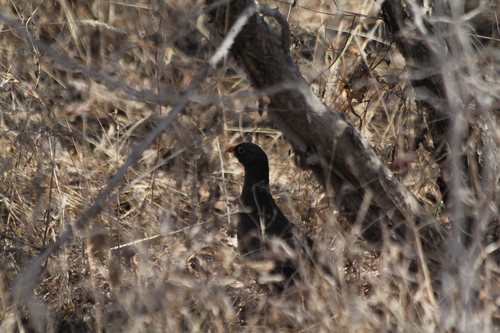
Red-billed Spurfowl (Pternistis adspersus) Red-billed Spurfowl

Red-necked Spurfowl (Pternistis afer) Red-necked Spurfowl

Media

Loading…

In short

The most reliable field mark between Red-billed Spurfowl and Red-necked Spurfowl is the color and extent of bare skin: Red-necked Spurfowl shows bright red on the bill, bare facial skin, neck, and legs, while Red-billed Spurfowl limits red to the bill and has a conspicuous yellow eye-ring. Red-billed Spurfowl has finely barred underparts, whereas Red-necked Spurfowl's underparts are darker with black streaks on grey or white. Both species are similar in size, but Red-necked Spurfowl can appear bulkier. In the field, focus on the face and neck color, and check the underpart pattern for a quick separation.

Identification tips

  1. Face and neck color: Red-necked Spurfowl shows extensive bright red on the bill, bare facial skin, neck, and legs; Red-billed Spurfowl restricts red to the bill and has a conspicuous yellow eye-ring. This is the single most reliable field mark in all ages and seasons.
  2. Underpart pattern: Red-billed Spurfowl has finely barred underparts, while Red-necked Spurfowl's underparts are darker with black streaks on grey or white. Look for the fine barring on Red-billed, especially in good light.
  3. Eye-ring: Red-billed Spurfowl shows a clear yellow eye-ring, absent in Red-necked Spurfowl. This can be visible even at moderate range with binoculars.
  4. Overall darkness: Red-necked Spurfowl appears generally darker and more uniform above, while Red-billed Spurfowl is paler with more contrast between upperparts and underparts.
  5. Bill color: Both have red bills, but in Red-necked Spurfowl the red is more extensive and brighter, often extending onto the face and neck.
  6. Leg color: Red-necked Spurfowl has bright red legs, while Red-billed Spurfowl's legs are less vividly colored (not described as bright red in sources).
  7. Sexual dimorphism: Red-billed Spurfowl males are larger than females, but both sexes share the same plumage. Size difference is subtle and not reliable in the field unless birds are side by side.
  8. Juvenile/immature plumage: No specific notes on juvenile or immature wing or flight pattern differences, so rely on face and underpart pattern at all ages.
  9. Flight views: In flight, look for the underpart pattern and extent of red on the head and neck. The yellow eye-ring of Red-billed Spurfowl may be hard to see in flight, but the red neck of Red-necked Spurfowl can stand out.
  10. Perched views: When perched, the facial skin and neck color are easiest to see. Use these marks before underpart pattern, especially in shaded or cluttered environments.
  11. Habitat overlap: Both species can occur in the same region, so do not rely on location alone. Check local abundance on eBird for clues, but always confirm with field marks.
  12. Pitfalls: In poor light, the red neck of Red-necked Spurfowl may look duller, and the yellow eye-ring of Red-billed Spurfowl may be hard to see. Always use multiple marks.
  13. No strong vocal or behavioral differences are described in the sources, so do not rely on these for separation.
  14. Season and age: No seasonal or age-specific plumage changes are noted that affect identification between these two species.
  15. Summary tip: If you see a spurfowl with a red bill and yellow eye-ring but no red on the neck or face, it's Red-billed. If the red extends onto the face, neck, and legs, it's Red-necked.

Size

Both species overlap in length, with Red-billed Spurfowl males reaching up to 38 cm and females about 33 cm, while Red-necked Spurfowl ranges from 25–38 cm depending on subspecies. However, Red-necked Spurfowl averages heavier (adult mass ~586 g) and can look bulkier, especially compared to female Red-billed Spurfowl. Size alone is not a safe separator, but a notably hefty bird is more likely Red-necked Spurfowl.

Plumage

Plumage differences are most apparent in adults: Red-billed Spurfowl has barred underparts and a yellow eye-ring, with red restricted to the bill. Red-necked Spurfowl is generally darker overall, with brown upperparts and black-streaked grey or white underparts, and shows extensive bright red on the bill, facial skin, neck, and legs. No specific juvenile or immature wing pattern differences are described in the sources, so rely on adult face, neck, and underpart pattern. Both sexes are similar in plumage, but Red-billed Spurfowl males are larger. In poor light or at distance, the yellow eye-ring of Red-billed Spurfowl and the red neck of Red-necked Spurfowl are key.

Behaviour

Both species are terrestrial gamebirds, often seen walking or running on the ground. No distinctive behavioral differences are noted in the sources, so behavior is not a reliable separator in this pair.

Habitat

Both species occur in southern Africa and can overlap in range. Red-billed Spurfowl is recorded from Angola, Botswana, Namibia, South Africa, Zambia, and Zimbabwe. Red-necked Spurfowl is also resident in southern Africa. Habitat alone is not diagnostic, but local abundance may differ by region (check eBird for your area).

Submit a better description

Use the same sections as the comparison. Your text is published immediately.

The most reliable field mark between Red-billed Spurfowl and Red-necked Spurfowl is the color and extent of bare skin: Red-necked Spurfowl shows bright red on the bill, bare facial skin, neck, and legs, while Red-billed Spurfowl limits red to the bill and has a conspicuous yellow eye-ring. Red-billed Spurfowl has finely barred underparts, whereas Red-necked Spurfowl's underparts are darker with black streaks on grey or white. Both species are similar in size, but Red-necked Spurfowl can appear bulkier. In the field, focus on the face and neck color, and check the underpart pattern for a quick separation.

  1. Face and neck color: Red-necked Spurfowl shows extensive bright red on the bill, bare facial skin, neck, and legs; Red-billed Spurfowl restricts red to the bill and has a conspicuous yellow eye-ring. This is the single most reliable field mark in all ages and seasons.
  2. Underpart pattern: Red-billed Spurfowl has finely barred underparts, while Red-necked Spurfowl's underparts are darker with black streaks on grey or white. Look for the fine barring on Red-billed, especially in good light.
  3. Eye-ring: Red-billed Spurfowl shows a clear yellow eye-ring, absent in Red-necked Spurfowl. This can be visible even at moderate range with binoculars.
  4. Overall darkness: Red-necked Spurfowl appears generally darker and more uniform above, while Red-billed Spurfowl is paler with more contrast between upperparts and underparts.
  5. Bill color: Both have red bills, but in Red-necked Spurfowl the red is more extensive and brighter, often extending onto the face and neck.
  6. Leg color: Red-necked Spurfowl has bright red legs, while Red-billed Spurfowl's legs are less vividly colored (not described as bright red in sources).
  7. Sexual dimorphism: Red-billed Spurfowl males are larger than females, but both sexes share the same plumage. Size difference is subtle and not reliable in the field unless birds are side by side.
  8. Juvenile/immature plumage: No specific notes on juvenile or immature wing or flight pattern differences, so rely on face and underpart pattern at all ages.
  9. Flight views: In flight, look for the underpart pattern and extent of red on the head and neck. The yellow eye-ring of Red-billed Spurfowl may be hard to see in flight, but the red neck of Red-necked Spurfowl can stand out.
  10. Perched views: When perched, the facial skin and neck color are easiest to see. Use these marks before underpart pattern, especially in shaded or cluttered environments.
  11. Habitat overlap: Both species can occur in the same region, so do not rely on location alone. Check local abundance on eBird for clues, but always confirm with field marks.
  12. Pitfalls: In poor light, the red neck of Red-necked Spurfowl may look duller, and the yellow eye-ring of Red-billed Spurfowl may be hard to see. Always use multiple marks.
  13. No strong vocal or behavioral differences are described in the sources, so do not rely on these for separation.
  14. Season and age: No seasonal or age-specific plumage changes are noted that affect identification between these two species.
  15. Summary tip: If you see a spurfowl with a red bill and yellow eye-ring but no red on the neck or face, it's Red-billed. If the red extends onto the face, neck, and legs, it's Red-necked.

Both species overlap in length, with Red-billed Spurfowl males reaching up to 38 cm and females about 33 cm, while Red-necked Spurfowl ranges from 25–38 cm depending on subspecies. However, Red-necked Spurfowl averages heavier (adult mass ~586 g) and can look bulkier, especially compared to female Red-billed Spurfowl. Size alone is not a safe separator, but a notably hefty bird is more likely Red-necked Spurfowl.

Plumage differences are most apparent in adults: Red-billed Spurfowl has barred underparts and a yellow eye-ring, with red restricted to the bill. Red-necked Spurfowl is generally darker overall, with brown upperparts and black-streaked grey or white underparts, and shows extensive bright red on the bill, facial skin, neck, and legs. No specific juvenile or immature wing pattern differences are described in the sources, so rely on adult face, neck, and underpart pattern. Both sexes are similar in plumage, but Red-billed Spurfowl males are larger. In poor light or at distance, the yellow eye-ring of Red-billed Spurfowl and the red neck of Red-necked Spurfowl are key.

Both species are terrestrial gamebirds, often seen walking or running on the ground. No distinctive behavioral differences are noted in the sources, so behavior is not a reliable separator in this pair.

Both species occur in southern Africa and can overlap in range. Red-billed Spurfowl is recorded from Angola, Botswana, Namibia, South Africa, Zambia, and Zimbabwe. Red-necked Spurfowl is also resident in southern Africa. Habitat alone is not diagnostic, but local abundance may differ by region (check eBird for your area).

Discard your changes?

You have unsaved edits. If you leave now, those changes will be lost.

Red-billed Spurfowl · Red-necked Spurfowl · My Tricky Birds