

Red-billed Spurfowl vs Red-necked Spurfowl
Pternistis adspersus contro Pternistis afer
Fai un quiz con Red-billed Spurfowl e Red-necked Spurfowl
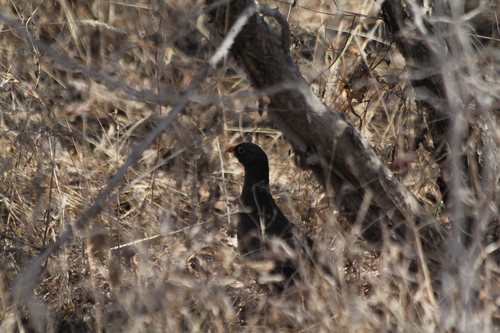 Red-billed Spurfowl
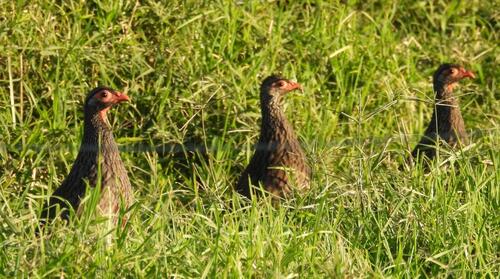 Red-necked Spurfowl
In breve
Il segno di campo più affidabile tra Red-billed Spurfowl e Red-necked Spurfowl è il colore e l'estensione della pelle nuda: Red-necked Spurfowl mostra un rosso brillante sul becco, pelle facciale nuda, collo e gambe, mentre Red-billed Spurfowl limita il rosso al becco e ha un anello oculare giallo molto evidente. Red-billed Spurfowl ha parti inferiori finemente barrate, mentre le parti inferiori di Red-necked Spurfowl sono più scure con striature nere su grigio o bianco. Entrambe le specie sono simili in dimensioni, ma Red-necked Spurfowl può apparire più robusto. Sul campo, concentrati sul colore del viso e del collo e controlla il motivo delle parti inferiori per una separazione rapida.
Consigli di identificazione
- Colore del viso e del collo: Red-necked Spurfowl mostra un rosso brillante esteso sul becco, pelle facciale nuda, collo e gambe; Red-billed Spurfowl limita il rosso al becco e ha un anello oculare giallo molto evidente. Questo è il segno di campo più affidabile in tutte le età e stagioni.
- Motivo delle parti inferiori: Red-billed Spurfowl ha parti inferiori finemente barrate, mentre le parti inferiori di Red-necked Spurfowl sono più scure con striature nere su grigio o bianco. Cerca la fine barratura su Red-billed, specialmente in buona luce.
- Anello oculare: Red-billed Spurfowl mostra un chiaro anello oculare giallo, assente in Red-necked Spurfowl. Questo può essere visibile anche a distanza moderata con i binocoli.
- Oscurità generale: Red-necked Spurfowl appare generalmente più scuro e uniforme sopra, mentre Red-billed Spurfowl è più chiaro con un maggiore contrasto tra le parti superiori e inferiori.
- Colore del becco: Entrambi hanno becchi rossi, ma in Red-necked Spurfowl il rosso è più esteso e brillante, spesso estendendosi sul viso e sul collo.
- Colore delle gambe: Red-necked Spurfowl ha gambe rosse brillanti, mentre le gambe di Red-billed Spurfowl sono meno vividamente colorate (non descritte come rosse brillanti nelle fonti).
- Dimorfismo sessuale: I maschi di Red-billed Spurfowl sono più grandi delle femmine, ma entrambi i sessi condividono lo stesso piumaggio. La differenza di dimensione è sottile e non affidabile sul campo a meno che gli uccelli non siano affiancati.
- Piumaggio giovanile/immaturo: Non ci sono note specifiche sulle differenze nel modello delle ali o nel volo giovanile o immaturo, quindi fai affidamento sul viso e sul modello delle parti inferiori a tutte le età.
- Viste in volo: In volo, cerca il motivo delle parti inferiori e l'estensione del rosso sulla testa e sul collo. L'anello oculare giallo di Red-billed Spurfowl può essere difficile da vedere in volo, ma il collo rosso di Red-necked Spurfowl può risaltare.
- Viste in perching: Quando sono in perching, il colore della pelle facciale e del collo è più facile da vedere. Usa questi segni prima del motivo delle parti inferiori, specialmente in ambienti ombreggiati o ingombri.
- Sovrapposizione dell'habitat: Entrambe le specie possono verificarsi nella stessa regione, quindi non fare affidamento solo sulla posizione. Controlla l'abbondanza locale su eBird per indizi, ma conferma sempre con i segni di campo.
- Trappole: In scarsa luce, il collo rosso di Red-necked Spurfowl può apparire più opaco, e l'anello oculare giallo di Red-billed Spurfowl può essere difficile da vedere. Usa sempre più segni.
- Non ci sono forti differenze vocali o comportamentali descritte nelle fonti, quindi non fare affidamento su queste per la separazione.
- Stagione e età: Non sono state notate variazioni di piumaggio stagionali o specifiche per età che influenzano l'identificazione tra queste due specie.
- Suggerimento riassuntivo: Se vedi uno spurfowl con un becco rosso e un anello oculare giallo ma senza rosso sul collo o sul viso, è Red-billed. Se il rosso si estende sul viso, collo e gambe, è Red-necked.
Taglia
Entrambe le specie si sovrappongono in lunghezza, con i maschi di Red-billed Spurfowl che raggiungono fino a 38 cm e le femmine circa 33 cm, mentre Red-necked Spurfowl varia da 25 a 38 cm a seconda della sottospecie. Tuttavia, Red-necked Spurfowl è mediamente più pesante (massa adulta ~586 g) e può apparire più robusto, specialmente rispetto alle femmine di Red-billed Spurfowl. La dimensione da sola non è un separatore sicuro, ma un uccello notevolmente pesante è più probabile che sia Red-necked Spurfowl.
Piumaggio
Le differenze nel piumaggio sono più evidenti negli adulti: Red-billed Spurfowl ha parti inferiori barrate e un anello oculare giallo, con il rosso limitato al becco. Red-necked Spurfowl è generalmente più scuro nel complesso, con parti superiori marroni e parti inferiori grigie o bianche striate di nero, e mostra un rosso brillante esteso sul becco, sulla pelle facciale, sul collo e sulle gambe. Non ci sono differenze specifiche nel modello delle ali giovanili o immaturi descritte nelle fonti, quindi fai affidamento sul viso, sul collo e sul modello delle parti inferiori degli adulti. Entrambi i sessi sono simili nel piumaggio, ma i maschi di Red-billed Spurfowl sono più grandi. In scarsa luce o a distanza, l'anello oculare giallo di Red-billed Spurfowl e il collo rosso di Red-necked Spurfowl sono chiave.
Comportamento
Entrambe le specie sono uccelli da caccia terrestri, spesso visti camminare o correre a terra. Non sono state notate differenze comportamentali distintive nelle fonti, quindi il comportamento non è un separatore affidabile in questa coppia.
Habitat
Entrambe le specie si trovano nell'Africa meridionale e possono sovrapporsi nell'areale. Red-billed Spurfowl è registrato in Angola, Botswana, Namibia, Sudafrica, Zambia e Zimbabwe. Anche Red-necked Spurfowl è residente nell'Africa meridionale. L'habitat da solo non è diagnostico, ma l'abbondanza locale può differire per regione (controlla eBird per la tua area).
Red-billed Spurfowl · Red-necked Spurfowl · I miei uccelli difficili