

red-billed spurfowl vs red-necked spurfowl
Pternistis adspersus versus Pternistis afer
Jogue um quiz com red-billed spurfowl e red-necked spurfowl
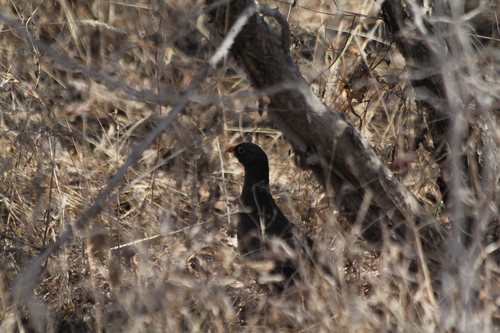 red-billed spurfowl
 red-necked spurfowl
Em resumo
A marca de campo mais confiável entre red-billed spurfowl e red-necked spurfowl é a cor e a extensão da pele nua: red-necked spurfowl apresenta vermelho brilhante no bico, pele facial nua, pescoço e pernas, enquanto red-billed spurfowl limita o vermelho ao bico e tem um anel ocular amarelo conspícuo. Red-billed spurfowl tem partes inferiores finamente listadas, enquanto as partes inferiores de red-necked spurfowl são mais escuras com listras pretas em cinza ou branco. Ambas as espécies são semelhantes em tamanho, mas red-necked spurfowl pode parecer mais robusto. No campo, concentre-se na cor do rosto e do pescoço e verifique o padrão das partes inferiores para uma separação rápida.
Dicas de identificação
- Cor do rosto e pescoço: Red-necked spurfowl apresenta vermelho brilhante extenso no bico, pele facial nua, pescoço e pernas; red-billed spurfowl restringe o vermelho ao bico e tem um anel ocular amarelo conspícuo. Esta é a marca de campo mais confiável em todas as idades e estações.
- Padrão das partes inferiores: Red-billed spurfowl tem partes inferiores finamente listadas, enquanto as partes inferiores de red-necked spurfowl são mais escuras com listras pretas em cinza ou branco. Procure a listagem fina em red-billed, especialmente em boa luz.
- Anel ocular: Red-billed spurfowl apresenta um anel ocular amarelo claro, ausente em red-necked spurfowl. Isso pode ser visível mesmo a uma distância moderada com binóculos.
- Escuridão geral: Red-necked spurfowl parece geralmente mais escuro e mais uniforme acima, enquanto red-billed spurfowl é mais claro com mais contraste entre as partes superiores e inferiores.
- Cor do bico: Ambos têm bicos vermelhos, mas em red-necked spurfowl o vermelho é mais extenso e brilhante, muitas vezes se estendendo para o rosto e pescoço.
- Cor das pernas: Red-necked spurfowl tem pernas vermelhas brilhantes, enquanto as pernas de red-billed spurfowl são menos vividamente coloridas (não descritas como vermelho brilhante nas fontes).
- Dimorfismo sexual: Machos de red-billed spurfowl são maiores que as fêmeas, mas ambos os sexos compartilham a mesma plumagem. A diferença de tamanho é sutil e não confiável no campo, a menos que os pássaros estejam lado a lado.
- Plumagem juvenil/imatura: Nenhuma nota específica sobre diferenças no padrão das asas ou no padrão de voo de juvenis ou imaturos, então confie no padrão do rosto e das partes inferiores em todas as idades.
- Visões em voo: Em voo, procure o padrão das partes inferiores e a extensão do vermelho na cabeça e no pescoço. O anel ocular amarelo de red-billed spurfowl pode ser difícil de ver em voo, mas o pescoço vermelho de red-necked spurfowl pode se destacar.
- Visões empoleiradas: Quando empoleirados, a cor da pele facial e do pescoço são mais fáceis de ver. Use essas marcas antes do padrão das partes inferiores, especialmente em ambientes sombreados ou desordenados.
- Sobreposição de habitat: Ambas as espécies podem ocorrer na mesma região, então não confie apenas na localização. Verifique a abundância local no eBird para pistas, mas sempre confirme com marcas de campo.
- Armadilhas: Em luz fraca, o pescoço vermelho de red-necked spurfowl pode parecer mais opaco, e o anel ocular amarelo de red-billed spurfowl pode ser difícil de ver. Sempre use múltiplas marcas.
- Nenhuma diferença vocal ou comportamental forte é descrita nas fontes, então não confie nisso para separação.
- Estação e idade: Nenhuma mudança de plumagem sazonal ou específica de idade é notada que afete a identificação entre essas duas espécies.
- Dica de resumo: Se você ver um spurfowl com um bico vermelho e anel ocular amarelo, mas sem vermelho no pescoço ou rosto, é red-billed. Se o vermelho se estender para o rosto, pescoço e pernas, é red-necked.
Tamanho
Ambas as espécies se sobrepõem em comprimento, com machos de red-billed spurfowl alcançando até 38 cm e fêmeas cerca de 33 cm, enquanto red-necked spurfowl varia de 25 a 38 cm dependendo da subespécie. No entanto, red-necked spurfowl é geralmente mais pesado (massa adulta ~586 g) e pode parecer mais robusto, especialmente em comparação com a fêmea de red-billed spurfowl. O tamanho sozinho não é um separador seguro, mas um pássaro notavelmente robusto é mais provável que seja red-necked spurfowl.
Plumagem
As diferenças de plumagem são mais aparentes em adultos: red-billed spurfowl tem partes inferiores listadas e um anel ocular amarelo, com vermelho restrito ao bico. Red-necked spurfowl é geralmente mais escuro no geral, com partes superiores marrons e partes inferiores cinzas ou brancas com listras pretas, e apresenta vermelho brilhante extenso no bico, pele facial, pescoço e pernas. Nenhuma diferença específica no padrão das asas de juvenis ou imaturos é descrita nas fontes, então confie no padrão do rosto, pescoço e partes inferiores de adultos. Ambos os sexos são semelhantes em plumagem, mas machos de red-billed spurfowl são maiores. Em luz fraca ou à distância, o anel ocular amarelo de red-billed spurfowl e o pescoço vermelho de red-necked spurfowl são fundamentais.
Comportamento
Ambas as espécies são aves de caça terrestres, frequentemente vistas caminhando ou correndo no chão. Nenhuma diferença comportamental distintiva é notada nas fontes, então o comportamento não é um separador confiável nesta dupla.
Habitat
Ambas as espécies ocorrem no sul da África e podem se sobrepor em alcance. Red-billed spurfowl é registrado de Angola, Botswana, Namíbia, África do Sul, Zâmbia e Zimbábue. Red-necked spurfowl também é residente no sul da África. O habitat sozinho não é diagnóstico, mas a abundância local pode diferir por região (verifique o eBird para sua área).
red-billed spurfowl · red-necked spurfowl · Minhas aves difíceis