

Red-bellied Woodpecker vs Pileated Woodpecker
Melanerpes carolinus versus Dryocopus pileatus
Play a quiz with Red-bellied Woodpecker and Pileated Woodpecker
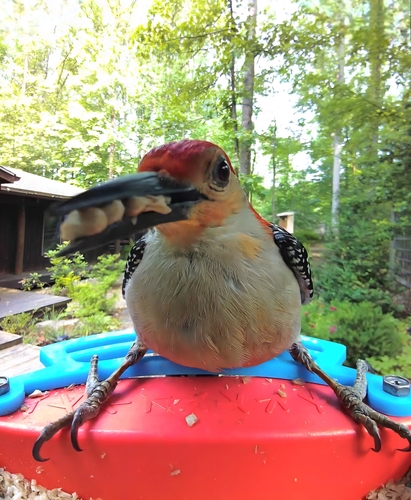 Red-bellied Woodpecker
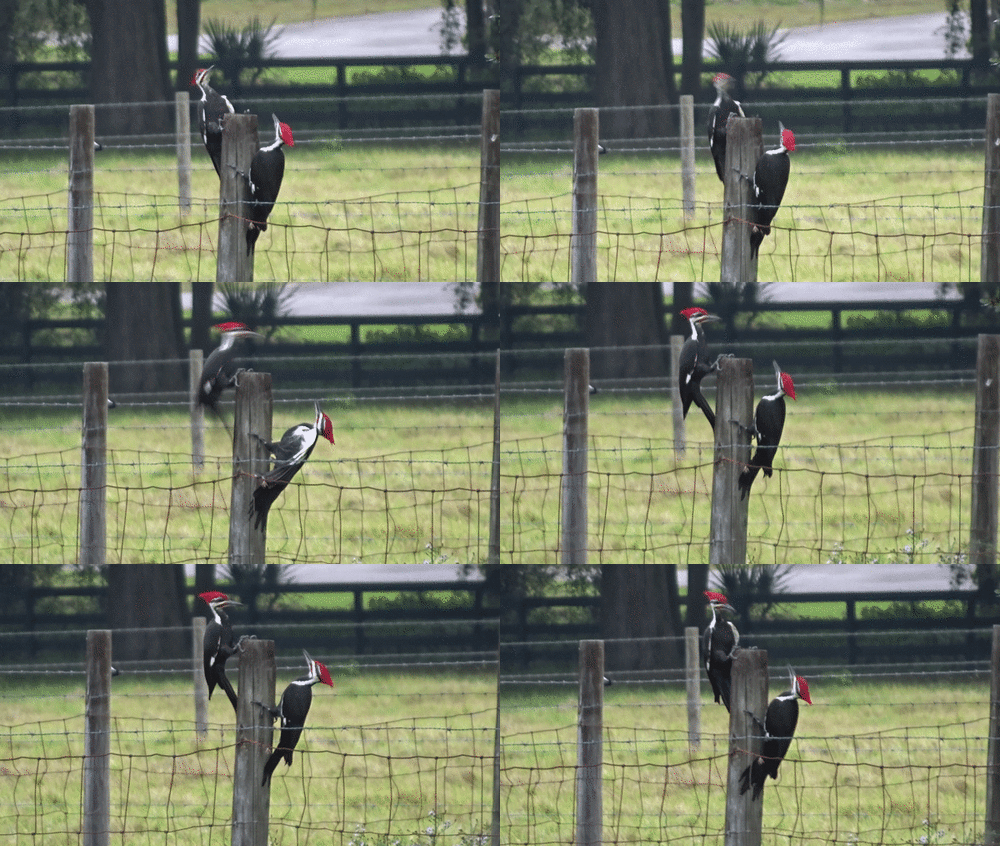 Pileated Woodpecker
In short
The most reliable field mark between Red-bellied and Pileated Woodpeckers is overall size and structure: Pileated is crow-sized with a long neck, massive bill, and a bold red crest, while Red-bellied is much smaller, with a shorter bill and only a red cap or nape. In flight, both show white in the wings, but Pileated flashes large white underwing patches, whereas Red-bellied shows smaller white patches. Juvenile Pileateds have less curved crests, but even young birds are much larger than any Red-bellied. Perched, note the barred black-and-white back of Red-bellied versus the mostly solid black of Pileated. Misidentifications often happen when only the red on the head is glimpsed, but the extent and placement of red are key.
Identification tips
- Size is the first check: If the bird looks crow-sized or larger than a jay, it's Pileated; if it's closer to a starling or robin, it's Red-bellied. This works for all ages and sexes.
- Bill length and shape: Pileated has a long, chisel-like bill nearly as long as its head; Red-bellied's bill is shorter and more proportionate to its head. Use this in perched birds or close flight views.
- Red on head: Pileated has a full, pointed red crest (both sexes), extending well above the crown. Red-bellied males have a red cap from bill to nape; females have a red nape and a separate red patch above the bill. No Red-bellied ever shows a full crest.
- Back pattern: Red-bellied always shows black-and-white barring on the back and wings; Pileated is solid black above (except for white underwing in flight).
- Face and throat: Pileated has a white line down the side of the throat; Red-bellied has a pale gray face and lacks a bold white throat stripe.
- Underparts: Red-bellied is pale gray below, sometimes with a faint reddish wash on the belly (hard to see). Pileated is black below, with white only on the underwing and throat.
- Wing pattern in flight: Both show white patches, but Pileated's are much larger and obvious, flashing white underwings; Red-bellied's white is smaller and less striking.
- Juvenile crests: Young Pileateds have less curved crests but still show the large red 'mohawk'; Red-bellied juveniles resemble adults but with duller red.
- Habitat context: In deep, mature forest, especially with large dead trees, expect Pileated. In open woods, edges, or near houses, Red-bellied is more likely.
- Drumming: Pileated's drumming is deep and resonant, carrying far; Red-bellied's is shorter and less forceful.
- Calls: Pileated gives a loud, ringing 'cuk-cuk-cuk' or laugh; Red-bellied gives a rolling 'chee-wuck' or 'grr, grr'.
- Foraging signs: Large, rectangular holes with big wood chips suggest Pileated; smaller holes and less dramatic excavations are typical of Red-bellied.
- Flight style: Pileated's flight is strong, direct, and undulating, with broad wings; Red-bellied's is more bounding and less powerful.
- Sex differences: Only relevant for subtle head pattern—male Pileated has a red malar stripe, female has black; Red-bellied males have a full red cap, females have red only on nape and above bill.
- Common pitfalls: Glimpsing only red on the head can mislead—always check for crest shape, back pattern, and size before deciding.
Size
Pileated Woodpecker is dramatically larger: at 40–49 cm long and 225–400 g in weight, it is nearly twice the length and over three times the mass of Red-bellied (22.85–26.7 cm, 70.45 g). Pileated's wingspan (66–75 cm) is also much broader than Red-bellied's (38–46 cm). Even at a distance or in silhouette, Pileated's size and proportions—long neck, large head, and heavy bill—stand out, while Red-bellied appears compact and medium-sized for a woodpecker.
Plumage
- Juvenile/immature marks: Juvenile Pileated Woodpeckers have less curved, 'mohawk'-like crests, but still show the large red crest and mostly black body. Juvenile Red-bellied Woodpeckers resemble adults but with duller head markings; both ages show the barred back and paler underparts. No distinctive age-specific upperwing pattern is described for either species, but in flight, both show white patches on the wings—Pileated's are much larger and more obvious.
- Adults: Red-bellied Woodpecker has a pale gray face and underparts, black-and-white barred back, and a red cap (male: from bill to nape; female: red nape and above bill, not continuous). The 'red belly' is subtle and rarely visible. Pileated Woodpecker is mostly black with a bold red crest, white throat stripe, and white underwing patches. Males have a red line from bill to throat; females have a black line. Pileated's back is solid black, lacking the barring of Red-bellied.
Behaviour
Both species drum and excavate cavities, but Pileated Woodpecker's behavior is more conspicuous due to its size and the large rectangular holes it creates. Pileateds often forage by chiseling deep into dead wood, sometimes leaving large piles of wood chips, and their flight is strong and direct but undulating. Red-bellied Woodpeckers are more likely to be seen in open woodlands or suburban areas, moving with shorter, bounding flights and foraging on trunks and branches. Both are territorial during breeding, but Pileated pairs stay together year-round and defend large territories.
Habitat
Pileated Woodpecker prefers mature, extensive deciduous or mixed forests, especially with large dead trees for nesting and foraging. It can also be found in boreal forests and some Pacific coastal forests. Red-bellied Woodpecker is more common in open woodlands, forest edges, and even suburban parks and yards, especially in the eastern US. If seen in deep, mature forest, especially away from human habitation, Pileated is more likely; in fragmented woods or near houses, Red-bellied is more likely.
Voice
Red-bellied Woodpecker gives a rolling, harsh 'chee-wuck, chee-wuck' and a low 'grr, grr' during courtship. Its drumming is rapid but not as resonant as Pileated's. Pileated Woodpecker's call is a loud, resonant 'cuk-cuk-cuk-cuk', often compared to a maniacal laugh, and its drumming is deep and carries far. In the field, Pileated's calls are much louder and more ringing, while Red-bellied's are shorter and less forceful.
Red-bellied Woodpecker · Pileated Woodpecker · My Tricky Birds