

red-bellied woodpecker vs pileated woodpecker
Melanerpes carolinus versus Dryocopus pileatus
Jogue um quiz com red-bellied woodpecker e pileated woodpecker
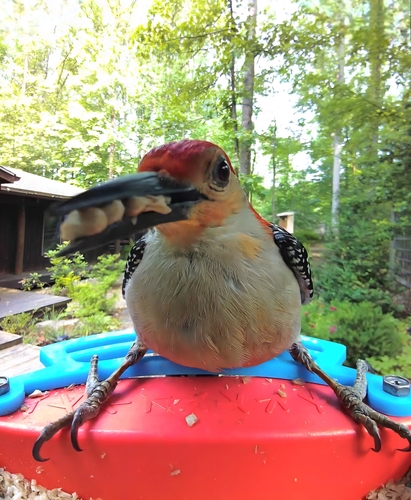 red-bellied woodpecker
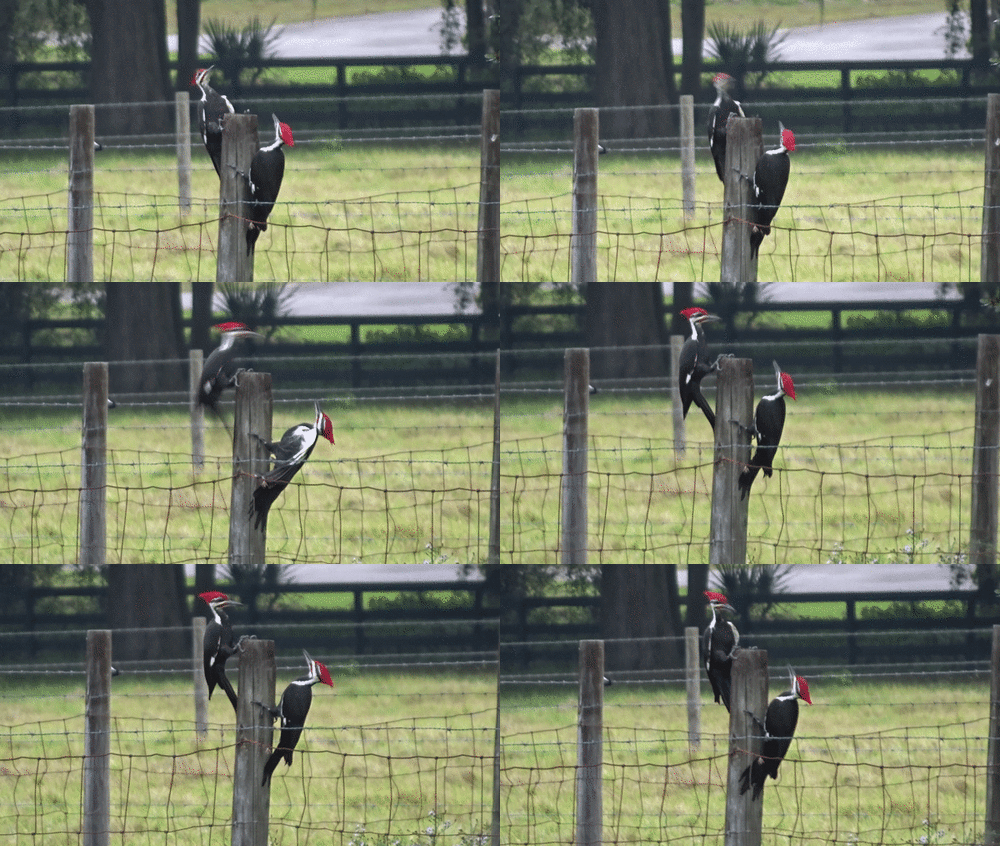 pileated woodpecker
Em resumo
A marca de campo mais confiável entre o red-bellied woodpecker e o pileated woodpecker é o tamanho e a estrutura geral: o pileated é do tamanho de um corvo, com um pescoço longo, bico maciço e uma crista vermelha ousada, enquanto o red-bellied é muito menor, com um bico mais curto e apenas uma touca ou nuca vermelha. Em voo, ambos mostram branco nas asas, mas o pileated exibe grandes manchas brancas na parte inferior das asas, enquanto o red-bellied mostra manchas brancas menores. Os juvenis de pileated têm cristas menos curvadas, mas mesmo os pássaros jovens são muito maiores do que qualquer red-bellied. Empoleirados, note as costas listradas em preto e branco do red-bellied em comparação com o preto sólido do pileated. Identificações erradas frequentemente ocorrem quando apenas o vermelho na cabeça é vislumbrado, mas a extensão e a colocação do vermelho são fundamentais.
Dicas de identificação
- O tamanho é a primeira verificação: Se o pássaro parece do tamanho de um corvo ou maior que um gaio, é um pileated; se está mais próximo de um estorninho ou um rouxinol, é um red-bellied. Isso funciona para todas as idades e sexos.
- Comprimento e forma do bico: O pileated tem um bico longo, semelhante a um cinzel, quase tão longo quanto sua cabeça; o bico do red-bellied é mais curto e mais proporcional à sua cabeça. Use isso em pássaros empoleirados ou em vistas de voo próximas.
- Vermelho na cabeça: O pileated tem uma crista vermelha pontuda e cheia (ambos os sexos), que se estende bem acima da coroa. Os machos de red-bellied têm uma touca vermelha do bico até a nuca; as fêmeas têm uma nuca vermelha e uma mancha vermelha separada acima do bico. Nenhum red-bellied mostra uma crista completa.
- Padrão das costas: O red-bellied sempre mostra listras em preto e branco nas costas e asas; o pileated é preto sólido acima (exceto por branco na parte inferior das asas em voo).
- Face e garganta: O pileated tem uma linha branca ao longo do lado da garganta; o red-bellied tem uma face cinza pálido e não possui uma faixa branca ousada na garganta.
- Partes inferiores: O red-bellied é cinza pálido embaixo, às vezes com uma leve lavagem avermelhada na barriga (difícil de ver). O pileated é preto embaixo, com branco apenas na parte inferior das asas e na garganta.
- Padrão das asas em voo: Ambos mostram manchas brancas, mas as do pileated são muito maiores e óbvias, piscando as partes inferiores brancas; o branco do red-bellied é menor e menos marcante.
- Cristas juvenis: Os jovens pileated têm cristas menos curvadas, mas ainda mostram o grande 'mohawk' vermelho; os juvenis de red-bellied se assemelham aos adultos, mas com vermelho mais apagado.
- Contexto do habitat: Em florestas profundas e maduras, especialmente com grandes árvores mortas, espere encontrar pileated. Em florestas abertas, bordas ou perto de casas, o red-bellied é mais provável.
- Bater: O bater do pileated é profundo e ressonante, se espalhando longe; o do red-bellied é mais curto e menos forte.
- Chamadas: O pileated emite um 'cuk-cuk-cuk' alto e ressonante ou uma risada; o red-bellied emite um 'chee-wuck' ou 'grr, grr' rolante.
- Sinais de forrageamento: Grandes buracos retangulares com grandes lascas de madeira sugerem pileated; buracos menores e escavações menos dramáticas são típicas do red-bellied.
- Estilo de voo: O voo do pileated é forte, direto e ondulante, com asas largas; o do red-bellied é mais saltitante e menos poderoso.
- Diferenças sexuais: Apenas relevante para o padrão sutil da cabeça—o macho pileated tem uma faixa vermelha na região malar, a fêmea tem preta; os machos de red-bellied têm uma touca vermelha completa, as fêmeas têm vermelho apenas na nuca e acima do bico.
- Armadilhas comuns: Vislumbrar apenas o vermelho na cabeça pode enganar—sempre verifique a forma da crista, o padrão das costas e o tamanho antes de decidir.
Tamanho
O pileated woodpecker é dramaticamente maior: com 40–49 cm de comprimento e 225–400 g de peso, é quase duas vezes o comprimento e mais de três vezes a massa do red-bellied (22,85–26,7 cm, 70,45 g). A envergadura do pileated (66–75 cm) também é muito mais ampla do que a do red-bellied (38–46 cm). Mesmo à distância ou em silhueta, o tamanho e as proporções do pileated—pescoço longo, cabeça grande e bico pesado—se destacam, enquanto o red-bellied parece compacto e de tamanho médio para um pica-pau.
Plumagem
- Marcas juvenis/imaturas: Os juvenis de pileated woodpecker têm cristas menos curvadas, semelhantes a 'mohawks', mas ainda mostram a grande crista vermelha e corpo predominantemente preto. Os juvenis de red-bellied woodpecker se assemelham aos adultos, mas com marcas na cabeça mais apagadas; ambas as idades mostram as costas listradas e partes inferiores mais claras. Nenhum padrão de asa específico para a idade é descrito para nenhuma das espécies, mas em voo, ambos mostram manchas brancas nas asas— as do pileated são muito maiores e mais óbvias.
- Adultos: O red-bellied woodpecker tem uma face e partes inferiores cinza pálido, costas listradas em preto e branco, e uma touca vermelha (macho: do bico até a nuca; fêmea: nuca vermelha e acima do bico, não contínua). A 'barriga vermelha' é sutil e raramente visível. O pileated woodpecker é predominantemente preto com uma crista vermelha ousada, faixa branca na garganta e manchas brancas na parte inferior das asas. Os machos têm uma linha vermelha do bico até a garganta; as fêmeas têm uma linha preta. As costas do pileated são pretas sólidas, sem as listras do red-bellied.
Comportamento
Ambas as espécies batem e escavam cavidades, mas o comportamento do pileated woodpecker é mais conspícuo devido ao seu tamanho e aos grandes buracos retangulares que cria. Os pileated frequentemente forrageiam escavando profundamente em madeira morta, às vezes deixando grandes pilhas de lascas de madeira, e seu voo é forte e direto, mas ondulante. Os red-bellied woodpeckers são mais propensos a serem vistos em florestas abertas ou áreas suburbanas, movendo-se com voos mais curtos e saltitantes e forrageando em troncos e galhos. Ambos são territoriais durante a reprodução, mas os pares de pileated permanecem juntos durante todo o ano e defendem grandes territórios.
Habitat
O pileated woodpecker prefere florestas decíduas ou mistas maduras e extensas, especialmente com grandes árvores mortas para nidificação e forrageamento. Também pode ser encontrado em florestas boreais e algumas florestas costeiras do Pacífico. O red-bellied woodpecker é mais comum em florestas abertas, bordas de florestas e até mesmo em parques e quintais suburbanos, especialmente no leste dos EUA. Se visto em florestas profundas e maduras, especialmente longe da habitação humana, o pileated é mais provável; em florestas fragmentadas ou perto de casas, o red-bellied é mais provável.
Voz
O red-bellied woodpecker emite um 'chee-wuck, chee-wuck' áspero e rolante e um 'grr, grr' baixo durante o acasalamento. Seu bater é rápido, mas não tão ressonante quanto o do pileated. A chamada do pileated woodpecker é um 'cuk-cuk-cuk-cuk' alto e ressonante, frequentemente comparado a uma risada maníaca, e seu bater é profundo e se espalha longe. No campo, as chamadas do pileated são muito mais altas e ressonantes, enquanto as do red-bellied são mais curtas e menos fortes.
red-bellied woodpecker · pileated woodpecker · Minhas aves difíceis