

Red-backed Shrike vs Brown Shrike
Lanius collurio versus Lanius cristatus
Play a quiz with Red-backed Shrike and Brown Shrike
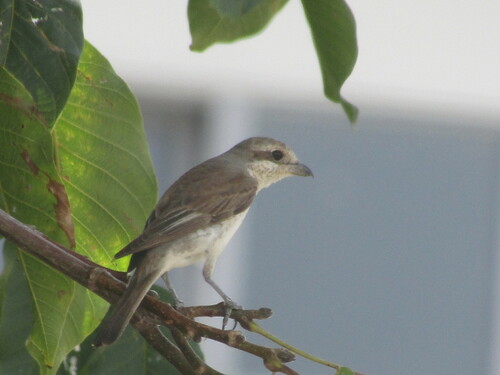 Red-backed Shrike
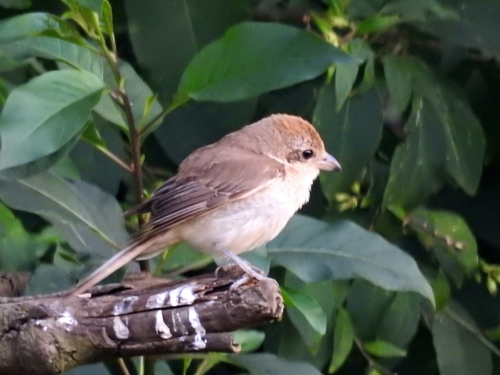 Brown Shrike
In short
The most reliable field mark between Red-backed Shrike and Brown Shrike is the coloration and pattern of the upperparts and head: adult male Red-backed Shrike has a distinctive grey head and rich reddish upperparts, while Brown Shrike is mainly brown above with a less contrasting head and a prominent white brow. Juveniles and females of both species are more similar, but Red-backed Shrike (of all ages/sexes) never shows a strong white supercilium, and Brown Shrike lacks the male Red-backed's blue-grey crown. In flight or perched, look for the presence or absence of white in the wings and the tail color and pattern. Both species can show brown, vermiculated upperparts in young birds, but Brown Shrike is generally plainer and more uniformly brown, with a rounded tail and no white wing mirrors. Use head pattern and tail coloration as your main clues, especially in non-adult males.
Identification tips
- **Adult male Red-backed Shrike shows a blue-grey head and nape with a sharply defined black mask and rich rufous upperparts; Brown Shrike never shows a blue-grey head. Use this mark when seeing a clear male.
- Brown Shrike of all ages and sexes shows a prominent white supercilium (brow) above the mask, especially in subspecies superciliosus and lucionensis; Red-backed Shrike lacks a white brow at all ages.
- Red-backed Shrike females and juveniles have brown upperparts with fine vermiculation (wavy barring) above and below; Brown Shrike females/juveniles are more uniformly brown above and have fine scalloping below, but not the same vermiculation.
- Brown Shrike's mask is usually less crisp and can appear paler in winter; Red-backed Shrike's mask is always sharply defined in males, less so in females/juveniles but still lacks the white brow.
- In flight or when tail is spread, Red-backed Shrike shows a black-and-white tail pattern, especially in males; Brown Shrike's tail is brownish or rufous, rounded, and lacks strong contrast.
- Brown Shrike's wings are plain brown and lack any white 'mirror' or panel; Red-backed Shrike may show some white in the wings, especially in males.
- Subspecies of Brown Shrike may show a greyish crown (lucionensis) or a richer reddish crown (superciliosus), but never the blue-grey of Red-backed Shrike male.
- Both species can show brown, vermiculated upperparts as juveniles, but only Brown Shrike will have a white brow.
- If you see a shrike with a strong white supercilium and brown upperparts, it's a Brown Shrike; if the head is blue-grey and the upperparts are rufous, it's a male Red-backed.
- Geographic location helps: Brown Shrike is mainly Asian, Red-backed is mainly European/West Asian, but vagrants can occur.
- In ambiguous birds (female/juvenile), focus on the presence or absence of the white brow and the pattern of the tail.
- Both species impale prey and hunt from perches, so behavior is not a reliable separator.
- Size is similar and not useful for field separation.
- Vocalizations are not reliably distinct in the field for separating these two species.
- If in doubt, prioritize head pattern (white brow vs blue-grey crown) and tail pattern (contrasting black-and-white vs plain brown) for your identification.
Size
Both species are similar in size, with Brown Shrike having a recorded average mass of 33g. Red-backed Shrike's mass is not provided, but both are medium-sized shrikes and should appear similar through binoculars. Structural differences like tail shape (Brown Shrike's tail is rounded and brownish; Red-backed Shrike's is more contrastingly black and white) may be more helpful than size.
Plumage
- Adult males: Red-backed Shrike males are unmistakable with a blue-grey head, black mask, and rich reddish upperparts. Brown Shrike males are brown above, with a black mask (sometimes paler in winter) and a white brow. The Brown Shrike's mask is less crisp, and the head is never blue-grey.
- Females and juveniles: Both are brown above, but Red-backed Shrike females/juveniles show fine vermiculation (wavy barring) on the upperparts and underparts, while Brown Shrike females have fine scalloping below and are more uniformly brown above. Brown Shrike juveniles/females often show a white supercilium (brow), which Red-backed Shrike lacks at all ages.
- Wings and tail: Red-backed Shrike (all ages) may show a black-and-white tail pattern, especially obvious in males, whereas Brown Shrike's tail is plain brown or rufous, rounded, and lacks strong contrast. Brown Shrike's wings are brown and lack any white 'mirror' patches. Subspecies of Brown Shrike may show variation in crown and rump color, but never the blue-grey of male Red-backed.
Behaviour
Both species perch conspicuously and hunt from elevated positions, impaling prey on thorns or barbed wire. There are no major behavioral differences noted that are diagnostic in the field. Both are migratory and establish territories on wintering grounds.
Habitat
Red-backed Shrike breeds from Western Europe to central Russia and winters in tropical and southern Africa. Brown Shrike is found mainly in Asia, breeding from Mongolia to Siberia and wintering in South and Southeast Asia. Overlap is rare and mainly in central Asia, so geographic context can help, but vagrants do occur. Both use open habitats with scattered bushes or trees.
Voice
No diagnostic vocal differences are described in the notes. Brown Shrike's winter song is faint and may include mimicry, but this is not a reliable field mark for separation from Red-backed Shrike.