

Motmot

Plumed Whistling-Duck vs Fulvous Whistling-Duck

Dendrocygna eytoni versus Dendrocygna bicolor

Play a quiz with Plumed Whistling-Duck and Fulvous Whistling-Duck
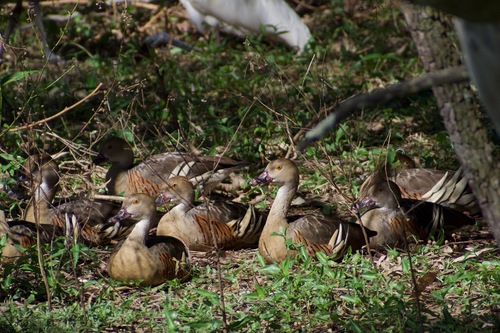
Plumed Whistling-Duck (Dendrocygna eytoni) Plumed Whistling-Duck
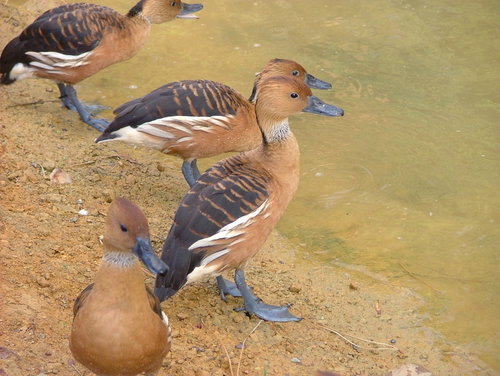
Fulvous Whistling-Duck (Dendrocygna bicolor) Fulvous Whistling-Duck

Media

Loading…

In short

The most reliable field mark to separate Plumed Whistling-Duck from Fulvous Whistling-Duck is the presence of long, black-edged plumes on the flanks of the Plumed Whistling-Duck, which are absent in Fulvous. In flight, Fulvous Whistling-Duck shows a striking white crescent across the rump and black tail, while Plumed Whistling-Duck has a white rump but lacks the bold white tail band. Bill and leg color also differ: Plumed has pinkish-red, Fulvous has grey. Both are long-necked, brown ducks with similar size and shape, so careful attention to flank plumes, rump/tail pattern, and bare part color is essential, especially in mixed or immature flocks.

Identification tips

  1. Flank plumes (all ages): Plumed Whistling-Duck always shows long, black-edged plumes projecting from the flanks—this is the single best field mark. Fulvous never shows these plumes; instead, it has buffy-white flank stripes.
  2. Rump and tail pattern in flight (all ages): Fulvous Whistling-Duck shows a bold white crescent across the rump and a contrasting black tail, especially obvious in flight. Plumed has a white rump but lacks the sharp white/black contrast.
  3. Bill and leg color (adults): Plumed has a pinkish-red bill and legs, while Fulvous has a long grey bill and grey legs. This is visible at close range or in good light.
  4. Chest and underpart color (adults): Plumed shows a chestnut chest with fine black barring; Fulvous is more uniformly rich buff on the head, neck, and breast, with less barring.
  5. Crown and neck stripe (adults): Fulvous has a dark brown to black stripe running from the crown down the nape to the mantle; Plumed lacks this feature.
  6. Eye color (adults): Plumed has yellow irises, which can be visible at close range; Fulvous eye color is not distinctive.
  7. Juvenile plumage: Juvenile Fulvous is paler and duller overall, especially on the flanks, but still lacks plumed flanks. Juvenile Plumed resembles adults in flank plumes.
  8. General structure: Both are long-necked and long-legged, but Plumed may appear slightly heavier and more upright when grazing. Structure is not a primary separator.
  9. Feeding behavior: Plumed often grazes in grassy fields away from water, sometimes in large flocks. Fulvous is more tied to wetlands and paddy fields.
  10. Geographic likelihood: In Australia, Plumed is expected; Fulvous is rare. Elsewhere, check local status.
  11. Sex differences: Both sexes are similar, but Fulvous females can be slightly duller and smaller; not a reliable field mark.
  12. Vocalizations: Both whistle, but calls are not reliably separable without experience.
  13. Flight silhouette: Both have short, rounded wings and long necks; Plumed may show a lowered neck posture in flight.
  14. Pitfalls: Immature Fulvous can appear dull and lack strong flank stripes, but never show plumed flanks. In poor light, bill and leg color may be hard to judge—rely on flank and rump/tail pattern.
  15. Flock context: Both may mix with other whistling ducks; always check multiple field marks, especially in mixed or immature groups.

Size

Both species are similar in overall size and structure, with Plumed Whistling-Duck slightly heavier on average (790g vs 682g). Length and wingspan overlap considerably, so size alone is not a reliable separator in the field. Both have long necks and legs typical of whistling ducks, and neither shows a strong difference in bulk or silhouette that is diagnostic at a distance.

Plumage

For all ages, Plumed Whistling-Duck stands out by its long, black-edged plumes projecting from the flanks, visible both at rest and in flight. Fulvous Whistling-Duck lacks these plumes, instead showing buffy-white stripes on the flanks. In flight, Fulvous reveals a bold white crescent across the rump contrasting with a black tail—this is absent in Plumed, which has a white rump but not the same sharp contrast with the tail. Both have brown upperparts, but Plumed's chest is chestnut with fine black barring, while Fulvous is more uniformly rich buff (fulvous) on head, neck, and breast, with a darker back and a dark stripe down the crown and nape. Juvenile Fulvous are paler and duller, especially on the flanks, but still lack the plumed flanks of Plumed. Both sexes are similar in each species, though Fulvous females can be slightly duller and smaller.

Behaviour

Both species are gregarious and often found in flocks, sometimes mixed with other whistling ducks. Plumed Whistling-Duck often feeds in grassy areas and may be seen grazing away from water, sometimes adopting a characteristic lowered neck posture. Fulvous Whistling-Duck is more likely to be seen in wetlands and rice fields, feeding by day or night. Both species have a whistling call and can be noisy, especially in flight or when alarmed.

Habitat

Plumed Whistling-Duck is resident and breeds mainly in northern and eastern Australia, with some non-breeding records in nearby regions. It prefers grasslands and open wetlands, often grazing in fields. Fulvous Whistling-Duck has a much wider global range, found across tropical regions in the Americas, Africa, and Asia, and prefers wetlands with abundant vegetation, including shallow lakes and paddy fields. In Australia, Plumed is far more likely, while Fulvous is rare or vagrant.

Voice

Both species have clear, whistling calls typical of their genus. Plumed Whistling-Duck gives a characteristic whistle, while Fulvous Whistling-Duck has a clear 'kee-wee-ooo' call, often heard at night or in flight. Calls are similar and not reliably separable in the field without experience, but Fulvous may sound slightly more drawn-out or musical. Both sexes call, but Fulvous shows some sex differences in call structure (not field-diagnostic).

Submit a better description

Use the same sections as the comparison. Your text is published immediately.

The most reliable field mark to separate Plumed Whistling-Duck from Fulvous Whistling-Duck is the presence of long, black-edged plumes on the flanks of the Plumed Whistling-Duck, which are absent in Fulvous. In flight, Fulvous Whistling-Duck shows a striking white crescent across the rump and black tail, while Plumed Whistling-Duck has a white rump but lacks the bold white tail band. Bill and leg color also differ: Plumed has pinkish-red, Fulvous has grey. Both are long-necked, brown ducks with similar size and shape, so careful attention to flank plumes, rump/tail pattern, and bare part color is essential, especially in mixed or immature flocks.

  1. Flank plumes (all ages): Plumed Whistling-Duck always shows long, black-edged plumes projecting from the flanks—this is the single best field mark. Fulvous never shows these plumes; instead, it has buffy-white flank stripes.
  2. Rump and tail pattern in flight (all ages): Fulvous Whistling-Duck shows a bold white crescent across the rump and a contrasting black tail, especially obvious in flight. Plumed has a white rump but lacks the sharp white/black contrast.
  3. Bill and leg color (adults): Plumed has a pinkish-red bill and legs, while Fulvous has a long grey bill and grey legs. This is visible at close range or in good light.
  4. Chest and underpart color (adults): Plumed shows a chestnut chest with fine black barring; Fulvous is more uniformly rich buff on the head, neck, and breast, with less barring.
  5. Crown and neck stripe (adults): Fulvous has a dark brown to black stripe running from the crown down the nape to the mantle; Plumed lacks this feature.
  6. Eye color (adults): Plumed has yellow irises, which can be visible at close range; Fulvous eye color is not distinctive.
  7. Juvenile plumage: Juvenile Fulvous is paler and duller overall, especially on the flanks, but still lacks plumed flanks. Juvenile Plumed resembles adults in flank plumes.
  8. General structure: Both are long-necked and long-legged, but Plumed may appear slightly heavier and more upright when grazing. Structure is not a primary separator.
  9. Feeding behavior: Plumed often grazes in grassy fields away from water, sometimes in large flocks. Fulvous is more tied to wetlands and paddy fields.
  10. Geographic likelihood: In Australia, Plumed is expected; Fulvous is rare. Elsewhere, check local status.
  11. Sex differences: Both sexes are similar, but Fulvous females can be slightly duller and smaller; not a reliable field mark.
  12. Vocalizations: Both whistle, but calls are not reliably separable without experience.
  13. Flight silhouette: Both have short, rounded wings and long necks; Plumed may show a lowered neck posture in flight.
  14. Pitfalls: Immature Fulvous can appear dull and lack strong flank stripes, but never show plumed flanks. In poor light, bill and leg color may be hard to judge—rely on flank and rump/tail pattern.
  15. Flock context: Both may mix with other whistling ducks; always check multiple field marks, especially in mixed or immature groups.

Both species are similar in overall size and structure, with Plumed Whistling-Duck slightly heavier on average (790g vs 682g). Length and wingspan overlap considerably, so size alone is not a reliable separator in the field. Both have long necks and legs typical of whistling ducks, and neither shows a strong difference in bulk or silhouette that is diagnostic at a distance.

For all ages, Plumed Whistling-Duck stands out by its long, black-edged plumes projecting from the flanks, visible both at rest and in flight. Fulvous Whistling-Duck lacks these plumes, instead showing buffy-white stripes on the flanks. In flight, Fulvous reveals a bold white crescent across the rump contrasting with a black tail—this is absent in Plumed, which has a white rump but not the same sharp contrast with the tail. Both have brown upperparts, but Plumed's chest is chestnut with fine black barring, while Fulvous is more uniformly rich buff (fulvous) on head, neck, and breast, with a darker back and a dark stripe down the crown and nape. Juvenile Fulvous are paler and duller, especially on the flanks, but still lack the plumed flanks of Plumed. Both sexes are similar in each species, though Fulvous females can be slightly duller and smaller.

Both species are gregarious and often found in flocks, sometimes mixed with other whistling ducks. Plumed Whistling-Duck often feeds in grassy areas and may be seen grazing away from water, sometimes adopting a characteristic lowered neck posture. Fulvous Whistling-Duck is more likely to be seen in wetlands and rice fields, feeding by day or night. Both species have a whistling call and can be noisy, especially in flight or when alarmed.

Plumed Whistling-Duck is resident and breeds mainly in northern and eastern Australia, with some non-breeding records in nearby regions. It prefers grasslands and open wetlands, often grazing in fields. Fulvous Whistling-Duck has a much wider global range, found across tropical regions in the Americas, Africa, and Asia, and prefers wetlands with abundant vegetation, including shallow lakes and paddy fields. In Australia, Plumed is far more likely, while Fulvous is rare or vagrant.

Both species have clear, whistling calls typical of their genus. Plumed Whistling-Duck gives a characteristic whistle, while Fulvous Whistling-Duck has a clear 'kee-wee-ooo' call, often heard at night or in flight. Calls are similar and not reliably separable in the field without experience, but Fulvous may sound slightly more drawn-out or musical. Both sexes call, but Fulvous shows some sex differences in call structure (not field-diagnostic).

Discard your changes?

You have unsaved edits. If you leave now, those changes will be lost.

Plumed Whistling-Duck · Fulvous Whistling-Duck · My Tricky Birds