

Plumed Whistling-Duck vs Dendrocigna fulva
Dendrocygna eytoni contro Dendrocygna bicolor
Fai un quiz con Plumed Whistling-Duck e Dendrocigna fulva
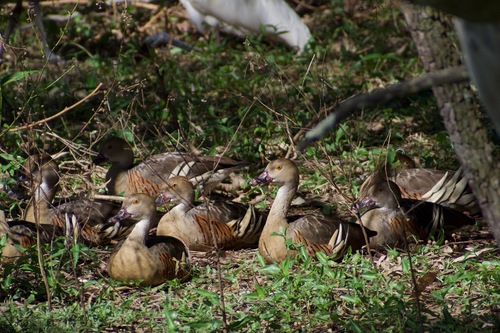 Plumed Whistling-Duck
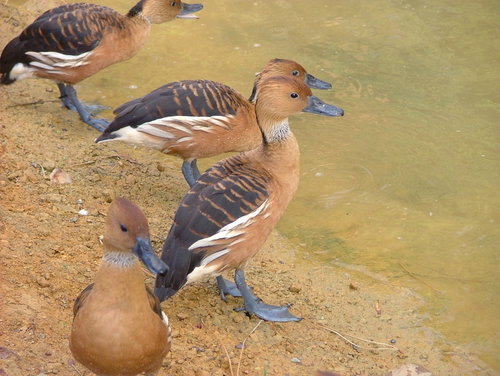 Dendrocigna fulva
In breve
Il segno distintivo più affidabile per separare il Plumed Whistling-Duck dal Dendrocigna fulva è la presenza di lunghe piume con bordi neri sui fianchi del Plumed Whistling-Duck, che sono assenti nel Fulvous. In volo, il Dendrocigna fulva mostra un colpo bianco sorprendente sulla parte posteriore e una coda nera, mentre il Plumed Whistling-Duck ha una parte posteriore bianca ma manca della netta banda bianca sulla coda. Anche il colore del becco e delle gambe differisce: il Plumed ha un becco e gambe rosso-rosati, il Fulvous ha un becco e gambe grigi. Entrambi sono anatre dal collo lungo e marroni con dimensioni e forma simili, quindi è essenziale prestare attenzione alle piume dei fianchi, al modello della parte posteriore/coda e al colore delle parti nude, specialmente in gruppi misti o immaturi.
Consigli di identificazione
- Flank plumes (all ages): Il Plumed Whistling-Duck mostra sempre lunghe piume con bordi neri che sporgono dai fianchi—questo è il segno distintivo migliore. Il Fulvous non mostra mai queste piume; invece, ha strisce bianche sporche sui fianchi.
- Rump and tail pattern in flight (all ages): Il Dendrocigna fulva mostra un colpo bianco audace sulla parte posteriore e una coda nera contrastante, particolarmente evidente in volo. Il Plumed ha una parte posteriore bianca ma manca del netto contrasto bianco/nero.
- Bill and leg color (adults): Il Plumed ha un becco e gambe rosso-rosati, mentre il Fulvous ha un lungo becco grigio e gambe grigie. Questo è visibile da vicino o in buona luce.
- Chest and underpart color (adults): Il Plumed mostra un petto castano con fini barre nere; il Fulvous è più uniformemente di un ricco buff sulla testa, collo e petto, con meno barre.
- Crown and neck stripe (adults): Il Fulvous ha una striscia di marrone scuro a nera che corre dalla corona lungo la nuca fino al mantello; il Plumed manca di questa caratteristica.
- Eye color (adults): Il Plumed ha iridi gialle, che possono essere visibili da vicino; il colore degli occhi del Fulvous non è distintivo.
- Juvenile plumage: Il giovane Fulvous è più chiaro e opaco nel complesso, specialmente sui fianchi, ma manca ancora delle piume dei fianchi del Plumed. Il giovane Plumed assomiglia agli adulti nelle piume dei fianchi.
- General structure: Entrambi hanno colli e gambe lunghi, ma il Plumed può apparire leggermente più pesante e più eretto quando pascola. La struttura non è un separatore primario.
- Feeding behavior: Il Plumed spesso pascola in campi erbosi lontano dall'acqua, a volte in grandi gruppi. Il Fulvous è più legato a zone umide e campi di riso.
- Geographic likelihood: In Australia, il Plumed è atteso; il Fulvous è raro. Altrove, controlla lo stato locale.
- Sex differences: Entrambi i sessi sono simili, ma le femmine di Fulvous possono essere leggermente più opache e più piccole; non è un segno distintivo affidabile.
- Vocalizations: Entrambi fischiano, ma i richiami non sono separabili in modo affidabile senza esperienza.
- Flight silhouette: Entrambi hanno ali corte e arrotondate e colli lunghi; il Plumed può mostrare una postura del collo abbassata in volo.
- Pitfalls: I Fulvous immaturi possono apparire opachi e mancare di forti strisce sui fianchi, ma non mostrano mai piume sui fianchi. In scarsa luce, il colore del becco e delle gambe può essere difficile da giudicare—fai affidamento sul modello dei fianchi e della parte posteriore/coda.
- Flock context: Entrambi possono mescolarsi con altre anatre fischianti; controlla sempre più segni distintivi, specialmente in gruppi misti o immaturi.
Taglia
Entrambe le specie sono simili in dimensioni e struttura complessive, con il Plumed Whistling-Duck leggermente più pesante in media (790g vs 682g). La lunghezza e l'apertura alare si sovrappongono considerevolmente, quindi la dimensione da sola non è un separatore affidabile sul campo. Entrambi hanno colli e gambe lunghi tipici delle anatre fischianti, e nessuno mostra una forte differenza in volume o silhouette che sia diagnostica a distanza.
Piumaggio
Per tutte le età, il Plumed Whistling-Duck si distingue per le sue lunghe piume con bordi neri che sporgono dai fianchi, visibili sia a riposo che in volo. Il Dendrocigna fulva manca di queste piume, mostrando invece strisce bianche sporche sui fianchi. In volo, il Fulvous rivela un audace colpo bianco sulla parte posteriore che contrasta con una coda nera—questo è assente nel Plumed, che ha una parte posteriore bianca ma non lo stesso netto contrasto con la coda. Entrambi hanno parti superiori marroni, ma il petto del Plumed è castano con fini barre nere, mentre il Fulvous è più uniformemente di un ricco buff (fulvous) su testa, collo e petto, con una schiena più scura e una striscia scura lungo la corona e la nuca. I giovani Fulvous sono più chiari e opachi, specialmente sui fianchi, ma mancano ancora delle piume dei fianchi del Plumed. Entrambi i sessi sono simili in ciascuna specie, anche se le femmine di Fulvous possono essere leggermente più opache e più piccole.
Comportamento
Entrambe le specie sono gregarie e spesso si trovano in gruppi, a volte mescolati con altre anatre fischianti. Il Plumed Whistling-Duck si nutre spesso in aree erbose e può essere visto pascolare lontano dall'acqua, a volte adottando una postura caratteristica del collo abbassato. Il Dendrocigna fulva è più probabile che venga visto in zone umide e campi di riso, nutrendosi di giorno o di notte. Entrambe le specie hanno un richiamo fischiante e possono essere rumorose, specialmente in volo o quando allarmate.
Habitat
Il Plumed Whistling-Duck è residente e nidifica principalmente nel nord e nell'est dell'Australia, con alcuni record di non nidificazione nelle regioni vicine. Preferisce praterie e zone umide aperte, spesso pascolando nei campi. Il Dendrocigna fulva ha un'area globale molto più ampia, trovandosi nelle regioni tropicali delle Americhe, Africa e Asia, e preferisce zone umide con abbondante vegetazione, inclusi laghi poco profondi e campi di riso. In Australia, il Plumed è di gran lunga più probabile, mentre il Fulvous è raro o vagante.
Voce
Entrambe le specie hanno richiami chiari e fischianti tipici del loro genere. Il Plumed Whistling-Duck emette un fischio caratteristico, mentre il Dendrocigna fulva ha un chiaro richiamo 'kee-wee-ooo', spesso udito di notte o in volo. I richiami sono simili e non sono separabili in modo affidabile sul campo senza esperienza, ma il Fulvous può suonare leggermente più prolungato o musicale. Entrambi i sessi chiamano, ma il Fulvous mostra alcune differenze sessuali nella struttura del richiamo (non diagnostica sul campo).
Plumed Whistling-Duck · Dendrocigna fulva · I miei uccelli difficili