

Motmot

カザリリュウキュウガモ 対 アカリュウキュウガモ

Dendrocygna eytoni 対 Dendrocygna bicolor

カザリリュウキュウガモとアカリュウキュウガモのクイズ
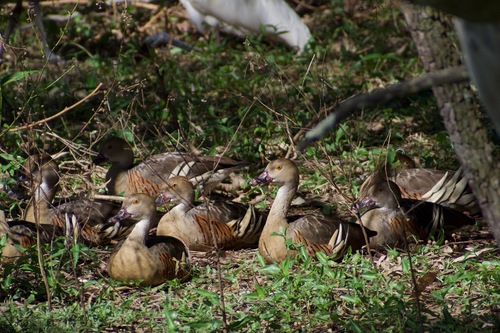
カザリリュウキュウガモ (Dendrocygna eytoni) カザリリュウキュウガモ
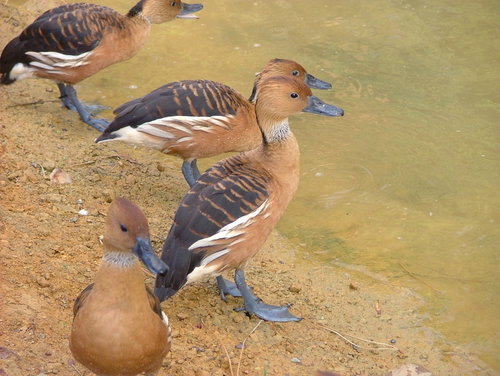
アカリュウキュウガモ (Dendrocygna bicolor) アカリュウキュウガモ

メディア

読み込み中…

要点

プルームドリュウキュウガモとアカリュウキュウガモを区別する最も信頼できるフィールドマークは、プルームドリュウキュウガモの側面にある長い黒縁の羽毛の存在であり、アカリュウキュウガモにはこれがありません。飛行中、アカリュウキュウガモは尻の部分に目立つ白い三日月と黒い尾を示し、プルームドリュウキュウガモは白い尻を持っていますが、太い白い尾の帯が欠けています。くちばしと脚の色も異なります:プルームドリュウキュウガモはピンクがかった赤、アカリュウキュウガモは灰色です。どちらも長い首を持つ茶色のカモで、サイズと形は似ていますので、特に混合群や未熟な群れでは、側面の羽毛、尻/尾のパターン、裸の部分の色に注意を払うことが重要です。

識別のコツ

  1. Flank plumes (all ages): プルームドリュウキュウガモは常に側面から突き出た長い黒縁の羽毛を示します—これは最も良いフィールドマークです。アカリュウキュウガモはこれらの羽毛を示さず、代わりに淡い白の側面のストライプがあります。
  2. Rump and tail pattern in flight (all ages): アカリュウキュウガモは尻の部分に目立つ白い三日月と対照的な黒い尾を示し、特に飛行中に明らかです。プルームドリュウキュウガモは白い尻を持っていますが、鋭い白/黒のコントラストが欠けています。
  3. Bill and leg color (adults): プルームドリュウキュウガモはピンクがかった赤のくちばしと脚を持ち、アカリュウキュウガモは長い灰色のくちばしと灰色の脚を持っています。これは近距離または良い光の下で見ることができます。
  4. Chest and underpart color (adults): プルームドリュウキュウガモは細かい黒の縞模様のある栗色の胸を示し、アカリュウキュウガモは頭、首、胸がより均一に豊かな淡色(アカリュウ)で、縞模様が少ないです。
  5. Crown and neck stripe (adults): アカリュウキュウガモは頭から後頭部にかけて暗い茶色から黒のストライプが走っていますが、プルームドリュウキュウガモにはこの特徴がありません。
  6. Eye color (adults): プルームドリュウキュウガモは黄色の虹彩を持ち、近距離で見ることができますが、アカリュウキュウガモの目の色は特徴的ではありません。
  7. Juvenile plumage: 幼鳥のアカリュウキュウガモは全体的に淡く鈍い色合いで、特に側面で目立ちますが、依然としてプルームのある側面は欠けています。幼鳥のプルームドリュウキュウガモは側面の羽毛で成鳥に似ています。
  8. General structure: 両者とも長い首と長い脚を持っていますが、プルームドリュウキュウガモは草を食べるときにやや重く、より直立して見えることがあります。構造は主要な区別要因ではありません。
  9. Feeding behavior: プルームドリュウキュウガモは水から離れた草地でよく食べ、大きな群れで見られることがあります。アカリュウキュウガモは湿地や水田により結びついています。
  10. Geographic likelihood: オーストラリアでは、プルームドリュウキュウガモが期待され、アカリュウキュウガモは稀です。他の地域では、地元の状況を確認してください。
  11. Sex differences: 両性は似ていますが、アカリュウキュウガモの雌はやや鈍く小さいことがありますが、信頼できるフィールドマークではありません。
  12. Vocalizations: 両者とも口笛を吹きますが、呼び声は経験なしには信頼できる区別ができません。
  13. Flight silhouette: 両者とも短く丸い翼と長い首を持ち、プルームドリュウキュウガモは飛行中に首を下げた姿勢を示すことがあります。
  14. Pitfalls: 未熟なアカリュウキュウガモは鈍く見え、強い側面のストライプが欠けることがありますが、決してプルームのある側面を示しません。光が悪いときは、くちばしと脚の色を判断するのが難しい場合があります—側面と尻/尾のパターンに頼ってください。
  15. Flock context: 両者とも他の口笛カモと混ざることがあります; 特に混合群や未熟なグループでは、常に複数のフィールドマークを確認してください。

大きさ

両種は全体的なサイズと構造が似ており、プルームドリュウキュウガモは平均してやや重い(790g対682g)です。長さと翼幅はかなり重なっているため、サイズだけではフィールドでの信頼できる区別要因にはなりません。両者とも口笛カモに典型的な長い首と脚を持ち、距離から診断できるような体格やシルエットの強い違いは示しません。

羽色

すべての年齢において、プルームドリュウキュウガモは側面から突き出た長い黒縁の羽毛によって際立っており、休んでいるときも飛行中も見ることができます。アカリュウキュウガモはこれらの羽毛が欠けており、代わりに側面に淡い白のストライプを示します。飛行中、アカリュウキュウガモは尻の部分に目立つ白い三日月を示し、黒い尾と対照的です—これはプルームドリュウキュウガモにはなく、白い尻を持っていますが、尾との鋭いコントラストはありません。両者とも茶色の上面を持っていますが、プルームドリュウキュウガモの胸は栗色で細かい黒の縞模様があり、アカリュウキュウガモは頭、首、胸がより均一に豊かな淡色(アカリュウ)で、背中は暗く、頭頂部と後頭部に暗いストライプがあります。幼鳥のアカリュウキュウガモは全体的に淡く鈍い色合いで、特に側面で目立ちますが、依然としてプルームのある側面は欠けています。両性は各種で似ていますが、アカリュウキュウガモの雌はやや鈍く小さいことがあります。

行動

両種は群れを作り、しばしば他の口笛カモと混ざって見られます。プルームドリュウキュウガモは草地でよく食べ、水から離れていることがあり、特徴的な首を下げた姿勢をとることがあります。アカリュウキュウガモは湿地や水田で見られることが多く、昼夜を問わず食べています。両種は口笛の呼び声を持ち、特に飛行中や警戒時に騒がしいことがあります。

生息環境

プルームドリュウキュウガモは主にオーストラリアの北部と東部に生息し繁殖し、近隣地域での非繁殖記録もあります。草地や開放的な湿地を好み、しばしば野原で草を食べます。アカリュウキュウガモは、アメリカ、アフリカ、アジアの熱帯地域に広い分布を持ち、豊富な植生のある湿地、浅い湖や水田を好みます。オーストラリアでは、プルームドリュウキュウガモがはるかに多く、アカリュウキュウガモは稀または迷子です。

声

両種はその属に典型的な明瞭な口笛の呼び声を持っています。プルームドリュウキュウガモは特徴的な口笛を吹き、アカリュウキュウガモは明瞭な「キーウィーオー」という呼び声を持ち、夜や飛行中によく聞かれます。呼び声は似ており、経験なしにはフィールドで信頼できる区別ができませんが、アカリュウキュウガモはやや引き延ばされたり音楽的に聞こえることがあります。両性とも呼びますが、アカリュウキュウガモは呼び声の構造にいくつかの性差を示します(フィールド診断には適していません)。

より良い説明を送る

比較と同じ項目を使ってください。文章はすぐに公開されます。

The most reliable field mark to separate Plumed Whistling-Duck from Fulvous Whistling-Duck is the presence of long, black-edged plumes on the flanks of the Plumed Whistling-Duck, which are absent in Fulvous. In flight, Fulvous Whistling-Duck shows a striking white crescent across the rump and black tail, while Plumed Whistling-Duck has a white rump but lacks the bold white tail band. Bill and leg color also differ: Plumed has pinkish-red, Fulvous has grey. Both are long-necked, brown ducks with similar size and shape, so careful attention to flank plumes, rump/tail pattern, and bare part color is essential, especially in mixed or immature flocks.

  1. Flank plumes (all ages): Plumed Whistling-Duck always shows long, black-edged plumes projecting from the flanks—this is the single best field mark. Fulvous never shows these plumes; instead, it has buffy-white flank stripes.
  2. Rump and tail pattern in flight (all ages): Fulvous Whistling-Duck shows a bold white crescent across the rump and a contrasting black tail, especially obvious in flight. Plumed has a white rump but lacks the sharp white/black contrast.
  3. Bill and leg color (adults): Plumed has a pinkish-red bill and legs, while Fulvous has a long grey bill and grey legs. This is visible at close range or in good light.
  4. Chest and underpart color (adults): Plumed shows a chestnut chest with fine black barring; Fulvous is more uniformly rich buff on the head, neck, and breast, with less barring.
  5. Crown and neck stripe (adults): Fulvous has a dark brown to black stripe running from the crown down the nape to the mantle; Plumed lacks this feature.
  6. Eye color (adults): Plumed has yellow irises, which can be visible at close range; Fulvous eye color is not distinctive.
  7. Juvenile plumage: Juvenile Fulvous is paler and duller overall, especially on the flanks, but still lacks plumed flanks. Juvenile Plumed resembles adults in flank plumes.
  8. General structure: Both are long-necked and long-legged, but Plumed may appear slightly heavier and more upright when grazing. Structure is not a primary separator.
  9. Feeding behavior: Plumed often grazes in grassy fields away from water, sometimes in large flocks. Fulvous is more tied to wetlands and paddy fields.
  10. Geographic likelihood: In Australia, Plumed is expected; Fulvous is rare. Elsewhere, check local status.
  11. Sex differences: Both sexes are similar, but Fulvous females can be slightly duller and smaller; not a reliable field mark.
  12. Vocalizations: Both whistle, but calls are not reliably separable without experience.
  13. Flight silhouette: Both have short, rounded wings and long necks; Plumed may show a lowered neck posture in flight.
  14. Pitfalls: Immature Fulvous can appear dull and lack strong flank stripes, but never show plumed flanks. In poor light, bill and leg color may be hard to judge—rely on flank and rump/tail pattern.
  15. Flock context: Both may mix with other whistling ducks; always check multiple field marks, especially in mixed or immature groups.

Both species are similar in overall size and structure, with Plumed Whistling-Duck slightly heavier on average (790g vs 682g). Length and wingspan overlap considerably, so size alone is not a reliable separator in the field. Both have long necks and legs typical of whistling ducks, and neither shows a strong difference in bulk or silhouette that is diagnostic at a distance.

For all ages, Plumed Whistling-Duck stands out by its long, black-edged plumes projecting from the flanks, visible both at rest and in flight. Fulvous Whistling-Duck lacks these plumes, instead showing buffy-white stripes on the flanks. In flight, Fulvous reveals a bold white crescent across the rump contrasting with a black tail—this is absent in Plumed, which has a white rump but not the same sharp contrast with the tail. Both have brown upperparts, but Plumed's chest is chestnut with fine black barring, while Fulvous is more uniformly rich buff (fulvous) on head, neck, and breast, with a darker back and a dark stripe down the crown and nape. Juvenile Fulvous are paler and duller, especially on the flanks, but still lack the plumed flanks of Plumed. Both sexes are similar in each species, though Fulvous females can be slightly duller and smaller.

Both species are gregarious and often found in flocks, sometimes mixed with other whistling ducks. Plumed Whistling-Duck often feeds in grassy areas and may be seen grazing away from water, sometimes adopting a characteristic lowered neck posture. Fulvous Whistling-Duck is more likely to be seen in wetlands and rice fields, feeding by day or night. Both species have a whistling call and can be noisy, especially in flight or when alarmed.

Plumed Whistling-Duck is resident and breeds mainly in northern and eastern Australia, with some non-breeding records in nearby regions. It prefers grasslands and open wetlands, often grazing in fields. Fulvous Whistling-Duck has a much wider global range, found across tropical regions in the Americas, Africa, and Asia, and prefers wetlands with abundant vegetation, including shallow lakes and paddy fields. In Australia, Plumed is far more likely, while Fulvous is rare or vagrant.

Both species have clear, whistling calls typical of their genus. Plumed Whistling-Duck gives a characteristic whistle, while Fulvous Whistling-Duck has a clear 'kee-wee-ooo' call, often heard at night or in flight. Calls are similar and not reliably separable in the field without experience, but Fulvous may sound slightly more drawn-out or musical. Both sexes call, but Fulvous shows some sex differences in call structure (not field-diagnostic).

変更を破棄しますか?

保存していない編集があります。今離れると失われます。

カザリリュウキュウガモ · アカリュウキュウガモ · 苦手な鳥