

Motmot

Planalto Woodcreeper vs Great Rufous Woodcreeper

Dendrocolaptes platyrostris versus Xiphocolaptes major

Play a quiz with Planalto Woodcreeper and Great Rufous Woodcreeper
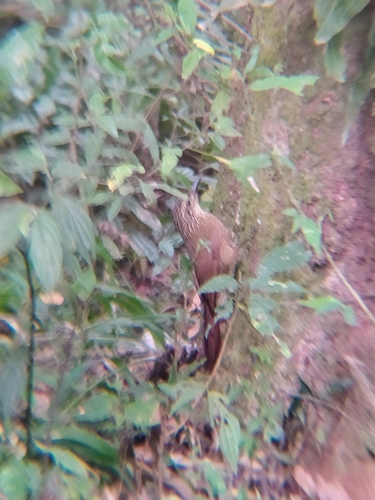
Planalto Woodcreeper (Dendrocolaptes platyrostris) Planalto Woodcreeper
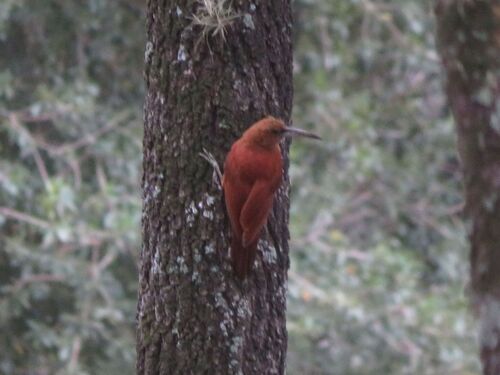
Great Rufous Woodcreeper (Xiphocolaptes major) Great Rufous Woodcreeper

Media

Loading…

In short

The most reliable field mark between Planalto Woodcreeper and Great Rufous Woodcreeper is overall color: Planalto is olive-brown with strong buff streaking, while Great Rufous is a massive, bright rufous-cinnamon bird with minimal streaking. Structure is also a giveaway—Great Rufous is much heavier-bodied, with a long, thick, decurved pale bill, compared to Planalto’s slimmer build and straighter, darker bill. In flight or perched, the Great Rufous’s sheer size and rich rufous tones stand out, while Planalto appears more patterned and less vividly colored. Juvenile-specific wing or flight marks are not described for either species, so focus on overall color, bill shape, and size. Both can overlap in range, but confusion is most likely when only glimpsed or in poor light.

Identification tips

  1. Overall color: Great Rufous Woodcreeper is almost entirely bright rufous-cinnamon, while Planalto is olive-brown with strong buff streaking. This is the quickest field separation at any age.
  2. Bill shape and color: Great Rufous has a long, thick, decurved pale (horn to whitish) bill; Planalto’s bill is medium-length, straight, and black (sometimes with a paler tip). This is especially useful if the head is visible.
  3. Size and structure: Great Rufous is much larger and heavier, with a chunky, robust body and long tail. Planalto is slimmer and lighter, with a more delicate build.
  4. Crown and nape pattern: Planalto shows bold buff streaks on a blackish crown and nape; Great Rufous has a slightly darker rufous crown but lacks strong streaking here (except in some juveniles/subspecies).
  5. Back and rump: Planalto’s back and rump are olive-brown with thin buff streaks; Great Rufous is uniformly rufous-cinnamon above, lacking the streaked back.
  6. Wing and tail color: Planalto’s wings and tail are dull chestnut, contrasting with the olive-brown back; Great Rufous’s wings and tail are rich rufous or chestnut, blending with the rest of the plumage.
  7. Face pattern: Planalto has a dusky face with bold buffy streaks and a faint supercilium; Great Rufous’s face is more uniform rufous with blackish lores, lacking a strong supercilium.
  8. Throat and breast: Planalto’s throat is whitish with faint streaking, and the breast is olive-brown with strong whitish buff streaks; Great Rufous’s throat is pale cinnamon with some whitish buff streaks, and the breast is cinnamon with only faint streaks.
  9. Belly and flanks: Planalto shows thin blackish barring on the belly and flanks; Great Rufous has dusky brownish bars on the belly, but these are less distinct against the rufous background.
  10. Iris color: Great Rufous can show a rich red-brown or crimson iris, especially in good light; Planalto’s iris is brown.
  11. Leg color: Both species have grayish to greenish legs, not reliably diagnostic.
  12. Juvenile plumage: Juvenile Great Rufous is brighter rufous with stronger breast streaks but weaker crown streaks; Planalto juveniles are not described, but likely similar to adults.
  13. Subspecies variation: Some Planalto subspecies (intermedius) are paler and more cinnamon, but never as uniform or bright rufous as Great Rufous. Some Great Rufous subspecies are darker or more streaked, but still much more rufous than any Planalto.
  14. Flight views: No unique wing or flight patterns are described for either species, so rely on size, color, and structure in flight.
  15. Context: Both can occur together, so do not use range or habitat alone for ID. Focus on color, size, and bill shape.

Size

Great Rufous Woodcreeper is dramatically larger and heavier: adults weigh around 156 g (males 120–150 g, females up to 162 g) and measure 27–34 cm long. Planalto Woodcreeper is much slimmer and lighter, at about 58 g and 25–27 cm. In the field, Great Rufous looks chunky and robust, often appearing almost twice the bulk of Planalto. Bill size and shape further exaggerate this difference: Great Rufous has a thick, long, decurved bill, while Planalto’s is medium-length, straight, and slimmer.

Plumage

No distinctive juvenile or immature wing or flight patterns are described for either species, so age-specific flight marks are not diagnostic. For adults, Planalto Woodcreeper is olive-brown above with bold buff streaks on the crown, nape, and back, and a streaked olive-brown breast. Its wings and tail are dull chestnut, with dusky tips on the primaries. The face is dusky with bold buffy streaks and a faint supercilium. The underparts show strong streaking on the breast and fine barring on the belly and flanks. By contrast, Great Rufous Woodcreeper is almost entirely bright rufous-cinnamon, with only faint buffy streaks on the breast and some dusky barring on the belly. Its crown is slightly darker, and the tail is more chestnut. The bill is pale horn to whitish, and the iris can be dark brown to crimson. Juveniles of Great Rufous are even brighter rufous, with stronger breast streaks but weaker crown streaks. Subspecies variation in both can affect overall tone, but Planalto never approaches the uniform rufous of Great Rufous.

Behaviour

Both species are woodcreepers and share similar foraging behaviors, climbing trunks and large branches. However, Great Rufous, due to its size, may appear more ponderous and less agile than the slimmer Planalto. In mixed flocks or at ant swarms, Great Rufous often dominates by size. Both species can be seen moving methodically up trunks, but Great Rufous’s heavy build and large bill make it stand out in direct comparison.

Habitat

Both species overlap in much of their range (Argentina, Brazil, Paraguay), though Great Rufous extends into Bolivia and Planalto into Uruguay. Both occur in forested habitats, but there is no diagnostic habitat separation in the notes. Expect both in mature woodlands and forest edges.

Submit a better description

Use the same sections as the comparison. Your text is published immediately.

The most reliable field mark between Planalto Woodcreeper and Great Rufous Woodcreeper is overall color: Planalto is olive-brown with strong buff streaking, while Great Rufous is a massive, bright rufous-cinnamon bird with minimal streaking. Structure is also a giveaway—Great Rufous is much heavier-bodied, with a long, thick, decurved pale bill, compared to Planalto’s slimmer build and straighter, darker bill. In flight or perched, the Great Rufous’s sheer size and rich rufous tones stand out, while Planalto appears more patterned and less vividly colored. Juvenile-specific wing or flight marks are not described for either species, so focus on overall color, bill shape, and size. Both can overlap in range, but confusion is most likely when only glimpsed or in poor light.

  1. Overall color: Great Rufous Woodcreeper is almost entirely bright rufous-cinnamon, while Planalto is olive-brown with strong buff streaking. This is the quickest field separation at any age.
  2. Bill shape and color: Great Rufous has a long, thick, decurved pale (horn to whitish) bill; Planalto’s bill is medium-length, straight, and black (sometimes with a paler tip). This is especially useful if the head is visible.
  3. Size and structure: Great Rufous is much larger and heavier, with a chunky, robust body and long tail. Planalto is slimmer and lighter, with a more delicate build.
  4. Crown and nape pattern: Planalto shows bold buff streaks on a blackish crown and nape; Great Rufous has a slightly darker rufous crown but lacks strong streaking here (except in some juveniles/subspecies).
  5. Back and rump: Planalto’s back and rump are olive-brown with thin buff streaks; Great Rufous is uniformly rufous-cinnamon above, lacking the streaked back.
  6. Wing and tail color: Planalto’s wings and tail are dull chestnut, contrasting with the olive-brown back; Great Rufous’s wings and tail are rich rufous or chestnut, blending with the rest of the plumage.
  7. Face pattern: Planalto has a dusky face with bold buffy streaks and a faint supercilium; Great Rufous’s face is more uniform rufous with blackish lores, lacking a strong supercilium.
  8. Throat and breast: Planalto’s throat is whitish with faint streaking, and the breast is olive-brown with strong whitish buff streaks; Great Rufous’s throat is pale cinnamon with some whitish buff streaks, and the breast is cinnamon with only faint streaks.
  9. Belly and flanks: Planalto shows thin blackish barring on the belly and flanks; Great Rufous has dusky brownish bars on the belly, but these are less distinct against the rufous background.
  10. Iris color: Great Rufous can show a rich red-brown or crimson iris, especially in good light; Planalto’s iris is brown.
  11. Leg color: Both species have grayish to greenish legs, not reliably diagnostic.
  12. Juvenile plumage: Juvenile Great Rufous is brighter rufous with stronger breast streaks but weaker crown streaks; Planalto juveniles are not described, but likely similar to adults.
  13. Subspecies variation: Some Planalto subspecies (intermedius) are paler and more cinnamon, but never as uniform or bright rufous as Great Rufous. Some Great Rufous subspecies are darker or more streaked, but still much more rufous than any Planalto.
  14. Flight views: No unique wing or flight patterns are described for either species, so rely on size, color, and structure in flight.
  15. Context: Both can occur together, so do not use range or habitat alone for ID. Focus on color, size, and bill shape.

Great Rufous Woodcreeper is dramatically larger and heavier: adults weigh around 156 g (males 120–150 g, females up to 162 g) and measure 27–34 cm long. Planalto Woodcreeper is much slimmer and lighter, at about 58 g and 25–27 cm. In the field, Great Rufous looks chunky and robust, often appearing almost twice the bulk of Planalto. Bill size and shape further exaggerate this difference: Great Rufous has a thick, long, decurved bill, while Planalto’s is medium-length, straight, and slimmer.

No distinctive juvenile or immature wing or flight patterns are described for either species, so age-specific flight marks are not diagnostic. For adults, Planalto Woodcreeper is olive-brown above with bold buff streaks on the crown, nape, and back, and a streaked olive-brown breast. Its wings and tail are dull chestnut, with dusky tips on the primaries. The face is dusky with bold buffy streaks and a faint supercilium. The underparts show strong streaking on the breast and fine barring on the belly and flanks. By contrast, Great Rufous Woodcreeper is almost entirely bright rufous-cinnamon, with only faint buffy streaks on the breast and some dusky barring on the belly. Its crown is slightly darker, and the tail is more chestnut. The bill is pale horn to whitish, and the iris can be dark brown to crimson. Juveniles of Great Rufous are even brighter rufous, with stronger breast streaks but weaker crown streaks. Subspecies variation in both can affect overall tone, but Planalto never approaches the uniform rufous of Great Rufous.

Both species are woodcreepers and share similar foraging behaviors, climbing trunks and large branches. However, Great Rufous, due to its size, may appear more ponderous and less agile than the slimmer Planalto. In mixed flocks or at ant swarms, Great Rufous often dominates by size. Both species can be seen moving methodically up trunks, but Great Rufous’s heavy build and large bill make it stand out in direct comparison.

Both species overlap in much of their range (Argentina, Brazil, Paraguay), though Great Rufous extends into Bolivia and Planalto into Uruguay. Both occur in forested habitats, but there is no diagnostic habitat separation in the notes. Expect both in mature woodlands and forest edges.

Discard your changes?

You have unsaved edits. If you leave now, those changes will be lost.

Planalto Woodcreeper · Great Rufous Woodcreeper · My Tricky Birds