

Motmot

コバシオニキバシリ 対 オオハシブトオニキバシリ

Dendrocolaptes platyrostris 対 Xiphocolaptes major

コバシオニキバシリとオオハシブトオニキバシリのクイズ
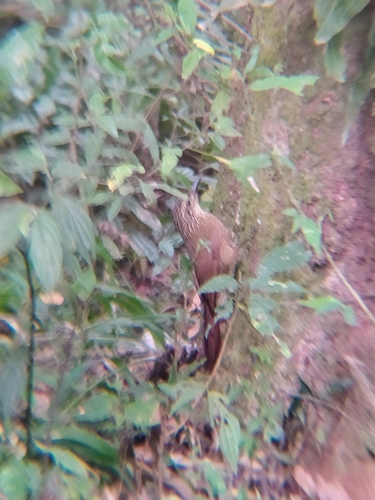
コバシオニキバシリ (Dendrocolaptes platyrostris) コバシオニキバシリ
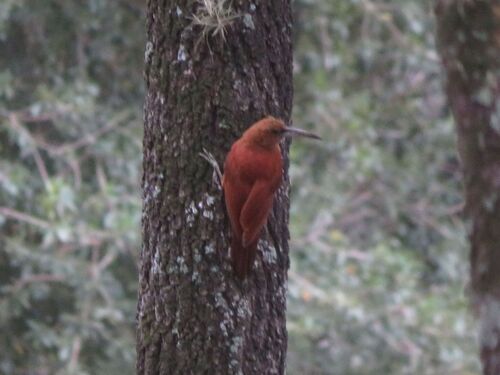
オオハシブトオニキバシリ (Xiphocolaptes major) オオハシブトオニキバシリ

メディア

読み込み中…

要点

プラナルトオニキバシリとオオハシブトオニキバシリの最も信頼できるフィールドマークは全体の色です:プラナルトはオリーブブラウンで強いバフのストリーキングがあり、オオハシブトは巨大で明るいルフスシナモンの鳥で、最小限のストリーキングがあります。構造も手がかりです—オオハシブトは体がずっと重く、長くて太く、下向きの淡いくちばしを持ち、プラナルトのスリムな体型とまっすぐで暗いくちばしと比較されます。飛んでいる時や止まっている時、オオハシブトの大きさと豊かなルフスのトーンが際立ち、プラナルトはよりパターン化され、色が鮮やかではないように見えます。幼鳥特有の翼や飛行マークはどちらの種でも記述されていないため、全体の色、くちばしの形、サイズに焦点を当ててください。両者は範囲が重なることがありますが、ちらっと見たり、光が悪い時に混乱する可能性が最も高いです。

識別のコツ

  1. 全体の色: オオハシブトオニキバシリはほぼ完全に明るいルフスシナモンで、プラナルトはオリーブブラウンで強いバフのストリーキングがあります。これはどの年齢でも最も迅速なフィールドの分離です。
  2. くちばしの形と色: オオハシブトは長くて太く、下向きの淡い(角から白っぽい)くちばしを持っています;プラナルトのくちばしは中程度の長さで、まっすぐで黒(時々淡い先端があります)。これは特に頭が見える場合に役立ちます。
  3. サイズと構造: オオハシブトはずっと大きくて重く、ずんぐりした頑丈な体と長い尾を持っています。プラナルトはスリムで軽く、より繊細な構造です。
  4. 冠と後頭部のパターン: プラナルトは黒っぽい冠と後頭部に大胆なバフのストリーキングを示します;オオハシブトはやや暗いルフスの冠を持っていますが、ここでは強いストリーキングがありません(いくつかの幼鳥/亜種を除く)。
  5. 背中と尾: プラナルトの背中と尾はオリーブブラウンで薄いバフのストリーキングがあります;オオハシブトは上面が均一にルフスシナモンで、ストリーキングのある背中がありません。
  6. 翼と尾の色: プラナルトの翼と尾は鈍い栗色で、オリーブブラウンの背中と対照的です;オオハシブトの翼と尾は豊かなルフスまたは栗色で、羽毛の残りと混ざり合っています。
  7. 顔のパターン: プラナルトは暗い顔に大胆なバフのストリーキングと微かなスーパーシリウムがあります;オオハシブトの顔はより均一なルフスで、黒っぽいロアがあり、強いスーパーシリウムがありません。
  8. 喉と胸: プラナルトの喉は白っぽくて微かなストリーキングがあり、胸はオリーブブラウンで強い白っぽいバフのストリーキングがあります;オオハシブトの喉は淡いシナモンでいくつかの白っぽいバフのストリーキングがあり、胸はシナモンでわずかなストリーキングしかありません。
  9. 腹と側面: プラナルトは腹と側面に薄い黒っぽいバリングを示します;オオハシブトは腹に暗い茶色のバーがありますが、これらはルフスの背景に対してあまり目立ちません。
  10. 虹彩の色: オオハシブトは特に良い光の中で豊かな赤茶色または深紅の虹彩を示すことがあります;プラナルトの虹彩は茶色です。
  11. 脚の色: 両種は灰色から緑がかった脚を持ち、信頼できる診断にはなりません。
  12. 幼鳥の羽毛: 幼鳥のオオハシブトはより明るいルフスで、強い胸のストリーキングがありますが、冠のストリーキングは弱いです;プラナルトの幼鳥は記述されていませんが、大人に似ている可能性があります。
  13. 亜種の変異: 一部のプラナルトの亜種(intermedius)はより淡く、シナモン色ですが、オオハシブトのように均一または明るいルフスにはなりません。いくつかのオオハシブトの亜種はより暗いまたはストリーキングがありますが、いずれにしてもプラナルトよりもずっとルフスです。
  14. 飛行時の視点: どちらの種にも独特の翼や飛行パターンは記述されていないため、飛行中はサイズ、色、構造に頼ってください。
  15. 文脈: 両者は一緒に発生することがあるため、同定のために範囲や生息地だけを使用しないでください。色、サイズ、くちばしの形に焦点を当ててください。

大きさ

オオハシブトオニキバシリは劇的に大きくて重いです:成鳥は約156 g(オス120–150 g、メス最大162 g)で、27–34 cmの長さです。プラナルトオニキバシリはずっとスリムで軽く、約58 gで25–27 cmです。フィールドでは、オオハシブトはずんぐりして頑丈に見え、しばしばプラナルトのほぼ2倍の体積に見えます。くちばしのサイズと形はこの違いをさらに誇張します:オオハシブトは太くて長い下向きのくちばしを持ち、プラナルトのくちばしは中程度の長さで、まっすぐでスリムです。

羽色

どちらの種にも独特の幼鳥または未熟な翼や飛行パターンは記述されていないため、年齢特有の飛行マークは診断にはなりません。成鳥の場合、プラナルトオニキバシリは上面がオリーブブラウンで、冠、後頭部、背中に大胆なバフのストリーキングがあり、ストリーキングのあるオリーブブラウンの胸を持っています。翼と尾は鈍い栗色で、初列羽に暗い先端があります。顔は暗く、大胆なバフのストリーキングと微かなスーパーシリウムがあります。下部は胸に強いストリーキングがあり、腹と側面に細かいバリングがあります。対照的に、オオハシブトオニキバシリはほぼ完全に明るいルフスシナモンで、胸にはわずかなバフのストリーキングと腹にいくつかの暗いバリングがあります。冠はやや暗く、尾はより栗色です。くちばしは淡い角から白っぽく、虹彩は暗い茶色から深紅になることがあります。オオハシブトの幼鳥はさらに明るいルフスで、強い胸のストリーキングがありますが、冠のストリーキングは弱いです。両者の亜種の変異は全体のトーンに影響を与える可能性がありますが、プラナルトはオオハシブトの均一なルフスには決して近づきません。

行動

両種はオニキバシリであり、幹や大きな枝を登る似たような採餌行動を共有しています。しかし、オオハシブトはそのサイズのため、スリムなプラナルトよりも鈍重で機敏さが欠けているように見えることがあります。混合群れやアリの群れでは、オオハシブトはしばしばサイズによって優位に立ちます。両種は幹を上に向かって着実に移動しているのが見られますが、オオハシブトの重い体型と大きなくちばしは直接比較で際立ちます。

生息環境

両種はその範囲の多くで重なります(アルゼンチン、ブラジル、パラグアイ)、ただしオオハシブトはボリビアに、プラナルトはウルグアイに分布しています。両者は森林生息地に生息しますが、ノートには診断的な生息地の分離はありません。成熟した森林や森林の端で両者を期待してください。

より良い説明を送る

比較と同じ項目を使ってください。文章はすぐに公開されます。

The most reliable field mark between Planalto Woodcreeper and Great Rufous Woodcreeper is overall color: Planalto is olive-brown with strong buff streaking, while Great Rufous is a massive, bright rufous-cinnamon bird with minimal streaking. Structure is also a giveaway—Great Rufous is much heavier-bodied, with a long, thick, decurved pale bill, compared to Planalto’s slimmer build and straighter, darker bill. In flight or perched, the Great Rufous’s sheer size and rich rufous tones stand out, while Planalto appears more patterned and less vividly colored. Juvenile-specific wing or flight marks are not described for either species, so focus on overall color, bill shape, and size. Both can overlap in range, but confusion is most likely when only glimpsed or in poor light.

  1. Overall color: Great Rufous Woodcreeper is almost entirely bright rufous-cinnamon, while Planalto is olive-brown with strong buff streaking. This is the quickest field separation at any age.
  2. Bill shape and color: Great Rufous has a long, thick, decurved pale (horn to whitish) bill; Planalto’s bill is medium-length, straight, and black (sometimes with a paler tip). This is especially useful if the head is visible.
  3. Size and structure: Great Rufous is much larger and heavier, with a chunky, robust body and long tail. Planalto is slimmer and lighter, with a more delicate build.
  4. Crown and nape pattern: Planalto shows bold buff streaks on a blackish crown and nape; Great Rufous has a slightly darker rufous crown but lacks strong streaking here (except in some juveniles/subspecies).
  5. Back and rump: Planalto’s back and rump are olive-brown with thin buff streaks; Great Rufous is uniformly rufous-cinnamon above, lacking the streaked back.
  6. Wing and tail color: Planalto’s wings and tail are dull chestnut, contrasting with the olive-brown back; Great Rufous’s wings and tail are rich rufous or chestnut, blending with the rest of the plumage.
  7. Face pattern: Planalto has a dusky face with bold buffy streaks and a faint supercilium; Great Rufous’s face is more uniform rufous with blackish lores, lacking a strong supercilium.
  8. Throat and breast: Planalto’s throat is whitish with faint streaking, and the breast is olive-brown with strong whitish buff streaks; Great Rufous’s throat is pale cinnamon with some whitish buff streaks, and the breast is cinnamon with only faint streaks.
  9. Belly and flanks: Planalto shows thin blackish barring on the belly and flanks; Great Rufous has dusky brownish bars on the belly, but these are less distinct against the rufous background.
  10. Iris color: Great Rufous can show a rich red-brown or crimson iris, especially in good light; Planalto’s iris is brown.
  11. Leg color: Both species have grayish to greenish legs, not reliably diagnostic.
  12. Juvenile plumage: Juvenile Great Rufous is brighter rufous with stronger breast streaks but weaker crown streaks; Planalto juveniles are not described, but likely similar to adults.
  13. Subspecies variation: Some Planalto subspecies (intermedius) are paler and more cinnamon, but never as uniform or bright rufous as Great Rufous. Some Great Rufous subspecies are darker or more streaked, but still much more rufous than any Planalto.
  14. Flight views: No unique wing or flight patterns are described for either species, so rely on size, color, and structure in flight.
  15. Context: Both can occur together, so do not use range or habitat alone for ID. Focus on color, size, and bill shape.

Great Rufous Woodcreeper is dramatically larger and heavier: adults weigh around 156 g (males 120–150 g, females up to 162 g) and measure 27–34 cm long. Planalto Woodcreeper is much slimmer and lighter, at about 58 g and 25–27 cm. In the field, Great Rufous looks chunky and robust, often appearing almost twice the bulk of Planalto. Bill size and shape further exaggerate this difference: Great Rufous has a thick, long, decurved bill, while Planalto’s is medium-length, straight, and slimmer.

No distinctive juvenile or immature wing or flight patterns are described for either species, so age-specific flight marks are not diagnostic. For adults, Planalto Woodcreeper is olive-brown above with bold buff streaks on the crown, nape, and back, and a streaked olive-brown breast. Its wings and tail are dull chestnut, with dusky tips on the primaries. The face is dusky with bold buffy streaks and a faint supercilium. The underparts show strong streaking on the breast and fine barring on the belly and flanks. By contrast, Great Rufous Woodcreeper is almost entirely bright rufous-cinnamon, with only faint buffy streaks on the breast and some dusky barring on the belly. Its crown is slightly darker, and the tail is more chestnut. The bill is pale horn to whitish, and the iris can be dark brown to crimson. Juveniles of Great Rufous are even brighter rufous, with stronger breast streaks but weaker crown streaks. Subspecies variation in both can affect overall tone, but Planalto never approaches the uniform rufous of Great Rufous.

Both species are woodcreepers and share similar foraging behaviors, climbing trunks and large branches. However, Great Rufous, due to its size, may appear more ponderous and less agile than the slimmer Planalto. In mixed flocks or at ant swarms, Great Rufous often dominates by size. Both species can be seen moving methodically up trunks, but Great Rufous’s heavy build and large bill make it stand out in direct comparison.

Both species overlap in much of their range (Argentina, Brazil, Paraguay), though Great Rufous extends into Bolivia and Planalto into Uruguay. Both occur in forested habitats, but there is no diagnostic habitat separation in the notes. Expect both in mature woodlands and forest edges.

変更を破棄しますか?

保存していない編集があります。今離れると失われます。

コバシオニキバシリ · オオハシブトオニキバシリ · 苦手な鳥