

Motmot

Plain Antvireo vs Slaty Antwren

Dysithamnus mentalis versus Myrmotherula schisticolor

Play a quiz with Plain Antvireo and Slaty Antwren
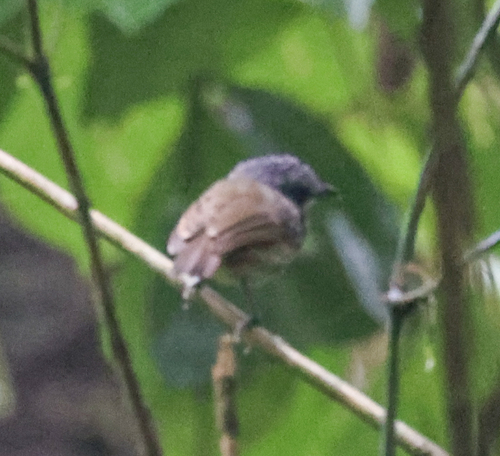
Plain Antvireo (Dysithamnus mentalis) Plain Antvireo
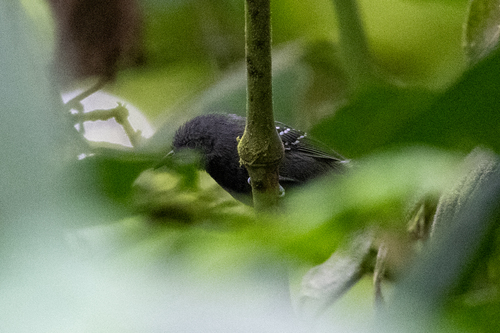
Slaty Antwren (Myrmotherula schisticolor) Slaty Antwren

Media

Loading…

In short

The most reliable way to separate Plain Antvireo from Slaty Antwren is by their structure and plumage: Plain Antvireo is chunkier with a bigger head and shorter tail, while Slaty Antwren is noticeably smaller and slimmer. Males of both species are mostly gray, but the antwren male has a black throat and upper breast, and the antvireo male shows a white-spotted throat and more olive tones. Females are trickier, but antvireo females are warmer and more olive or cinnamon above, while antwren females are grayer above with a pale cinnamon throat and tawny-cinnamon underparts. In flight or perched, check for the antwren's smaller size and more delicate build versus the antvireo's robust jizz. Both can show white-tipped wing coverts, but the overall color balance and structure are key. Both species overlap widely in Central and northern South America, so careful observation is needed.

Identification tips

  1. Structure is key: Plain Antvireo is chunkier, with a big head and short tail, while Slaty Antwren is smaller, slimmer, and more delicate. This is often the fastest field clue, especially in mixed flocks.
  2. Male throat and breast: Male Slaty Antwren has a solid black throat and upper breast, contrasting with the gray of the rest of the body. Male Plain Antvireo has a white throat and upper breast with light gray spots, not solid black.
  3. Male upperparts: Antvireo males are grayish olive above, often with a hidden white scapular patch. Antwren males are more uniformly dark gray, with a hidden white shoulder patch.
  4. Female crown and upperparts: Female Plain Antvireo has a cinnamon-tawny crown and more olive upperparts. Female Slaty Antwren is grayish olive above, with a browner tail and browner wings with rufous edges.
  5. Female underparts: Female antvireo has more extensive yellow below, while female antwren has a pale cinnamon throat and tawny-cinnamon underparts, becoming yellowish brown on the crissum.
  6. Wing coverts: Both species can show white-tipped wing coverts, but the antwren's are set against a darker, grayer wing, while the antvireo's are on a more olive background.
  7. Tail pattern: Both have dark tails with some white, but the antwren's tail is shorter and has thin white edges; the antvireo's is longer and has narrow white tips.
  8. Bill and head: Antvireo has a proportionally larger head and heavier bill, giving a more robust look. Antwren's bill is finer and head smaller.
  9. Behavior: Antwren is more active, often moving quickly through foliage, while antvireo is more deliberate and often sits still for longer periods.
  10. Sex differences: Both species show sexual dimorphism, but the antwren's female is grayer and more cinnamon below, while the antvireo's female is more olive and yellow.
  11. Subspecies variation: Be aware that both species have subspecies with subtle differences, but the main contrasts above hold for most of their range.
  12. White scapular/shoulder patch: Both can show a hidden white patch between the scapulars/shoulders, so this is not diagnostic alone.
  13. Plumage pitfalls: In poor light, the antwren's gray and black can look olive, and the antvireo's olive can look grayish—use structure and throat color as backup.
  14. Habitat overlap: Both species occur in similar habitats, so do not rely on location or context alone.
  15. Size in mixed flocks: When both are present, the size and jizz difference is striking—antvireo is bulkier and slower, antwren is smaller and more active.

Size

Plain Antvireo is distinctly larger and heavier (10–13 cm, 12–16 g) than Slaty Antwren (9–12 cm, 8.5–10 g) [wikipedia][wikidata]. In the field, the antvireo looks chunkier, with a noticeably larger head and thicker body, while the antwren is more petite and slim. The antwren's tail is proportionally shorter, making it appear even smaller and more delicate. When seen together, the size and bulk difference is obvious, but with a single bird, use structure as much as length.

Plumage

No distinctive juvenile or immature upperwing pattern is described for either species, so focus on adult and sex differences.

Adult males: Plain Antvireo males have a dark gray forehead and crown, blackish ear coverts, grayish olive upperparts, and a white-spotted throat and upper breast. Their wings are dark grayish olive with olive edges and white-tipped coverts, and the tail is dark grayish olive with narrow white tips. Slaty Antwren males are mostly dark gray, with a hidden white shoulder patch, black throat and upper breast, and dark gray tail with thin white edges. Their wings are dark gray with white-tipped coverts.

Adult females: Plain Antvireo females have a cinnamon-tawny crown, more olive upperparts and wings, and more extensive yellow on the underparts. They lack the white interscapular patch. Slaty Antwren females are grayish olive above with a browner tail, browner wings with rufous edges, a pale cinnamon throat, olive-brown sides/flanks, and tawny-cinnamon underparts that become yellowish brown on the crissum.

Subspecific variation exists in both, but the above covers the main contrasts. Both species can show white-tipped wing coverts, but the antwren's overall gray and black (male) or gray and cinnamon (female) palette is distinct from the antvireo's olive and yellow tones.

Behaviour

Both species forage in dense vegetation, often in the midstory or understory, and can join mixed-species flocks. Slaty Antwren is especially active, often seen gleaning insects and spiders from leaves and vines, sometimes sallying out for prey. Plain Antvireo is chunkier and moves more deliberately, often perching quietly and making short hops or sallies. The antwren can forage higher (up to 12 m) but is usually between 1–6 m above ground. Both may join mixed flocks, but the antwren is more likely to be seen in small groups or pairs, while the antvireo is often in pairs or singly.

Habitat

Both species overlap widely in range, occurring from Mexico through Central America into northern South America. Both prefer dense, humid forest undergrowth, edges, and second growth. There is no strong habitat separation in the notes, so context is not reliable for separation where both occur.

Submit a better description

Use the same sections as the comparison. Your text is published immediately.

The most reliable way to separate Plain Antvireo from Slaty Antwren is by their structure and plumage: Plain Antvireo is chunkier with a bigger head and shorter tail, while Slaty Antwren is noticeably smaller and slimmer. Males of both species are mostly gray, but the antwren male has a black throat and upper breast, and the antvireo male shows a white-spotted throat and more olive tones. Females are trickier, but antvireo females are warmer and more olive or cinnamon above, while antwren females are grayer above with a pale cinnamon throat and tawny-cinnamon underparts. In flight or perched, check for the antwren's smaller size and more delicate build versus the antvireo's robust jizz. Both can show white-tipped wing coverts, but the overall color balance and structure are key. Both species overlap widely in Central and northern South America, so careful observation is needed.

  1. Structure is key: Plain Antvireo is chunkier, with a big head and short tail, while Slaty Antwren is smaller, slimmer, and more delicate. This is often the fastest field clue, especially in mixed flocks.
  2. Male throat and breast: Male Slaty Antwren has a solid black throat and upper breast, contrasting with the gray of the rest of the body. Male Plain Antvireo has a white throat and upper breast with light gray spots, not solid black.
  3. Male upperparts: Antvireo males are grayish olive above, often with a hidden white scapular patch. Antwren males are more uniformly dark gray, with a hidden white shoulder patch.
  4. Female crown and upperparts: Female Plain Antvireo has a cinnamon-tawny crown and more olive upperparts. Female Slaty Antwren is grayish olive above, with a browner tail and browner wings with rufous edges.
  5. Female underparts: Female antvireo has more extensive yellow below, while female antwren has a pale cinnamon throat and tawny-cinnamon underparts, becoming yellowish brown on the crissum.
  6. Wing coverts: Both species can show white-tipped wing coverts, but the antwren's are set against a darker, grayer wing, while the antvireo's are on a more olive background.
  7. Tail pattern: Both have dark tails with some white, but the antwren's tail is shorter and has thin white edges; the antvireo's is longer and has narrow white tips.
  8. Bill and head: Antvireo has a proportionally larger head and heavier bill, giving a more robust look. Antwren's bill is finer and head smaller.
  9. Behavior: Antwren is more active, often moving quickly through foliage, while antvireo is more deliberate and often sits still for longer periods.
  10. Sex differences: Both species show sexual dimorphism, but the antwren's female is grayer and more cinnamon below, while the antvireo's female is more olive and yellow.
  11. Subspecies variation: Be aware that both species have subspecies with subtle differences, but the main contrasts above hold for most of their range.
  12. White scapular/shoulder patch: Both can show a hidden white patch between the scapulars/shoulders, so this is not diagnostic alone.
  13. Plumage pitfalls: In poor light, the antwren's gray and black can look olive, and the antvireo's olive can look grayish—use structure and throat color as backup.
  14. Habitat overlap: Both species occur in similar habitats, so do not rely on location or context alone.
  15. Size in mixed flocks: When both are present, the size and jizz difference is striking—antvireo is bulkier and slower, antwren is smaller and more active.

Plain Antvireo is distinctly larger and heavier (10–13 cm, 12–16 g) than Slaty Antwren (9–12 cm, 8.5–10 g) [wikipedia][wikidata]. In the field, the antvireo looks chunkier, with a noticeably larger head and thicker body, while the antwren is more petite and slim. The antwren's tail is proportionally shorter, making it appear even smaller and more delicate. When seen together, the size and bulk difference is obvious, but with a single bird, use structure as much as length.

No distinctive juvenile or immature upperwing pattern is described for either species, so focus on adult and sex differences.

Adult males: Plain Antvireo males have a dark gray forehead and crown, blackish ear coverts, grayish olive upperparts, and a white-spotted throat and upper breast. Their wings are dark grayish olive with olive edges and white-tipped coverts, and the tail is dark grayish olive with narrow white tips. Slaty Antwren males are mostly dark gray, with a hidden white shoulder patch, black throat and upper breast, and dark gray tail with thin white edges. Their wings are dark gray with white-tipped coverts.

Adult females: Plain Antvireo females have a cinnamon-tawny crown, more olive upperparts and wings, and more extensive yellow on the underparts. They lack the white interscapular patch. Slaty Antwren females are grayish olive above with a browner tail, browner wings with rufous edges, a pale cinnamon throat, olive-brown sides/flanks, and tawny-cinnamon underparts that become yellowish brown on the crissum.

Subspecific variation exists in both, but the above covers the main contrasts. Both species can show white-tipped wing coverts, but the antwren's overall gray and black (male) or gray and cinnamon (female) palette is distinct from the antvireo's olive and yellow tones.

Both species forage in dense vegetation, often in the midstory or understory, and can join mixed-species flocks. Slaty Antwren is especially active, often seen gleaning insects and spiders from leaves and vines, sometimes sallying out for prey. Plain Antvireo is chunkier and moves more deliberately, often perching quietly and making short hops or sallies. The antwren can forage higher (up to 12 m) but is usually between 1–6 m above ground. Both may join mixed flocks, but the antwren is more likely to be seen in small groups or pairs, while the antvireo is often in pairs or singly.

Both species overlap widely in range, occurring from Mexico through Central America into northern South America. Both prefer dense, humid forest undergrowth, edges, and second growth. There is no strong habitat separation in the notes, so context is not reliable for separation where both occur.

Discard your changes?

You have unsaved edits. If you leave now, those changes will be lost.

Plain Antvireo · Slaty Antwren · My Tricky Birds