

Piping Plover vs Wilson's Plover
Charadrius melodus versus Anarhynchus wilsonia
Play a quiz with Piping Plover and Wilson's Plover
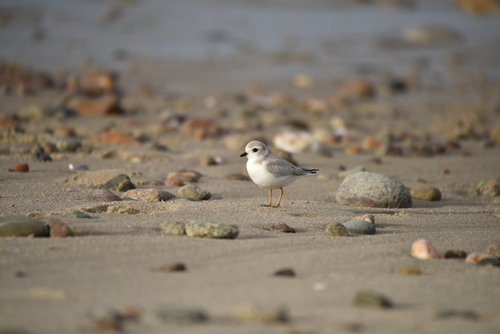 Piping Plover
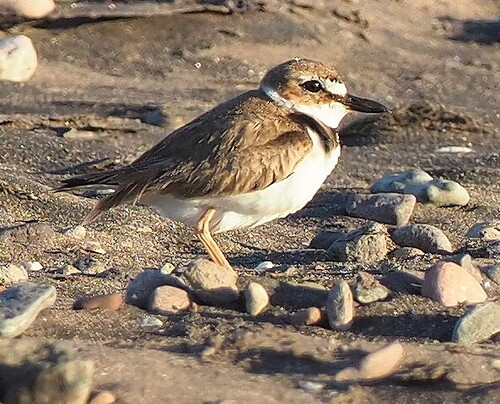 Wilson's Plover
In short
The most reliable field mark to separate Piping Plover from Wilson's Plover is the bill: Piping Plover has a short, stubby orange bill with a black tip, while Wilson's Plover shows a much heavier, all-dark bill. In breeding plumage, Piping Plover has bright orange legs and a neat black neck ring, while Wilson's Plover has pinkish legs and a broader, darker breast band. Juvenile and nonbreeding birds can be trickier, but Wilson's is always bulkier-billed and darker above. Pay close attention to leg color, bill shape, and the sharpness of the breast band, especially when birds are not in full breeding dress.
Identification tips
- Bill shape and color: Piping Plover has a short, stubby orange bill with a black tip (all seasons, all ages); Wilson's Plover has a much heavier, longer, all-dark bill. This is the single best mark at any distance.
- Leg color: Piping Plover shows bright yellow-orange legs (especially in breeding season), while Wilson's Plover has pinkish legs that are brightest in breeding birds. In dull light, leg color can be tricky, but Piping's legs never look pink.
- Breast band: Piping Plover has a thin, complete black neck ring (breeding male) or a faint, broken band (female/immature/nonbreeding); Wilson's Plover has a much broader, darker breast band (black in breeding males, brown/rufous in females/immatures), often appearing heavier and more extensive.
- Forehead and face: Piping Plover shows a neat black band across the forehead from eye to eye (breeding male), while Wilson's Plover breeding male has black lores and forecrown with a rufous mask. Females and nonbreeding Wilson's have less contrast, but still lack the crisp black forehead band of Piping.
- Upperparts color: Piping Plover is pale, sandy, and dull gray/khaki above; Wilson's Plover is darker gray-brown, making it look more contrasting against pale sand.
- Wing pattern in flight: Wilson's Plover has a short white wing bar and white tail sides, which can be seen in good flight views; Piping Plover lacks a strong wing bar and has plainer wings.
- Size and structure: Wilson's Plover is slightly larger and bulkier, with a longer body and heavier bill, but size overlap is significant. Use this only as a supporting clue.
- Jizz: Piping Plover looks compact, round-headed, and quick-moving; Wilson's Plover appears more robust and deliberate.
- Juvenile/immature confusion: Both can show incomplete breast bands, but Piping is always paler and sandier, with a smaller bill and orange legs; Wilson's is darker and bulkier-billed.
- Nonbreeding birds: Both species lose contrast, but bill and leg color remain reliable. Piping Plover's bill dulls but keeps the orange base; Wilson's stays dark.
- Habitat context: On inland sandbars or Great Lakes beaches, Piping Plover is the default. On southern Atlantic or Gulf coasts, both may occur, but Wilson's is more likely in salt flats and tidal lagoons.
- Voice: Wilson's Plover gives a high, weak whistle; Piping Plover's call is not described here, so do not rely on voice for separation.
- Sex differences: Only male Piping Plover in breeding plumage shows a thick black forehead band and neck ring; females are duller and may be confused with Wilson's, but bill and leg color still separate them.
- Seasonal pitfalls: In nonbreeding plumage, both species become duller, but Piping Plover never shows a heavy, all-dark bill or pink legs.
- When in doubt: Focus on bill size and color, then leg color, then overall paleness and breast band width. These three marks will separate nearly all individuals in any plumage.
Size
Both species are small plovers, but Wilson's Plover is slightly larger overall: Piping Plover measures 15–19 cm in length with a mass around 55 g, while Wilson's Plover is 16–20 cm long and weighs 55–70 g ([wikidata]). Wilson's Plover also has a noticeably longer wingspan (about 48 cm vs. 35–41 cm for Piping). In the field, Wilson's Plover may appear a bit more robust and longer-bodied, but size overlap is considerable and not always reliable for a quick ID.
Plumage
-
Juvenile/immature birds: Wilson's Plover immatures resemble adult females, with a brown or incomplete breast band and generally darker upperparts. Piping Plover immatures are paler overall, with a faint or broken breast band and sandy upperparts. No distinctive upperwing pattern is described for either species at this age, so focus on overall tone and bill/leg color.
-
Adult breeding plumage: Piping Plover adults show a clear black band across the forehead and a thin black neck ring (thicker in males), with orange legs and an orange bill tipped black. Wilson's Plover breeding males have a bold black breast band, black lores and forecrown, and a rufous mask; females and nonbreeding males replace black with brown or rufous. Wilson's upperparts are darker gray, with a short white wing bar and white tail sides; their bill is dark and heavy.
-
Nonbreeding plumage: Both species lose some contrast, but Piping Plover remains paler and sandier, with duller leg and bill color, while Wilson's Plover becomes greyer above and on the breast band, but keeps its heavy dark bill and pinkish legs.
Behaviour
Both species forage on open beaches and sandflats, running and pausing to pick prey. Piping Plovers often appear more delicate and quick-footed, with a bouncy, sparrow-like jizz. Wilson's Plover tends to move more deliberately and may appear bulkier, especially when seen side-by-side. In flight, neither species shows a striking upperwing pattern, but Wilson's Plover has a short white wing bar and white tail sides, which can be a subtle clue if seen well.
Habitat
Both species are coastal specialists, but Piping Plover is more strictly tied to open, sandy beaches and gravelly shores, especially in the breeding season ([wikipedia]). Wilson's Plover also breeds on coastal beaches but is more widespread on both Atlantic and Gulf coasts, sometimes using salt flats and tidal lagoons. In the Great Lakes and inland sandbars, only Piping Plover occurs. If you are well inland, especially on the Great Lakes or Missouri River sandbars, Piping Plover is far more likely.
Voice
Wilson's Plover gives a high, weak whistle, but no distinctive vocalization is described for Piping Plover in these notes. Voice is not a primary field mark for separation based on the available information.