

Piping Plover vs Snowy Plover
Charadrius melodus versus Anarhynchus nivosus
Play a quiz with Piping Plover and Snowy Plover
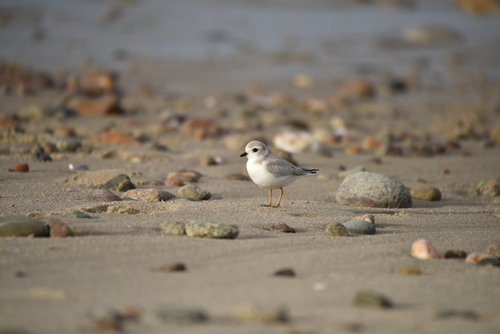 Piping Plover
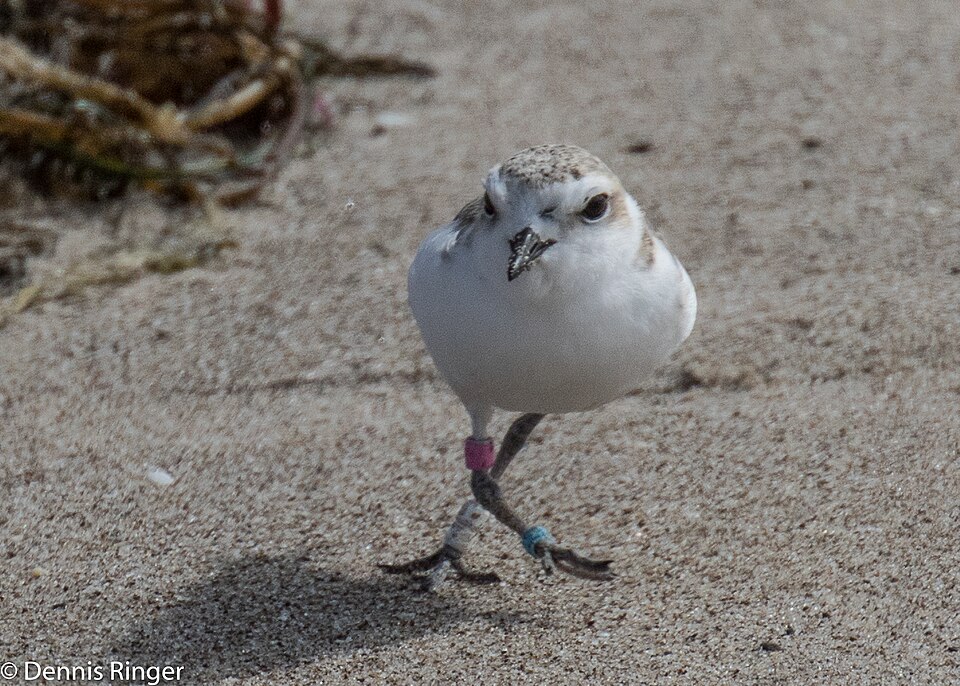 Snowy Plover
In short
The most reliable field mark for separating Piping Plover from Snowy Plover is the pattern of black on the head and breast in breeding adults: Piping Plover shows a bold black forehead band and a complete or nearly complete black breast band (especially in males), while Snowy Plover has only black patches behind the eye and on the sides of the neck, never forming a full breast band. Leg color is also key: Piping Plover has bright yellow-orange legs, whereas Snowy Plover's legs are gray to black. Bill color and shape differ—Piping Plover has a short, thick, orange bill with a black tip; Snowy Plover's bill is all black and slender. Both are small, pale shorebirds of open sandy habitats, but careful attention to these details will prevent confusion, especially outside the breeding season when markings are duller.
Identification tips
- Breast Band (Breeding Adult): Piping Plover males show a bold, complete or nearly complete black breast band; females have a thinner, often incomplete band. Snowy Plover never has a full breast band—only isolated black patches on the sides of the neck. This is the single most diagnostic mark in breeding season.
- Forehead Band: Piping Plover has a black band across the forehead (eye to eye) in breeding plumage; Snowy Plover lacks this, instead showing a black patch behind the eye.
- Leg Color: Piping Plover has bright yellow-orange legs in all plumages and ages; Snowy Plover's legs are always gray to black. This is reliable at all times of year.
- Bill Color and Shape: Piping Plover has a short, thick, orange bill with a black tip (especially in breeding season, duller in winter); Snowy Plover has a slender, all-black bill. Bill color is a strong separator, especially in close views.
- Overall Structure: Piping Plover appears stockier, with a large, rounded head and short, thick neck; Snowy Plover is more delicate, with a shorter, slender bill and longer legs in proportion to body.
- Nonbreeding/Immature Plumage: Both species become much plainer, but Piping Plover retains yellow-orange legs and a stubbier, orange-based bill, while Snowy Plover keeps gray-black legs and an all-black bill. Breast and head markings are faint or absent in both, so rely on leg and bill color.
- Juvenile Plumage: No distinctive upperwing or flight pattern differences are described; focus on structure and bare parts.
- Flight Views: Neither species shows strong wing patterning; separation in flight relies on overall shape and leg/bill color if visible.
- Habitat Preferences: If found on a saline inland lake or salt flat, Snowy Plover is more likely; Piping Plover is more strictly coastal or on large inland rivers/lakes with sandy beaches.
- Sex Differences: Only Piping Plover shows clear sexual dimorphism in the thickness of the breast and forehead bands (males bolder); Snowy Plover sexes are similar.
- Voice: Snowy Plover gives a 'tu-wheet' call, but Piping Plover's call is not described here; do not rely on voice for separation unless familiar with both.
- Size: Piping Plover is slightly heavier and stockier, but size overlap is great; do not use size alone.
- Context: If you see a plover with orange legs and an orange-based bill, it's a Piping Plover; if legs and bill are both black, it's a Snowy Plover.
- Common Pitfall: In dull light or at distance, both can appear very pale and similar; always check leg and bill color first, then look for breast/forehead pattern if in breeding plumage.
- When Marks Fail: In worn or juvenile plumage, or at great distance, separation may be impossible without close views of bare parts. In such cases, consider habitat and range as supporting clues.
Size
Both species are small plovers, but Piping Plover is slightly heavier (average 55 g) than Snowy Plover (40–43 g). Their lengths overlap (Piping: 15–19 cm, Snowy: 15–17 cm), and wingspans are similar (Piping: 35–41 cm, Snowy: 34–43.2 cm). In the field, size alone is not a reliable separator, but Piping Plover may appear a bit stockier and more compact, while Snowy Plover is slightly more delicate and slender overall.
Plumage
For all ages, focus on the head and breast pattern. Breeding adult Piping Plovers have a bold black band across the forehead and a black neck ring (complete or nearly so in males, fainter in females); in nonbreeding plumage, these bands are much reduced but still often visible. Snowy Plovers never show a full breast band—instead, they have black patches behind the eye and on the sides of the neck, which do not connect across the breast. Both are pale sandy above and white below, but Piping Plover tends to look slightly grayer or duller, while Snowy Plover is paler and more buffy. Leg color is diagnostic at all ages: Piping Plover has yellow-orange legs, Snowy Plover has gray to black legs. Bill color also differs: Piping Plover's bill is orange with a black tip (breeding), duller in winter; Snowy Plover's bill is always all black and more slender. Juvenile and nonbreeding birds of both species are plainer, but the leg and bill color differences persist and are key.
Behaviour
Both species forage actively on open sandy beaches or flats, running and pausing to pick at prey. Piping Plover often appears more robust and may move with a more deliberate gait, while Snowy Plover can seem daintier and more buoyant. Both species nest in open areas with little or no vegetation, but Snowy Plover may be slightly more tolerant of saline or inland habitats. In flight, neither species shows strong wing patterning, so separation relies on structure and underwing color, which are not distinctive in these notes.
Habitat
Both species use open, sandy or gravelly beaches, often near water. Piping Plover is more strictly coastal or on large inland lakes/rivers with broad sandbars, while Snowy Plover also frequents salt flats and soda lakes, especially inland. Overlap occurs on some coastal beaches, but Snowy Plover is more likely found in arid, saline environments away from the coast. Habitat alone is not diagnostic where ranges overlap, but can be suggestive in some regions.
Voice
Snowy Plover's typical call is a repeated 'tu-wheet.' No distinctive call is described for Piping Plover in these notes, so vocalizations are not a reliable separator based on the provided information.