

Motmot

Pin-tailed Sandgrouse vs Black-bellied Sandgrouse

Pterocles alchata versus Pterocles orientalis

Play a quiz with Pin-tailed Sandgrouse and Black-bellied Sandgrouse
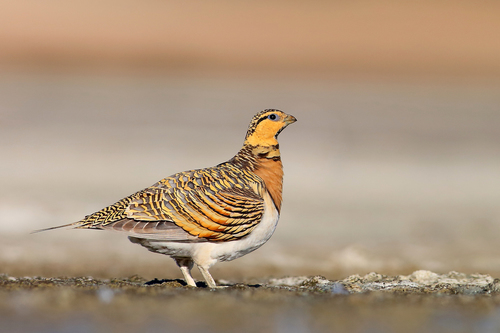
Pin-tailed Sandgrouse (Pterocles alchata) Pin-tailed Sandgrouse
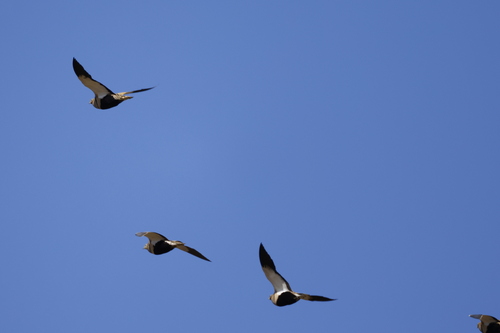
Black-bellied Sandgrouse (Pterocles orientalis) Black-bellied Sandgrouse

Media

Loading…

In short

The most reliable field mark between Pin-tailed and Black-bellied Sandgrouse is seen in flight: Pin-tailed shows bright white underparts and underwing coverts, while Black-bellied has a strikingly black belly contrasting with white underwings. On the ground, Pin-tailed males show a yellowish-green head and neck with a chestnut breast band, whereas Black-bellied males have a grey head and neck with a black belly. Females of both species are duller and more camouflaged, but the black belly of Black-bellied is still diagnostic in most views. Pin-tailed is notably slimmer and lighter, with a longer, pin-shaped tail, while Black-bellied is bulkier. Both species have similar fast, direct flight and flocking behavior, but their plumage and structure provide consistent separation.

Identification tips

  1. In flight, check the belly color: Pin-tailed always shows white underparts and underwing coverts; Black-bellied always has a black belly contrasting with white underwings. This is the most reliable mark for all ages and sexes.
  2. Tail shape: Pin-tailed males have long, pin-like central tail feathers that project well beyond the rest of the tail, visible both perched and in flight. Black-bellied has a shorter, more even tail without long streamers.
  3. Body build: Black-bellied is noticeably bulkier and heavier-bodied than the slimmer, more compact Pin-tailed. This is most apparent when birds are side by side or in mixed flocks.
  4. Head and neck color (males): Pin-tailed males have a yellowish-green head and neck in breeding plumage, while Black-bellied males are grey-headed and grey-necked.
  5. Breast band (males): Pin-tailed males show a broad chestnut breast band bordered by thin black lines, separating the white belly from the green neck. Black-bellied males have a thin black border around the lower breast and a chestnut throat patch, but the black belly dominates.
  6. Female plumage: Female Pin-tailed is more barred above, with golden-buff cheeks and neck, and lacks the black belly. Female Black-bellied is browner and more finely marked above, but still shows a black belly.
  7. Non-breeding plumage: Pin-tailed loses the black throat patch and becomes more uniformly barred above, but never shows a black belly. Black-bellied remains black-bellied year-round.
  8. Upperwing pattern: Both have long, pointed wings with white underwings, but only Black-bellied shows a black belly in flight; Pin-tailed's white underparts extend unbroken.
  9. Voice: Pin-tailed's loud, abrupt 'kattar-kattar' is distinctive and carries far; Black-bellied's call is softer and more rolling. Use calls when visual separation is difficult.
  10. Habitat preference: If seen in an area with some vegetation, Black-bellied is more likely; Pin-tailed can be found in more barren, open plains. This is a supporting clue, not a primary separator.
  11. Flock composition: Both species may flock together at watering holes, but careful scanning for the above marks will separate them.
  12. Bill and head shape: Both have small, pigeon-like heads and short bills; this is not useful for separation.
  13. Contextual clues: During the breeding season, Pin-tailed males are brighter and more contrasting; outside the breeding season, both sexes become duller, but the black belly of Black-bellied is always present.
  14. Juvenile/immature birds: No specific juvenile upperwing pattern is described for either species, but the belly color in flight remains the best separator at all ages.
  15. When in doubt: Prioritize the underparts in flight and the presence or absence of a black belly. Tail shape and body build are next most reliable, especially when birds are perched or on the ground.

Size

Black-bellied Sandgrouse is significantly heavier (mean body mass ~405.5g) than Pin-tailed Sandgrouse (~237.5g), making it the largest sandgrouse in the region. In the field, Black-bellied appears bulkier and more robust, with a stockier body, while Pin-tailed is more slender and compact. Both are similar in overall length (33–39 cm for Black-bellied, about 35 cm for Pin-tailed), but Pin-tailed males have longer, more pointed central tail feathers ('pins'), which accentuate their slimmer profile.

Plumage

In flight, age and sex aside, the underwing and belly pattern are the best separators: Pin-tailed of all ages shows bright white underparts and underwing coverts, with no black on the belly, and long central tail feathers visible from behind. Black-bellied of all ages and sexes has a bold black belly that contrasts with the white underwings, making the black stand out in flight. On the ground, adult male Pin-taileds have a yellowish-green head and neck, chestnut breast band, and barred upperparts, while Black-bellied males have a grey head and neck, chestnut throat patch, golden-brown upperparts, and a black belly. Females of both species are duller, but Black-bellied females retain the black belly and have browner, more finely marked upperparts, while Pin-tailed females are more barred and lack the black belly. Non-breeding Pin-taileds lose the black throat patch and become more uniformly barred above, but still lack any black on the belly.

Behaviour

Both species are gregarious and often seen in flocks, especially when flying to watering holes at dawn. Their flight is fast and direct, with long, pointed wings. On the ground, both are wary and prefer open areas, but Pin-tailed may appear more slender and elongated due to its longer tail. There are no major behavioral differences noted that aid in separation in the field.

Habitat

Both species breed on dry, open plains, but Black-bellied Sandgrouse tends to avoid areas that are completely barren of vegetation, while Pin-tailed can be found in more open, treeless plains. This difference is subtle and not always reliable for field separation, but in areas with some vegetation, Black-bellied is more likely.

Voice

Pin-tailed Sandgrouse has a loud, repeated 'kattar-kattar', a nasal 'ga-ga-ga', and a low-pitched 'gang gang', especially in flight. Black-bellied Sandgrouse gives a softer 'chowrrr rrrr-rrrr'. The Pin-tailed's call is generally louder and more abrupt, while Black-bellied's is softer and more rolling. These differences can help when birds are flying overhead or in poor light.

Submit a better description

Use the same sections as the comparison. Your text is published immediately.

The most reliable field mark between Pin-tailed and Black-bellied Sandgrouse is seen in flight: Pin-tailed shows bright white underparts and underwing coverts, while Black-bellied has a strikingly black belly contrasting with white underwings. On the ground, Pin-tailed males show a yellowish-green head and neck with a chestnut breast band, whereas Black-bellied males have a grey head and neck with a black belly. Females of both species are duller and more camouflaged, but the black belly of Black-bellied is still diagnostic in most views. Pin-tailed is notably slimmer and lighter, with a longer, pin-shaped tail, while Black-bellied is bulkier. Both species have similar fast, direct flight and flocking behavior, but their plumage and structure provide consistent separation.

  1. In flight, check the belly color: Pin-tailed always shows white underparts and underwing coverts; Black-bellied always has a black belly contrasting with white underwings. This is the most reliable mark for all ages and sexes.
  2. Tail shape: Pin-tailed males have long, pin-like central tail feathers that project well beyond the rest of the tail, visible both perched and in flight. Black-bellied has a shorter, more even tail without long streamers.
  3. Body build: Black-bellied is noticeably bulkier and heavier-bodied than the slimmer, more compact Pin-tailed. This is most apparent when birds are side by side or in mixed flocks.
  4. Head and neck color (males): Pin-tailed males have a yellowish-green head and neck in breeding plumage, while Black-bellied males are grey-headed and grey-necked.
  5. Breast band (males): Pin-tailed males show a broad chestnut breast band bordered by thin black lines, separating the white belly from the green neck. Black-bellied males have a thin black border around the lower breast and a chestnut throat patch, but the black belly dominates.
  6. Female plumage: Female Pin-tailed is more barred above, with golden-buff cheeks and neck, and lacks the black belly. Female Black-bellied is browner and more finely marked above, but still shows a black belly.
  7. Non-breeding plumage: Pin-tailed loses the black throat patch and becomes more uniformly barred above, but never shows a black belly. Black-bellied remains black-bellied year-round.
  8. Upperwing pattern: Both have long, pointed wings with white underwings, but only Black-bellied shows a black belly in flight; Pin-tailed's white underparts extend unbroken.
  9. Voice: Pin-tailed's loud, abrupt 'kattar-kattar' is distinctive and carries far; Black-bellied's call is softer and more rolling. Use calls when visual separation is difficult.
  10. Habitat preference: If seen in an area with some vegetation, Black-bellied is more likely; Pin-tailed can be found in more barren, open plains. This is a supporting clue, not a primary separator.
  11. Flock composition: Both species may flock together at watering holes, but careful scanning for the above marks will separate them.
  12. Bill and head shape: Both have small, pigeon-like heads and short bills; this is not useful for separation.
  13. Contextual clues: During the breeding season, Pin-tailed males are brighter and more contrasting; outside the breeding season, both sexes become duller, but the black belly of Black-bellied is always present.
  14. Juvenile/immature birds: No specific juvenile upperwing pattern is described for either species, but the belly color in flight remains the best separator at all ages.
  15. When in doubt: Prioritize the underparts in flight and the presence or absence of a black belly. Tail shape and body build are next most reliable, especially when birds are perched or on the ground.

Black-bellied Sandgrouse is significantly heavier (mean body mass ~405.5g) than Pin-tailed Sandgrouse (~237.5g), making it the largest sandgrouse in the region. In the field, Black-bellied appears bulkier and more robust, with a stockier body, while Pin-tailed is more slender and compact. Both are similar in overall length (33–39 cm for Black-bellied, about 35 cm for Pin-tailed), but Pin-tailed males have longer, more pointed central tail feathers ('pins'), which accentuate their slimmer profile.

In flight, age and sex aside, the underwing and belly pattern are the best separators: Pin-tailed of all ages shows bright white underparts and underwing coverts, with no black on the belly, and long central tail feathers visible from behind. Black-bellied of all ages and sexes has a bold black belly that contrasts with the white underwings, making the black stand out in flight. On the ground, adult male Pin-taileds have a yellowish-green head and neck, chestnut breast band, and barred upperparts, while Black-bellied males have a grey head and neck, chestnut throat patch, golden-brown upperparts, and a black belly. Females of both species are duller, but Black-bellied females retain the black belly and have browner, more finely marked upperparts, while Pin-tailed females are more barred and lack the black belly. Non-breeding Pin-taileds lose the black throat patch and become more uniformly barred above, but still lack any black on the belly.

Both species are gregarious and often seen in flocks, especially when flying to watering holes at dawn. Their flight is fast and direct, with long, pointed wings. On the ground, both are wary and prefer open areas, but Pin-tailed may appear more slender and elongated due to its longer tail. There are no major behavioral differences noted that aid in separation in the field.

Both species breed on dry, open plains, but Black-bellied Sandgrouse tends to avoid areas that are completely barren of vegetation, while Pin-tailed can be found in more open, treeless plains. This difference is subtle and not always reliable for field separation, but in areas with some vegetation, Black-bellied is more likely.

Pin-tailed Sandgrouse has a loud, repeated 'kattar-kattar', a nasal 'ga-ga-ga', and a low-pitched 'gang gang', especially in flight. Black-bellied Sandgrouse gives a softer 'chowrrr rrrr-rrrr'. The Pin-tailed's call is generally louder and more abrupt, while Black-bellied's is softer and more rolling. These differences can help when birds are flying overhead or in poor light.

Discard your changes?

You have unsaved edits. If you leave now, those changes will be lost.

Pin-tailed Sandgrouse · Black-bellied Sandgrouse · My Tricky Birds