

Motmot

シロハラサケイ 対 クロハラサケイ

Pterocles alchata 対 Pterocles orientalis

シロハラサケイとクロハラサケイのクイズ
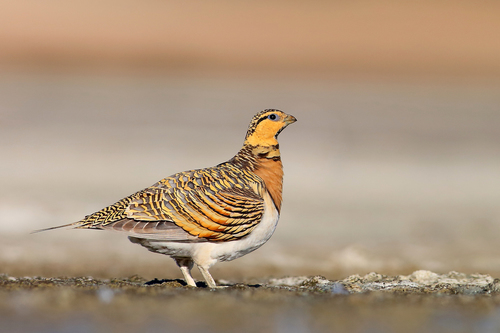
シロハラサケイ (Pterocles alchata) シロハラサケイ
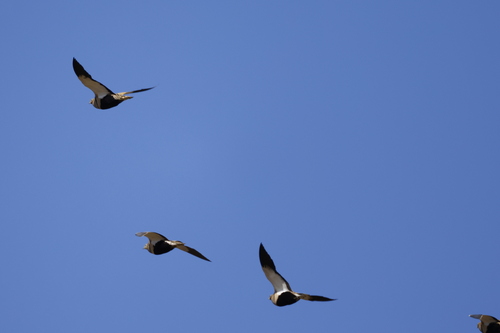
クロハラサケイ (Pterocles orientalis) クロハラサケイ

メディア

読み込み中…

要点

シロハラサケイとクロハラサケイの最も信頼できるフィールドマークは飛行中に見られます:シロハラは明るい白い腹部と翼の下の覆羽を示し、クロハラは白い翼の下と対照的な目を引く黒い腹部を持っています。地上では、シロハラのオスは黄緑色の頭と首に栗色の胸帯を示し、一方、クロハラのオスは灰色の頭と首に黒い腹部を持っています。両種の雌はより鈍く、よりカモフラージュされていますが、クロハラの黒い腹部はほとんどの視点で診断的です。シロハラは特にスリムで軽量で、長くてピンのような尾を持ち、クロハラはより大きいです。両種は似たような速く、直接的な飛行と群れ行動を持っていますが、羽毛と構造が一貫した分離を提供します。

識別のコツ

  1. In flight, check the belly color: シロハラは常に白い腹部と翼の下の覆羽を示し、クロハラは常に白い翼の下と対照的な黒い腹部を持っています。これはすべての年齢と性別に対して最も信頼できるマークです。
  2. Tail shape: シロハラのオスは、尾の残りの部分を超えてよく突き出る長いピンのような中央尾羽を持ち、止まっている時も飛行中も見えます。クロハラは長い流れ羽のない短く、より均一な尾を持っています。
  3. Body build: クロハラはスリムでコンパクトなシロハラよりも明らかに大きく、重い体を持っています。これは、鳥が並んでいる時や混合群れの中で最も明らかです。
  4. Head and neck color (males): シロハラのオスは繁殖羽衣で黄緑色の頭と首を持ち、クロハラのオスは灰色の頭と首を持っています。
  5. Breast band (males): シロハラのオスは、白い腹部と緑の首を分ける薄い黒い線で縁取られた広い栗色の胸帯を示します。クロハラのオスは下胸の周りに薄い黒い縁取りと栗色の喉の斑点を持っていますが、黒い腹部が支配的です。
  6. Female plumage: 雌のシロハラは上部がより縞模様で、金色の頬と首を持ち、黒い腹部がありません。雌のクロハラはより茶色で、上部がより細かく模様付けされていますが、黒い腹部はまだ見えます。
  7. Non-breeding plumage: シロハラは黒い喉の斑点を失い、上部がより均一に縞模様になりますが、黒い腹部は決して見えません。クロハラは年間を通して黒い腹部を保持します。
  8. Upperwing pattern: 両種は白い翼の下を持つ長く尖った翼を持っていますが、飛行中に黒い腹部を示すのはクロハラだけです;シロハラの白い腹部は途切れずに伸びています。
  9. Voice: シロハラの大きく、突然の「カッタル-カッタル」は特徴的で、遠くまで響きます;クロハラの鳴き声はより柔らかく、より流れるようです。視覚的な分離が難しい場合は鳴き声を使用してください。
  10. Habitat preference: もし植生のある地域で見られた場合、クロハラの可能性が高いです;シロハラはより荒れた、開けた平原で見つかることができます。これは補助的な手がかりであり、主要な分離要因ではありません。
  11. Flock composition: 両種は水飲み場で一緒に群れることがありますが、上記のマークを注意深くスキャンすることで分離できます。
  12. Bill and head shape: 両種は小さく、鳩のような頭と短いくちばしを持っています;これは分離には役立ちません。
  13. Contextual clues: 繁殖期には、シロハラのオスはより明るく、対照的です;繁殖期の外では、両性とも鈍くなりますが、クロハラの黒い腹部は常に存在します。
  14. Juvenile/immature birds: どちらの種にも特定の幼鳥の上翼パターンは記載されていませんが、飛行中の腹部の色はすべての年齢で最良の分離要因です。
  15. When in doubt: 飛行中の腹部と黒い腹部の有無を優先してください。尾の形と体の構造は次に信頼できるものであり、特に鳥が止まっている時や地面にいる時に重要です。

大きさ

クロハラサケイはシロハラサケイよりもかなり重く(平均体重約405.5g)、この地域で最大のサケイです。フィールドでは、クロハラはより大きく、より頑丈に見え、体ががっしりしていますが、シロハラはよりスリムでコンパクトです。全体の長さは似ています(クロハラは33〜39 cm、シロハラは約35 cm)が、シロハラのオスはより長く、尖った中央尾羽(「ピン」)を持ち、スリムなプロファイルを強調します。

羽色

飛行中は、年齢や性別に関係なく、翼の下と腹部のパターンが最良の分離要因です:すべての年齢のシロハラは明るい白い腹部と翼の下の覆羽を示し、腹部に黒はなく、後ろから見える長い中央尾羽を持っています。すべての年齢と性別のクロハラは、白い翼の下と対照的な大胆な黒い腹部を持ち、飛行中に黒が際立ちます。地上では、成鳥のオスのシロハラは黄緑色の頭と首、栗色の胸帯、縞模様の上部を持ち、クロハラのオスは灰色の頭と首、栗色の喉の斑点、金茶色の上部、黒い腹部を持っています。両種の雌は鈍いですが、クロハラの雌は黒い腹部を保持し、より茶色で、より細かく模様付けされていますが、シロハラの雌はより縞模様で、黒い腹部がありません。非繁殖期のシロハラは黒い喉の斑点を失い、上部がより均一に縞模様になりますが、腹部に黒はありません。

行動

両種は群れを成し、特に夜明けに水飲み場に飛ぶ時に群れで見られることが多いです。彼らの飛行は速く、直接的で、長く尖った翼を持っています。地上では、両種とも警戒心が強く、開けた場所を好みますが、シロハラは長い尾のためによりスリムで細長く見えることがあります。フィールドでの分離を助けるための主要な行動の違いは特に記載されていません。

生息環境

両種は乾燥した開けた平原で繁殖しますが、クロハラサケイは完全に植生のない地域を避ける傾向があり、シロハラはより開けた、樹木のない平原で見つかることができます。この違いは微妙で、フィールドでの分離には常に信頼できるわけではありませんが、植生のある地域ではクロハラの可能性が高いです。

声

シロハラサケイは大きく、繰り返される「カッタル-カッタル」、鼻にかかった「ガーガーガー」、低音の「ガングアン」を持ち、特に飛行中に聞こえます。クロハラサケイはより柔らかい「チョウrrr rrrr-rrrr」を出します。シロハラの鳴き声は一般的により大きく、急激ですが、クロハラの鳴き声はより柔らかく、より流れるようです。これらの違いは、鳥が頭上を飛んでいる時や薄暗い時に役立ちます。

より良い説明を送る

比較と同じ項目を使ってください。文章はすぐに公開されます。

The most reliable field mark between Pin-tailed and Black-bellied Sandgrouse is seen in flight: Pin-tailed shows bright white underparts and underwing coverts, while Black-bellied has a strikingly black belly contrasting with white underwings. On the ground, Pin-tailed males show a yellowish-green head and neck with a chestnut breast band, whereas Black-bellied males have a grey head and neck with a black belly. Females of both species are duller and more camouflaged, but the black belly of Black-bellied is still diagnostic in most views. Pin-tailed is notably slimmer and lighter, with a longer, pin-shaped tail, while Black-bellied is bulkier. Both species have similar fast, direct flight and flocking behavior, but their plumage and structure provide consistent separation.

  1. In flight, check the belly color: Pin-tailed always shows white underparts and underwing coverts; Black-bellied always has a black belly contrasting with white underwings. This is the most reliable mark for all ages and sexes.
  2. Tail shape: Pin-tailed males have long, pin-like central tail feathers that project well beyond the rest of the tail, visible both perched and in flight. Black-bellied has a shorter, more even tail without long streamers.
  3. Body build: Black-bellied is noticeably bulkier and heavier-bodied than the slimmer, more compact Pin-tailed. This is most apparent when birds are side by side or in mixed flocks.
  4. Head and neck color (males): Pin-tailed males have a yellowish-green head and neck in breeding plumage, while Black-bellied males are grey-headed and grey-necked.
  5. Breast band (males): Pin-tailed males show a broad chestnut breast band bordered by thin black lines, separating the white belly from the green neck. Black-bellied males have a thin black border around the lower breast and a chestnut throat patch, but the black belly dominates.
  6. Female plumage: Female Pin-tailed is more barred above, with golden-buff cheeks and neck, and lacks the black belly. Female Black-bellied is browner and more finely marked above, but still shows a black belly.
  7. Non-breeding plumage: Pin-tailed loses the black throat patch and becomes more uniformly barred above, but never shows a black belly. Black-bellied remains black-bellied year-round.
  8. Upperwing pattern: Both have long, pointed wings with white underwings, but only Black-bellied shows a black belly in flight; Pin-tailed's white underparts extend unbroken.
  9. Voice: Pin-tailed's loud, abrupt 'kattar-kattar' is distinctive and carries far; Black-bellied's call is softer and more rolling. Use calls when visual separation is difficult.
  10. Habitat preference: If seen in an area with some vegetation, Black-bellied is more likely; Pin-tailed can be found in more barren, open plains. This is a supporting clue, not a primary separator.
  11. Flock composition: Both species may flock together at watering holes, but careful scanning for the above marks will separate them.
  12. Bill and head shape: Both have small, pigeon-like heads and short bills; this is not useful for separation.
  13. Contextual clues: During the breeding season, Pin-tailed males are brighter and more contrasting; outside the breeding season, both sexes become duller, but the black belly of Black-bellied is always present.
  14. Juvenile/immature birds: No specific juvenile upperwing pattern is described for either species, but the belly color in flight remains the best separator at all ages.
  15. When in doubt: Prioritize the underparts in flight and the presence or absence of a black belly. Tail shape and body build are next most reliable, especially when birds are perched or on the ground.

Black-bellied Sandgrouse is significantly heavier (mean body mass ~405.5g) than Pin-tailed Sandgrouse (~237.5g), making it the largest sandgrouse in the region. In the field, Black-bellied appears bulkier and more robust, with a stockier body, while Pin-tailed is more slender and compact. Both are similar in overall length (33–39 cm for Black-bellied, about 35 cm for Pin-tailed), but Pin-tailed males have longer, more pointed central tail feathers ('pins'), which accentuate their slimmer profile.

In flight, age and sex aside, the underwing and belly pattern are the best separators: Pin-tailed of all ages shows bright white underparts and underwing coverts, with no black on the belly, and long central tail feathers visible from behind. Black-bellied of all ages and sexes has a bold black belly that contrasts with the white underwings, making the black stand out in flight. On the ground, adult male Pin-taileds have a yellowish-green head and neck, chestnut breast band, and barred upperparts, while Black-bellied males have a grey head and neck, chestnut throat patch, golden-brown upperparts, and a black belly. Females of both species are duller, but Black-bellied females retain the black belly and have browner, more finely marked upperparts, while Pin-tailed females are more barred and lack the black belly. Non-breeding Pin-taileds lose the black throat patch and become more uniformly barred above, but still lack any black on the belly.

Both species are gregarious and often seen in flocks, especially when flying to watering holes at dawn. Their flight is fast and direct, with long, pointed wings. On the ground, both are wary and prefer open areas, but Pin-tailed may appear more slender and elongated due to its longer tail. There are no major behavioral differences noted that aid in separation in the field.

Both species breed on dry, open plains, but Black-bellied Sandgrouse tends to avoid areas that are completely barren of vegetation, while Pin-tailed can be found in more open, treeless plains. This difference is subtle and not always reliable for field separation, but in areas with some vegetation, Black-bellied is more likely.

Pin-tailed Sandgrouse has a loud, repeated 'kattar-kattar', a nasal 'ga-ga-ga', and a low-pitched 'gang gang', especially in flight. Black-bellied Sandgrouse gives a softer 'chowrrr rrrr-rrrr'. The Pin-tailed's call is generally louder and more abrupt, while Black-bellied's is softer and more rolling. These differences can help when birds are flying overhead or in poor light.

変更を破棄しますか?

保存していない編集があります。今離れると失われます。

シロハラサケイ · クロハラサケイ · 苦手な鳥