

Ganga Ibérica vs Ganga Ortega
Pterocles alchata frente a Pterocles orientalis
Juega un quiz con Ganga Ibérica y Ganga Ortega
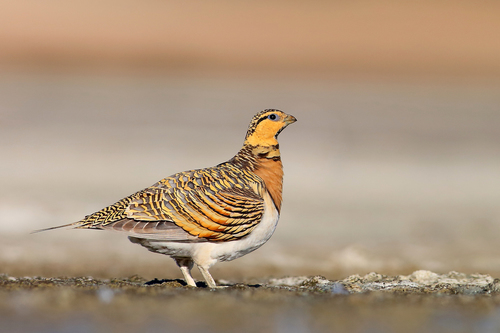 Ganga Ibérica
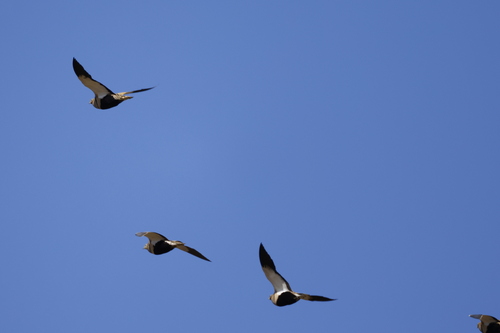 Ganga Ortega
En breve
La marca de campo más confiable entre la Ganga Ibérica y la Ganga Ortega se observa en vuelo: la Ganga Ibérica muestra partes inferiores y coberturas de alas inferiores blancas brillantes, mientras que la Ganga Ortega tiene un vientre notablemente negro que contrasta con las alas inferiores blancas. En el suelo, los machos de la Ganga Ibérica muestran una cabeza y cuello verde amarillento con una banda pectoral castaña, mientras que los machos de la Ganga Ortega tienen una cabeza y cuello grises con un vientre negro. Las hembras de ambas especies son más apagadas y están más camufladas, pero el vientre negro de la Ganga Ortega sigue siendo diagnóstico en la mayoría de las vistas. La Ganga Ibérica es notablemente más delgada y ligera, con una cola más larga y en forma de pin, mientras que la Ganga Ortega es más robusta. Ambas especies tienen un vuelo rápido y directo similar y un comportamiento de bandada, pero su plumaje y estructura proporcionan una separación consistente.
Consejos de identificación
- En vuelo, verifica el color del vientre: La Ganga Ibérica siempre muestra partes inferiores y coberturas de alas inferiores blancas; la Ganga Ortega siempre tiene un vientre negro que contrasta con las alas inferiores blancas. Esta es la marca más confiable para todas las edades y sexos.
- Forma de la cola: Los machos de la Ganga Ibérica tienen plumas centrales de la cola largas y en forma de pin que sobresalen bien más allá del resto de la cola, visibles tanto posados como en vuelo. La Ganga Ortega tiene una cola más corta y más uniforme sin largas cintas.
- Conformación del cuerpo: La Ganga Ortega es notablemente más robusta y pesada que la Ganga Ibérica, que es más delgada y compacta. Esto es más evidente cuando los pájaros están uno al lado del otro o en bandadas mixtas.
- Color de cabeza y cuello (machos): Los machos de la Ganga Ibérica tienen una cabeza y cuello verde amarillento en plumaje de cría, mientras que los machos de la Ganga Ortega son de cabeza y cuello grises.
- Banda pectoral (machos): Los machos de la Ganga Ibérica muestran una amplia banda pectoral castaña bordeada por delgadas líneas negras, separando el vientre blanco del cuello verde. Los machos de la Ganga Ortega tienen un delgado borde negro alrededor de la parte inferior del pecho y una mancha de garganta castaña, pero el vientre negro domina.
- Plumaje de las hembras: La hembra de la Ganga Ibérica es más estriada en la parte superior, con mejillas y cuello de color dorado-amarillento, y carece del vientre negro. La hembra de la Ganga Ortega es más marrón y está más finamente marcada en la parte superior, pero aún muestra un vientre negro.
- Plumaje no reproductivo: La Ganga Ibérica pierde la mancha de garganta negra y se vuelve más uniformemente estriada en la parte superior, pero nunca muestra un vientre negro. La Ganga Ortega permanece con vientre negro durante todo el año.
- Patrón de las alas superiores: Ambas tienen alas largas y puntiagudas con alas inferiores blancas, pero solo la Ganga Ortega muestra un vientre negro en vuelo; las partes inferiores blancas de la Ganga Ibérica se extienden sin interrupción.
- Voz: El fuerte y abrupto 'kattar-kattar' de la Ganga Ibérica es distintivo y se escucha a lo lejos; el llamado de la Ganga Ortega es más suave y más rodante. Usa los llamados cuando la separación visual es difícil.
- Preferencia de hábitat: Si se ve en un área con algo de vegetación, es más probable que sea la Ganga Ortega; la Ganga Ibérica se puede encontrar en llanuras más áridas y abiertas. Esta es una pista de apoyo, no un separador primario.
- Composición de la bandada: Ambas especies pueden agruparse en charcas, pero un escaneo cuidadoso de las marcas anteriores las separará.
- Forma del pico y la cabeza: Ambas tienen cabezas pequeñas, similares a las de las palomas, y picos cortos; esto no es útil para la separación.
- Pistas contextuales: Durante la temporada de cría, los machos de la Ganga Ibérica son más brillantes y contrastantes; fuera de la temporada de cría, ambos sexos se vuelven más apagados, pero el vientre negro de la Ganga Ortega siempre está presente.
- Aves juveniles/inmaduras: No se describe un patrón específico de alas superiores juveniles para ninguna de las especies, pero el color del vientre en vuelo sigue siendo el mejor separador a todas las edades.
- Cuando tengas dudas: Prioriza las partes inferiores en vuelo y la presencia o ausencia de un vientre negro. La forma de la cola y la conformación del cuerpo son las siguientes más confiables, especialmente cuando los pájaros están posados o en el suelo.
Tamaño
La Ganga Ortega es significativamente más pesada (masa corporal media ~405.5g) que la Ganga Ibérica (~237.5g), lo que la convierte en la mayor ganga de la región. En el campo, la Ganga Ortega parece más robusta y sólida, con un cuerpo más robusto, mientras que la Ganga Ibérica es más delgada y compacta. Ambas son similares en longitud total (33–39 cm para la Ganga Ortega, aproximadamente 35 cm para la Ganga Ibérica), pero los machos de la Ganga Ibérica tienen plumas centrales de la cola más largas y puntiagudas ('pins'), que acentúan su perfil más delgado.
Plumaje
En vuelo, dejando de lado la edad y el sexo, el patrón de las alas inferiores y el vientre son los mejores separadores: la Ganga Ibérica de todas las edades muestra partes inferiores y coberturas de alas inferiores blancas brillantes, sin negro en el vientre, y plumas centrales de la cola largas visibles desde atrás. La Ganga Ortega de todas las edades y sexos tiene un vientre negro audaz que contrasta con las alas inferiores blancas, haciendo que el negro resalte en vuelo. En el suelo, los machos adultos de la Ganga Ibérica tienen una cabeza y cuello verde amarillento, banda pectoral castaña y partes superiores estriadas, mientras que los machos de la Ganga Ortega tienen una cabeza y cuello grises, mancha de garganta castaña, partes superiores de color marrón dorado y un vientre negro. Las hembras de ambas especies son más apagadas, pero las hembras de la Ganga Ortega retienen el vientre negro y tienen partes superiores más marrones y finamente marcadas, mientras que las hembras de la Ganga Ibérica son más estriadas y carecen del vientre negro. Las Ganga Ibérica no reproductivas pierden la mancha de garganta negra y se vuelven más uniformemente estriadas en la parte superior, pero aún carecen de negro en el vientre.
Comportamiento
Ambas especies son gregarias y a menudo se ven en bandadas, especialmente cuando vuelan hacia charcas al amanecer. Su vuelo es rápido y directo, con alas largas y puntiagudas. En el suelo, ambas son cautelosas y prefieren áreas abiertas, pero la Ganga Ibérica puede parecer más delgada y alargada debido a su cola más larga. No se han notado diferencias de comportamiento importantes que ayuden en la separación en el campo.
Hábitat
Ambas especies crían en llanuras secas y abiertas, pero la Ganga Ortega tiende a evitar áreas que están completamente desprovistas de vegetación, mientras que la Ganga Ibérica se puede encontrar en llanuras más abiertas y sin árboles. Esta diferencia es sutil y no siempre es confiable para la separación en el campo, pero en áreas con algo de vegetación, es más probable que se encuentre la Ganga Ortega.
Voz
La Ganga Ibérica tiene un fuerte 'kattar-kattar' repetido, un nasal 'ga-ga-ga' y un 'gang gang' de tono bajo, especialmente en vuelo. La Ganga Ortega emite un 'chowrrr rrrr-rrrr' más suave. El llamado de la Ganga Ibérica es generalmente más fuerte y abrupto, mientras que el de la Ganga Ortega es más suave y más rodante. Estas diferencias pueden ayudar cuando los pájaros vuelan por encima o en condiciones de poca luz.