

Pennant-winged Nightjar vs Rufous-cheeked Nightjar
Caprimulgus vexillarius versus Caprimulgus rufigena
Play a quiz with Pennant-winged Nightjar and Rufous-cheeked Nightjar
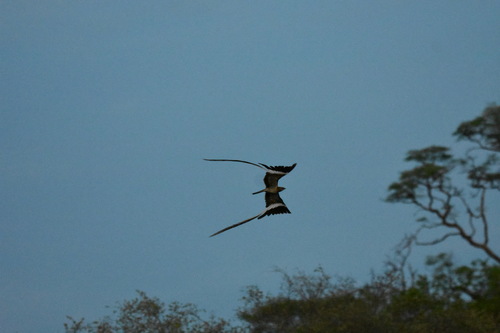 Pennant-winged Nightjar
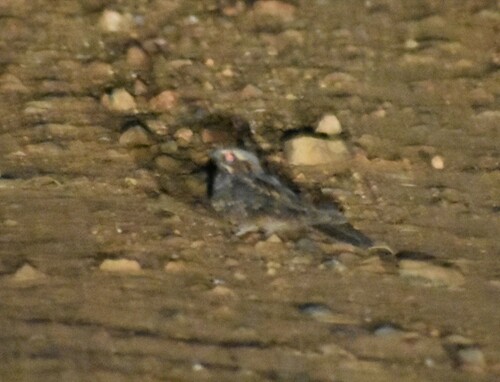 Rufous-cheeked Nightjar
In short
The most reliable field mark for separating Pennant-winged Nightjar from Rufous-cheeked Nightjar is the spectacular breeding male's pennant-like second primary: a long, streamer-like feather that is unique among nightjars and instantly diagnostic in flight or perched views. Outside the breeding season and in females or immatures, separation becomes more subtle, relying on wing pattern, overall coloration, and structure. Pennant-winged Nightjar males show a bold white band across black primaries, while Rufous-cheeked Nightjar males have more diffuse white in the primaries and a rufous-spotted, paler body. Both species are intra-African migrants with overlapping ranges, but their plumage and structure in the field are distinct if carefully observed.
Identification tips
- Breeding male Pennant-winged Nightjar is unmistakable: Look for the extremely long, streamer-like second primary (the 'pennant')—no other nightjar in Africa shows this feature. This mark is present only in breeding males and is shed or broken off after breeding.
- Broad white band on primaries (male Pennant-winged): Even without the pennant, males show a bold, broad white band across otherwise black primaries. This is much more striking and sharply defined than the white in Rufous-cheeked Nightjar.
- White in primaries and tail (Rufous-cheeked): Males have more diffuse white in the primaries and less in the tail than fiery-necked nightjar, but still more than Pennant-winged. Females show buff (not white) marks in these areas.
- Overall coloration: Pennant-winged Nightjar is generally darker, especially in males, with less rufous and more blackish tones. Rufous-cheeked Nightjar is paler, with rufous spots and a less distinct collar, blending into sandy or stony ground.
- Female and non-breeding male separation: Without the pennant, rely on the sharper, broader white (or buff) wing markings and overall darker (Pennant-winged) vs paler, rufous-spotted (Rufous-cheeked) body.
- Juvenile confusion: Juvenile Rufous-cheeked Nightjars are extremely well-camouflaged with counter-shaded down, but no unique flight marks are described for either species at this age. Young Pennant-winged Nightjars lack the pennant and appear as large, dark nightjars.
- Wing shape in flight: Breeding male Pennant-winged Nightjar has distinctly angular wings due to the length of the 1st–3rd and 9th primaries. Rufous-cheeked Nightjar has typical nightjar wing shape, lacking this angularity.
- Tail corners: Rufous-cheeked Nightjar males have white in the tail corners, females have buff; Pennant-winged Nightjar does not show such tail markings.
- Perched posture: Both may perch lengthwise on branches or on the ground, but Pennant-winged Nightjar may appear bulkier, especially in males.
- Size and jizz: Pennant-winged Nightjar is heavier and can appear larger, especially with pennant feathers. Rufous-cheeked is more compact and paler.
- Vocalization: If you hear a long, continuous churring at night, it's Rufous-cheeked Nightjar. Pennant-winged Nightjar's vocalizations are not described in these notes.
- Habitat context: Both use open ground for nesting, but Rufous-cheeked Nightjar is especially tied to sandy or stony areas where its camouflage is most effective. Use this in combination with plumage.
- Seasonal context: If you see a pennant-winged male with streamers, it's breeding season (roughly late dry to early wet season, varies by region). Outside this period, separation is more challenging and relies on subtle plumage and structure.
- Pitfall: Non-breeding male and female Pennant-winged Nightjars can be confused with Rufous-cheeked, especially in poor light. Focus on the sharpness and width of the white (or buff) wing markings and overall darkness.
- When in doubt: If the bird is paler, rufous-spotted, with buff or white in the tail corners and no sign of a pennant, lean toward Rufous-cheeked. If it is darker, bulkier, with a broad white wing band and especially if a pennant is present, it's Pennant-winged.
Size
Pennant-winged Nightjar is notably heavier (average adult mass 72.4g [wikidata]) than Rufous-cheeked Nightjar (male 48–65g, female 46–66g [wikipedia]), making it a more robust bird overall. Both are similar in length (Rufous-cheeked: 23–24 cm), but the Pennant-winged's elongated pennant feathers in breeding males can make it appear much larger in flight. Without the pennant, size difference is moderate but not always obvious in the field.
Plumage
- Breeding adult males: Pennant-winged Nightjar is unmistakable when the male has its long, streamer-like second primary feather (the 'pennant'), which can be up to twice the body length and is shed after breeding. This is accompanied by a broad white band across otherwise black primaries and distinctly angular wings (due to the longest 1st–3rd and 9th primaries). Rufous-cheeked Nightjar males never show such streamers; their primaries have white marks, but these are more diffuse and not as bold or broad, with additional white in the tail corners.
- Females and non-breeding males: Pennant-winged Nightjar females and non-breeding males lack the pennant but still show a broad white band (in males) or less contrasting pattern (in females) on the primaries. Rufous-cheeked Nightjar females have buff (not white) marks on the primaries and tail corners, and the body is paler with rufous spots and a less distinct collar.
- Juveniles: Rufous-cheeked Nightjar juveniles have a counter-shaded, cryptic down that is extremely well-camouflaged, but no specific juvenile wing pattern is described for either species. In flight, young Pennant-winged Nightjars lack the pennant and appear more like large, dark nightjars with less contrast.
- General coloration: Pennant-winged Nightjar is darker overall, especially in males, while Rufous-cheeked Nightjar is paler, with rufous spotting and a less distinct collar.
Behaviour
Both species are crepuscular, emerging at dusk and dawn to feed on insects. Pennant-winged Nightjar may be seen drinking in flight over water and sometimes perches lengthwise on branches, similar to European Nightjar. Rufous-cheeked Nightjar is also ground-roosting and highly camouflaged, relying on its plumage for concealment. Both species nest on bare ground with minimal or no nest structure. Males of Rufous-cheeked Nightjar are territorial and vocal at night, especially during the breeding season.
Habitat
Both are intra-African migrants with overlapping ranges from Nigeria to southern Africa. Pennant-winged Nightjar is found from Nigeria to northern South Africa, while Rufous-cheeked Nightjar breeds in southern Africa and winters further north. Both prefer open habitats with bare ground or leaf litter for nesting, but Rufous-cheeked Nightjar is especially well-camouflaged in sandy or stony substrates, sometimes using quartzite blocks as nest landmarks.
Voice
Only Rufous-cheeked Nightjar's song is described: males give a long, continuous churring at night, which stops when the moon is obscured and resumes when another male or a female approaches. No specific vocalization is described for Pennant-winged Nightjar in the provided notes, so voice is not a reliable separator unless the churring song is heard (then it points to Rufous-cheeked).
Pennant-winged Nightjar · Rufous-cheeked Nightjar · My Tricky Birds