

Motmot

Pallid Scops Owl vs Desert Owl

Otus brucei versus Strix hadorami

Play a quiz with Pallid Scops Owl and Desert Owl
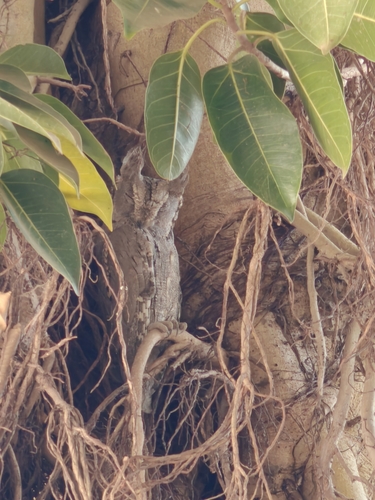
Pallid Scops Owl (Otus brucei) Pallid Scops Owl
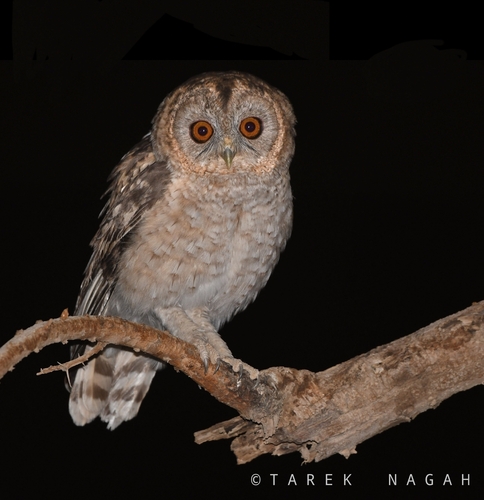
Desert Owl (Strix hadorami) Desert Owl

Media

Loading…

In short

The most reliable field mark is ear tufts: Pallid Scops Owl shows small, pointed ear tufts, while Desert Owl lacks ear tufts entirely and has a smoothly rounded head. In all ages and seasons, Pallid Scops Owl appears more finely streaked and patterned, especially on the back, while Desert Owl is paler and less streaked, particularly below. Desert Owl is noticeably larger and bulkier, with a rounder, more 'tawny owl-like' jizz, and yellow eyes. Voice and habitat can help: Pallid Scops gives a low, dove-like series of notes, while Desert Owl's call is a hooting phrase reminiscent of a collared dove. Both can occur in palm groves, but Desert Owl is tied to rocky ravines and arid cliffs, while Pallid Scops prefers semi-open woodland.

Identification tips

  1. Ear tufts: Pallid Scops Owl always shows small, pointed ear tufts in all ages and postures; Desert Owl never shows tufts and has a smoothly rounded head. This is the quickest and most reliable field mark.
  2. Head shape: Desert Owl has a broad, round head with no tufts, giving a 'tawny owl-like' look. Pallid Scops Owl's head appears narrower and more angular due to the tufts.
  3. Facial disk and eyes: Desert Owl has a pale, rounded facial disk with striking yellow eyes. Pallid Scops Owl's facial disk is less prominent, and the eyes are darker.
  4. Plumage pattern: Pallid Scops Owl is more finely and distinctly streaked on the back and upperparts, with a more intricate pattern. Desert Owl is paler overall, with less streaking, especially on the underparts, which may appear almost plain.
  5. Underparts: Desert Owl's underparts are pale and only lightly streaked, while Pallid Scops Owl shows more fine streaking below.
  6. Overall color: Both can look pale, but Desert Owl is especially sandy or buffy, with a washed-out appearance; Pallid Scops Owl is paler than Eurasian Scops but still more patterned than Desert Owl.
  7. Size and structure: Desert Owl is noticeably larger and stockier, with a heavier body and broad wings. Pallid Scops Owl is smaller, slimmer, and more upright when perched.
  8. Flight style: Pallid Scops Owl is lighter and more agile in flight, sometimes seen hunting on the wing at dusk or even by day. Desert Owl flies more heavily and directly.
  9. Habitat: If seen in rocky ravines, cliffs, or arid desert edges, Desert Owl is more likely. In semi-open woodland, plantations, or agricultural areas, especially away from cliffs, Pallid Scops Owl is more probable.
  10. Nesting sites: Pallid Scops Owl nests in tree cavities or palm plantations; Desert Owl nests in crevices or holes in cliffs.
  11. Voice: Pallid Scops Owl gives a soft, dove-like series of notes; Desert Owl produces a hooting phrase similar to a collared dove. Listen for the difference in rhythm and tone.
  12. Activity: Pallid Scops Owl may be active at dusk or even during the day, especially when hunting insects; Desert Owl is strictly nocturnal.
  13. Diet clues: If observed catching insects or bats on the wing, especially by day, Pallid Scops Owl is more likely. Desert Owl is more mammal-focused and hunts at night.
  14. Geographic overlap: Both species can occur in the Middle East, especially Israel and Jordan, but context and habitat are key for separation.
  15. Pitfalls: Beware of pale Pallid Scops Owls appearing almost as pale as Desert Owl in strong light, and of Desert Owl's minimal streaking making it look even paler than expected. Always confirm ear tufts and head shape for a confident ID.

Size

Desert Owl is a medium-sized owl, 29–33 cm in length, and appears stocky with a broad, rounded head. Pallid Scops Owl is smaller and more delicate, with a slimmer build and proportionally larger-looking ear tufts. In the field, Desert Owl's bulk and lack of ear tufts stand out, while Pallid Scops Owl appears more petite and upright. Both are smaller than Tawny Owl, but Desert Owl is still noticeably larger than Pallid Scops Owl.

Plumage

Ear tufts are the quickest separator: Pallid Scops Owl always shows small, pointed ear tufts, even in juveniles, while Desert Owl never shows tufts and has a smoothly rounded head. In all ages, Pallid Scops Owl is more intricately streaked and patterned on the back, with finer, more distinct streaks, while Desert Owl is paler overall and less streaked, especially on the underparts, which can appear almost plain. Desert Owl's face is rounder and paler, with yellow eyes, while Pallid Scops Owl has a more angular face and darker eyes. No distinctive age-specific upperwing pattern is described for either species, so focus on head shape and overall patterning. Both species can appear pale, but Desert Owl is especially so, with a sandy or buffy tone and minimal streaking below.

Behaviour

Pallid Scops Owl is primarily insectivorous and may hunt by day, sometimes taking insects and bats on the wing. It is more likely to be active at dusk or even in daylight than Desert Owl. Desert Owl is largely nocturnal and sedentary, hunting mostly small mammals and large insects at night. In flight, Desert Owl appears heavier and more direct, while Pallid Scops Owl is lighter and more agile. Both may be seen perched in palm plantations, but Desert Owl is more often found near rocky cliffs.

Habitat

Pallid Scops Owl favors semi-open country with trees and bushes, often nesting in tree cavities or palm plantations. It can also be found in agricultural areas and plantations, sometimes far from rocky terrain. Desert Owl is tied to arid, rocky habitats: desert, semi-desert, rocky ravines, and cliffs, though it can also use palm groves near these features. If you are in a rocky wadi or cliff face, Desert Owl is more likely; in wooded farmland or plantations, especially away from cliffs, Pallid Scops Owl is more probable.

Voice

Pallid Scops Owl gives a series of low, hollow, dove-like notes—soft, repetitive, and less hooting in quality. Desert Owl's call is a hoooo-ho-ho-ho-ho, a hooting phrase with a rhythm similar to Eurasian Collared Dove. The female Desert Owl's call is deeper and less distinct than the male's. If you hear a classic 'hoot' series, think Desert Owl; if the call is softer and more dove-like, Pallid Scops Owl is more likely.

Submit a better description

Use the same sections as the comparison. Your text is published immediately.

The most reliable field mark is ear tufts: Pallid Scops Owl shows small, pointed ear tufts, while Desert Owl lacks ear tufts entirely and has a smoothly rounded head. In all ages and seasons, Pallid Scops Owl appears more finely streaked and patterned, especially on the back, while Desert Owl is paler and less streaked, particularly below. Desert Owl is noticeably larger and bulkier, with a rounder, more 'tawny owl-like' jizz, and yellow eyes. Voice and habitat can help: Pallid Scops gives a low, dove-like series of notes, while Desert Owl's call is a hooting phrase reminiscent of a collared dove. Both can occur in palm groves, but Desert Owl is tied to rocky ravines and arid cliffs, while Pallid Scops prefers semi-open woodland.

  1. Ear tufts: Pallid Scops Owl always shows small, pointed ear tufts in all ages and postures; Desert Owl never shows tufts and has a smoothly rounded head. This is the quickest and most reliable field mark.
  2. Head shape: Desert Owl has a broad, round head with no tufts, giving a 'tawny owl-like' look. Pallid Scops Owl's head appears narrower and more angular due to the tufts.
  3. Facial disk and eyes: Desert Owl has a pale, rounded facial disk with striking yellow eyes. Pallid Scops Owl's facial disk is less prominent, and the eyes are darker.
  4. Plumage pattern: Pallid Scops Owl is more finely and distinctly streaked on the back and upperparts, with a more intricate pattern. Desert Owl is paler overall, with less streaking, especially on the underparts, which may appear almost plain.
  5. Underparts: Desert Owl's underparts are pale and only lightly streaked, while Pallid Scops Owl shows more fine streaking below.
  6. Overall color: Both can look pale, but Desert Owl is especially sandy or buffy, with a washed-out appearance; Pallid Scops Owl is paler than Eurasian Scops but still more patterned than Desert Owl.
  7. Size and structure: Desert Owl is noticeably larger and stockier, with a heavier body and broad wings. Pallid Scops Owl is smaller, slimmer, and more upright when perched.
  8. Flight style: Pallid Scops Owl is lighter and more agile in flight, sometimes seen hunting on the wing at dusk or even by day. Desert Owl flies more heavily and directly.
  9. Habitat: If seen in rocky ravines, cliffs, or arid desert edges, Desert Owl is more likely. In semi-open woodland, plantations, or agricultural areas, especially away from cliffs, Pallid Scops Owl is more probable.
  10. Nesting sites: Pallid Scops Owl nests in tree cavities or palm plantations; Desert Owl nests in crevices or holes in cliffs.
  11. Voice: Pallid Scops Owl gives a soft, dove-like series of notes; Desert Owl produces a hooting phrase similar to a collared dove. Listen for the difference in rhythm and tone.
  12. Activity: Pallid Scops Owl may be active at dusk or even during the day, especially when hunting insects; Desert Owl is strictly nocturnal.
  13. Diet clues: If observed catching insects or bats on the wing, especially by day, Pallid Scops Owl is more likely. Desert Owl is more mammal-focused and hunts at night.
  14. Geographic overlap: Both species can occur in the Middle East, especially Israel and Jordan, but context and habitat are key for separation.
  15. Pitfalls: Beware of pale Pallid Scops Owls appearing almost as pale as Desert Owl in strong light, and of Desert Owl's minimal streaking making it look even paler than expected. Always confirm ear tufts and head shape for a confident ID.

Desert Owl is a medium-sized owl, 29–33 cm in length, and appears stocky with a broad, rounded head. Pallid Scops Owl is smaller and more delicate, with a slimmer build and proportionally larger-looking ear tufts. In the field, Desert Owl's bulk and lack of ear tufts stand out, while Pallid Scops Owl appears more petite and upright. Both are smaller than Tawny Owl, but Desert Owl is still noticeably larger than Pallid Scops Owl.

Ear tufts are the quickest separator: Pallid Scops Owl always shows small, pointed ear tufts, even in juveniles, while Desert Owl never shows tufts and has a smoothly rounded head. In all ages, Pallid Scops Owl is more intricately streaked and patterned on the back, with finer, more distinct streaks, while Desert Owl is paler overall and less streaked, especially on the underparts, which can appear almost plain. Desert Owl's face is rounder and paler, with yellow eyes, while Pallid Scops Owl has a more angular face and darker eyes. No distinctive age-specific upperwing pattern is described for either species, so focus on head shape and overall patterning. Both species can appear pale, but Desert Owl is especially so, with a sandy or buffy tone and minimal streaking below.

Pallid Scops Owl is primarily insectivorous and may hunt by day, sometimes taking insects and bats on the wing. It is more likely to be active at dusk or even in daylight than Desert Owl. Desert Owl is largely nocturnal and sedentary, hunting mostly small mammals and large insects at night. In flight, Desert Owl appears heavier and more direct, while Pallid Scops Owl is lighter and more agile. Both may be seen perched in palm plantations, but Desert Owl is more often found near rocky cliffs.

Pallid Scops Owl favors semi-open country with trees and bushes, often nesting in tree cavities or palm plantations. It can also be found in agricultural areas and plantations, sometimes far from rocky terrain. Desert Owl is tied to arid, rocky habitats: desert, semi-desert, rocky ravines, and cliffs, though it can also use palm groves near these features. If you are in a rocky wadi or cliff face, Desert Owl is more likely; in wooded farmland or plantations, especially away from cliffs, Pallid Scops Owl is more probable.

Pallid Scops Owl gives a series of low, hollow, dove-like notes—soft, repetitive, and less hooting in quality. Desert Owl's call is a hoooo-ho-ho-ho-ho, a hooting phrase with a rhythm similar to Eurasian Collared Dove. The female Desert Owl's call is deeper and less distinct than the male's. If you hear a classic 'hoot' series, think Desert Owl; if the call is softer and more dove-like, Pallid Scops Owl is more likely.

Discard your changes?

You have unsaved edits. If you leave now, those changes will be lost.

Pallid Scops Owl · Desert Owl · My Tricky Birds