

Motmot

Paddyfield Warbler vs Common Reed Warbler

Acrocephalus agricola versus Acrocephalus scirpaceus

Play a quiz with Paddyfield Warbler and Common Reed Warbler
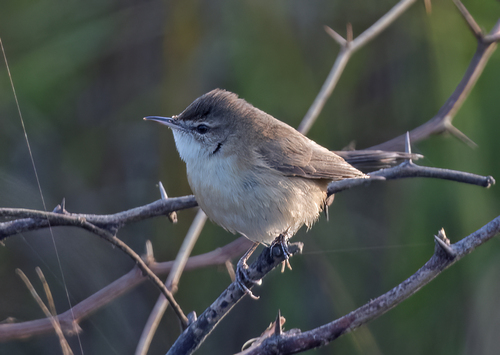
Paddyfield Warbler (Acrocephalus agricola) Paddyfield Warbler
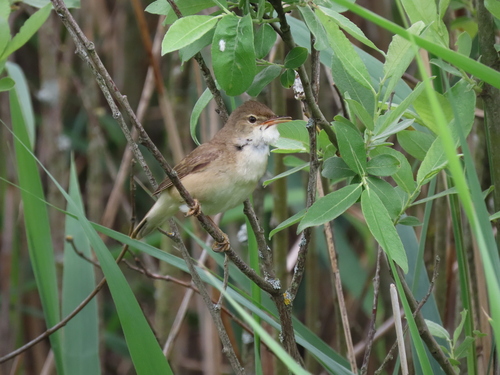
Common Reed Warbler (Acrocephalus scirpaceus) Common Reed Warbler

Media

Loading…

In short

The most reliable field mark between Paddyfield Warbler and Common Reed Warbler is the combination of bill and supercilium: Paddyfield Warbler shows a shorter, finer bill and a more distinct whitish supercilium, while Common Reed Warbler has a longer, stronger bill and a less obvious supercilium. Both are similar in size and overall coloration, with unstreaked brown backs and buff underparts, but subtle differences in structure and facial pattern are key. Juveniles of both species are richer buff below, so age alone is not a safe separator. Focus on bill shape, supercilium clarity, and overall jizz for the best field separation.

Identification tips

  1. Bill shape and length: Paddyfield Warbler has a noticeably shorter, finer, and more pointed bill, while Common Reed Warbler's bill is longer and stronger. This is often visible in profile, especially when the birds are singing or foraging.
  2. Supercilium (eyebrow stripe): Paddyfield Warbler shows a clearer, more contrasting whitish supercilium, especially in fresh plumage. Common Reed Warbler's supercilium is duller, less distinct, and blends more with the face.
  3. Facial expression: The combination of a short bill and strong supercilium gives Paddyfield Warbler a more delicate, 'open-faced' look. Common Reed Warbler appears more flat-headed and plain-faced.
  4. Rump color: Paddyfield Warbler may show a warmer brown rump, but this is subtle and unreliable at distance or in poor light.
  5. Underpart color in juveniles: Both species' juveniles are richer buff below, so this is not a separator. Do not rely on underpart tone alone in young birds.
  6. Back and wing pattern: Both species have unstreaked brown backs and lack strong wing panels or distinctive upperwing marks in all ages. If you see streaking or a strong panel, reconsider the ID.
  7. Size and structure: Both are similar in length and mass. Common Reed Warbler may appear slightly longer-winged, but this is subtle and unreliable in the field.
  8. Song: If heard well, Paddyfield Warbler's song is faster, weaker, and more rhythmic, while Common Reed Warbler's is slower and chattier. However, both include mimicry and acrocephaline whistles, so use with caution.
  9. Habitat context: In western Europe, Common Reed Warbler is by far the expected species in reedbeds. Paddyfield Warbler is a rare vagrant except near the Black Sea or in South Asia. In rice fields or grassy marshes in the east, Paddyfield Warbler becomes more likely.
  10. Perched vs. in flight: Both species behave similarly and lack strong flight marks. Use perched views for bill and supercilium.
  11. Sex differences: Both species are sexually monomorphic; do not attempt separation by sex.
  12. Primary projection: No distinctive differences are noted in the sources; do not rely on wing formula.
  13. Pitfalls: Do not mistake a dull supercilium in worn Paddyfield Warbler for Common Reed Warbler, or vice versa. Lighting and feather wear can obscure facial marks.
  14. Geographic range: Always consider location and season. In Europe, Common Reed Warbler is vastly more common. Paddyfield Warbler is regular only in specific eastern areas or as a rare vagrant.
  15. Overall impression: In direct comparison, Paddyfield Warbler looks daintier with a more marked face, while Common Reed Warbler is plainer and more robust. Use a combination of bill, supercilium, and context for best results.

Size

Both species are about 13 cm in length, but Common Reed Warbler has a slightly longer wingspan (17–21 cm) compared to Paddyfield Warbler (15–17.5 cm). The only available mass figure is for Common Reed Warbler (12.0 g) [wikidata], suggesting they are very similar in weight. In the field, size is not a reliable separator, as both appear medium-small and slim for Acrocephalus warblers.

Plumage

No distinctive juvenile or immature upperwing pattern is described for either species, so focus shifts to facial and underpart coloration. Adults of both species have unstreaked brown backs and buff underparts. Paddyfield Warbler stands out with a clearer, more contrasting whitish supercilium, while Common Reed Warbler's supercilium is duller and less defined. Both species' juveniles are richer buff below, so this is not a useful separator. The rump of Paddyfield Warbler is described as warmer brown, which may be subtle in the field. Neither species shows strong streaking or obvious wing panels.

Behaviour

Both species are typically found in low vegetation such as reeds and long grass, often skulking but sometimes perching up to sing. Their foraging and movement are very similar, with no strong behavioral differences noted in the sources. Both may be seen flitting through reedbeds or making short flights between stems.

Habitat

Paddyfield Warbler is most often found in low vegetation, especially long grass, reeds, and rice fields, breeding in the central Palearctic and wintering in South Asia. Common Reed Warbler prefers reedbeds and marshy areas across Europe and western Palearctic, wintering in sub-Saharan Africa. While their habitats overlap in reedbeds, Paddyfield Warbler may be more likely in grassy or rice-field settings, especially outside Europe. In western Europe, Common Reed Warbler is much more likely except for rare vagrancy or small breeding populations of Paddyfield Warbler near the Black Sea.

Voice

Both species have acrocephaline songs with mimicry and whistles. Paddyfield Warbler's song is described as fast, weaker, and more rhythmic, while Common Reed Warbler's song is a slow, chattering 'jit-jit-jit' with similar mimicry. In practice, song differences are subtle and may be hard to use unless the bird is singing clearly and at length.

Submit a better description

Use the same sections as the comparison. Your text is published immediately.

The most reliable field mark between Paddyfield Warbler and Common Reed Warbler is the combination of bill and supercilium: Paddyfield Warbler shows a shorter, finer bill and a more distinct whitish supercilium, while Common Reed Warbler has a longer, stronger bill and a less obvious supercilium. Both are similar in size and overall coloration, with unstreaked brown backs and buff underparts, but subtle differences in structure and facial pattern are key. Juveniles of both species are richer buff below, so age alone is not a safe separator. Focus on bill shape, supercilium clarity, and overall jizz for the best field separation.

  1. Bill shape and length: Paddyfield Warbler has a noticeably shorter, finer, and more pointed bill, while Common Reed Warbler's bill is longer and stronger. This is often visible in profile, especially when the birds are singing or foraging.
  2. Supercilium (eyebrow stripe): Paddyfield Warbler shows a clearer, more contrasting whitish supercilium, especially in fresh plumage. Common Reed Warbler's supercilium is duller, less distinct, and blends more with the face.
  3. Facial expression: The combination of a short bill and strong supercilium gives Paddyfield Warbler a more delicate, 'open-faced' look. Common Reed Warbler appears more flat-headed and plain-faced.
  4. Rump color: Paddyfield Warbler may show a warmer brown rump, but this is subtle and unreliable at distance or in poor light.
  5. Underpart color in juveniles: Both species' juveniles are richer buff below, so this is not a separator. Do not rely on underpart tone alone in young birds.
  6. Back and wing pattern: Both species have unstreaked brown backs and lack strong wing panels or distinctive upperwing marks in all ages. If you see streaking or a strong panel, reconsider the ID.
  7. Size and structure: Both are similar in length and mass. Common Reed Warbler may appear slightly longer-winged, but this is subtle and unreliable in the field.
  8. Song: If heard well, Paddyfield Warbler's song is faster, weaker, and more rhythmic, while Common Reed Warbler's is slower and chattier. However, both include mimicry and acrocephaline whistles, so use with caution.
  9. Habitat context: In western Europe, Common Reed Warbler is by far the expected species in reedbeds. Paddyfield Warbler is a rare vagrant except near the Black Sea or in South Asia. In rice fields or grassy marshes in the east, Paddyfield Warbler becomes more likely.
  10. Perched vs. in flight: Both species behave similarly and lack strong flight marks. Use perched views for bill and supercilium.
  11. Sex differences: Both species are sexually monomorphic; do not attempt separation by sex.
  12. Primary projection: No distinctive differences are noted in the sources; do not rely on wing formula.
  13. Pitfalls: Do not mistake a dull supercilium in worn Paddyfield Warbler for Common Reed Warbler, or vice versa. Lighting and feather wear can obscure facial marks.
  14. Geographic range: Always consider location and season. In Europe, Common Reed Warbler is vastly more common. Paddyfield Warbler is regular only in specific eastern areas or as a rare vagrant.
  15. Overall impression: In direct comparison, Paddyfield Warbler looks daintier with a more marked face, while Common Reed Warbler is plainer and more robust. Use a combination of bill, supercilium, and context for best results.

Both species are about 13 cm in length, but Common Reed Warbler has a slightly longer wingspan (17–21 cm) compared to Paddyfield Warbler (15–17.5 cm). The only available mass figure is for Common Reed Warbler (12.0 g) [wikidata], suggesting they are very similar in weight. In the field, size is not a reliable separator, as both appear medium-small and slim for Acrocephalus warblers.

No distinctive juvenile or immature upperwing pattern is described for either species, so focus shifts to facial and underpart coloration. Adults of both species have unstreaked brown backs and buff underparts. Paddyfield Warbler stands out with a clearer, more contrasting whitish supercilium, while Common Reed Warbler's supercilium is duller and less defined. Both species' juveniles are richer buff below, so this is not a useful separator. The rump of Paddyfield Warbler is described as warmer brown, which may be subtle in the field. Neither species shows strong streaking or obvious wing panels.

Both species are typically found in low vegetation such as reeds and long grass, often skulking but sometimes perching up to sing. Their foraging and movement are very similar, with no strong behavioral differences noted in the sources. Both may be seen flitting through reedbeds or making short flights between stems.

Paddyfield Warbler is most often found in low vegetation, especially long grass, reeds, and rice fields, breeding in the central Palearctic and wintering in South Asia. Common Reed Warbler prefers reedbeds and marshy areas across Europe and western Palearctic, wintering in sub-Saharan Africa. While their habitats overlap in reedbeds, Paddyfield Warbler may be more likely in grassy or rice-field settings, especially outside Europe. In western Europe, Common Reed Warbler is much more likely except for rare vagrancy or small breeding populations of Paddyfield Warbler near the Black Sea.

Both species have acrocephaline songs with mimicry and whistles. Paddyfield Warbler's song is described as fast, weaker, and more rhythmic, while Common Reed Warbler's song is a slow, chattering 'jit-jit-jit' with similar mimicry. In practice, song differences are subtle and may be hard to use unless the bird is singing clearly and at length.

Discard your changes?

You have unsaved edits. If you leave now, those changes will be lost.

Paddyfield Warbler · Common Reed Warbler · My Tricky Birds