

Motmot

Ovenbird vs Northern Waterthrush

Seiurus aurocapilla versus Parkesia noveboracensis

Play a quiz with Ovenbird and Northern Waterthrush
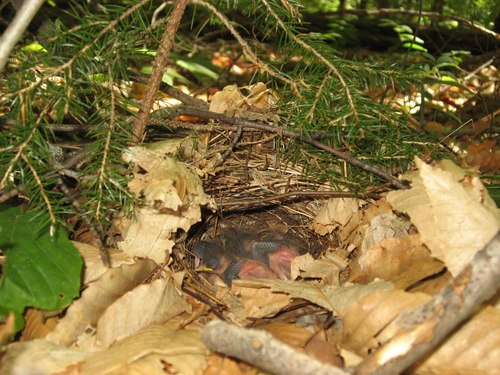
Ovenbird (Seiurus aurocapilla) Ovenbird
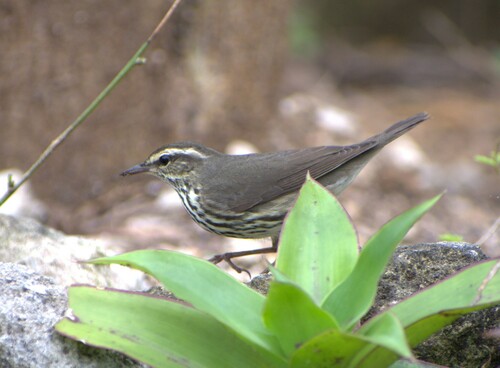
Northern Waterthrush (Parkesia noveboracensis) Northern Waterthrush

Media

Loading…

In short

The most reliable field mark between Ovenbird and Northern Waterthrush is the head pattern: Ovenbird shows a bold orange crown stripe bordered by black (often concealed in immatures), while Northern Waterthrush has a broad white supercilium and lacks any orange or black crown stripes. Immature Ovenbirds can hide the orange crown with olive tips, but still lack the strong white eyebrow of the waterthrush. Both are large, ground-walking warblers with streaked underparts, but the Ovenbird is olive above and has a rounder, more thrush-like jizz, while the Northern Waterthrush is browner and longer-tailed. Watch for the Ovenbird’s habit of flicking its tail up and down, versus the waterthrush’s constant rear-end bobbing and preference for wet habitats.

Identification tips

  1. Crown stripe (adults): Ovenbird shows a bold orange crown stripe bordered by black, visible in good light and often raised into a small crest. Northern Waterthrush lacks any crown stripe and instead has a plain brown crown.
  2. Crown in immatures: Immature Ovenbirds may have the orange crown stripe almost or completely hidden by broad olive-green tips, making the head look more uniformly olive. Still, they lack the strong white supercilium of waterthrush.
  3. Supercilium: Northern Waterthrush always shows a broad, strong white or buffy eyebrow (supercilium) from the bill to the nape, a key mark at all ages. Ovenbird lacks any supercilium, instead showing a white eyering.
  4. Eyering: Ovenbird has a complete white eyering; Northern Waterthrush does not—its eye is set in a plain brown face with the strong supercilium above.
  5. Malar (mustache) stripe: Ovenbird has a dark malar stripe below the cheek, contrasting with the white throat. Northern Waterthrush’s face is plainer, with the supercilium the main feature.
  6. Underpart streaking: Both are streaked below, but Ovenbird’s streaks are boldest on the breast and fade on the belly and flanks (which are olive-tinged). Northern Waterthrush’s streaks are more even from throat through flanks and are brownish.
  7. Throat: Ovenbird’s throat is clean white; Northern Waterthrush’s is lightly streaked.
  8. Back color: Ovenbird is olive-brown above; Northern Waterthrush is more uniformly brown, lacking any olive tone.
  9. Tail and jizz: Ovenbird is compact, with a shortish tail and round body. Northern Waterthrush is longer, slimmer, and has a longer tail.
  10. Tail movement: Ovenbird often flicks its tail up and down, especially when alarmed. Northern Waterthrush constantly bobs its rear end while walking, giving a teetering appearance.
  11. Habitat: Ovenbird prefers dry or mesic mature forests, often away from water. Northern Waterthrush is almost always near water—streams, bogs, or pond edges.
  12. Flight: In flight, Ovenbird looks compact and rounded; Northern Waterthrush appears longer and slimmer.
  13. Juvenile/immature marks: Immature Ovenbirds may show tawny fringes to tertials and buff-tipped outer primary coverts, but these are subtle and not easily seen in the field. Immature Northern Waterthrushes have buff underparts but retain the strong supercilium.
  14. Voice: Ovenbird’s song is a loud, rhythmic 'teacher-teacher-teacher'; Northern Waterthrush’s is a more variable, musical series of chirps, often falling in pitch.
  15. Season and context: Both species are migratory and can overlap in migration, but habitat and behavior remain reliable clues—Ovenbird in dry woods, Northern Waterthrush along water.

Size

Both species are among the largest North American wood-warblers and overlap in size, but Ovenbird is slightly bulkier on average (Ovenbird: 11–16 cm length, 19–26 cm wingspan, 14–28.8 g; Northern Waterthrush: 12–15 cm length, 21–24 cm wingspan, 13–25 g) [wikipedia][avonet]. Ovenbird tends to look more compact and round-bodied, while Northern Waterthrush appears longer and slimmer, with a relatively longer tail. Bill and tarsus lengths are similar and not reliable for separation in the field.

Plumage

Juvenile and immature Ovenbirds have olive-green tips to the crown feathers that can almost or completely obscure the orange crown-stripe, making the head look more uniformly olive and less striking than in adults. They also show tawny fringes to the tertials and sometimes buff-tipped outer primary coverts, but these are subtle and not visible at distance. In contrast, Northern Waterthrush immatures have buff (not white) underparts but always show a strong white or buffy supercilium and lack any orange or black crown stripes. In all ages, Ovenbird is olive-brown above with a bold white eyering and dark malar (mustache) stripe, while Northern Waterthrush is evenly brown above, with a broad white supercilium and no eyering. Both are heavily streaked below, but Ovenbird’s streaks are concentrated on the breast, while Northern Waterthrush’s streaks extend onto the flanks and are more diffuse. The throat of Northern Waterthrush is lightly streaked, while Ovenbird’s is cleaner. The flanks of Ovenbird are olive-tinged, while Northern Waterthrush’s flanks are brownish and more heavily streaked.

Behaviour

Ovenbird forages on the ground in dry leaf litter, often in mature forest interiors, and walks with a distinctive tail-flicking motion—raising and slowly lowering its tail, especially when alarmed. Northern Waterthrush also walks rather than hops, but is more likely to be seen along water edges (streams, bogs, ponds), and constantly bobs its rear end as it moves. Both species are ground-feeders, but Ovenbird’s movements are more deliberate and less teetering than the waterthrush’s. In flight, Ovenbird appears more compact and rounded, while Northern Waterthrush looks longer and slimmer.

Habitat

Ovenbird is most often found in mature, dry or mesic deciduous or mixed forests, especially away from water, foraging in leaf litter. Northern Waterthrush is strongly associated with wet habitats—stream edges, bogs, swamps, and pond margins—where it walks along muddy banks or in shallow water. Finding a streaked ground-warbler in a dry upland forest strongly favors Ovenbird; along water, especially in the north, Northern Waterthrush is much more likely.

Voice

Ovenbird’s song is a loud, repeated 'teacher-teacher-teacher', rising in volume, while Northern Waterthrush gives a series of loud, emphatic, clear chirping notes that generally fall in pitch and accelerate, often loosely paired or tripled. The waterthrush’s call is a loud, hard 'spwik' or buzzy 'zzip', while Ovenbird’s call is a sharp 'chik'. Both are loud and distinctive, but the Ovenbird’s song is more rhythmic and monotone, while the waterthrush’s is more variable and musical.

Submit a better description

Use the same sections as the comparison. Your text is published immediately.

The most reliable field mark between Ovenbird and Northern Waterthrush is the head pattern: Ovenbird shows a bold orange crown stripe bordered by black (often concealed in immatures), while Northern Waterthrush has a broad white supercilium and lacks any orange or black crown stripes. Immature Ovenbirds can hide the orange crown with olive tips, but still lack the strong white eyebrow of the waterthrush. Both are large, ground-walking warblers with streaked underparts, but the Ovenbird is olive above and has a rounder, more thrush-like jizz, while the Northern Waterthrush is browner and longer-tailed. Watch for the Ovenbird’s habit of flicking its tail up and down, versus the waterthrush’s constant rear-end bobbing and preference for wet habitats.

  1. Crown stripe (adults): Ovenbird shows a bold orange crown stripe bordered by black, visible in good light and often raised into a small crest. Northern Waterthrush lacks any crown stripe and instead has a plain brown crown.
  2. Crown in immatures: Immature Ovenbirds may have the orange crown stripe almost or completely hidden by broad olive-green tips, making the head look more uniformly olive. Still, they lack the strong white supercilium of waterthrush.
  3. Supercilium: Northern Waterthrush always shows a broad, strong white or buffy eyebrow (supercilium) from the bill to the nape, a key mark at all ages. Ovenbird lacks any supercilium, instead showing a white eyering.
  4. Eyering: Ovenbird has a complete white eyering; Northern Waterthrush does not—its eye is set in a plain brown face with the strong supercilium above.
  5. Malar (mustache) stripe: Ovenbird has a dark malar stripe below the cheek, contrasting with the white throat. Northern Waterthrush’s face is plainer, with the supercilium the main feature.
  6. Underpart streaking: Both are streaked below, but Ovenbird’s streaks are boldest on the breast and fade on the belly and flanks (which are olive-tinged). Northern Waterthrush’s streaks are more even from throat through flanks and are brownish.
  7. Throat: Ovenbird’s throat is clean white; Northern Waterthrush’s is lightly streaked.
  8. Back color: Ovenbird is olive-brown above; Northern Waterthrush is more uniformly brown, lacking any olive tone.
  9. Tail and jizz: Ovenbird is compact, with a shortish tail and round body. Northern Waterthrush is longer, slimmer, and has a longer tail.
  10. Tail movement: Ovenbird often flicks its tail up and down, especially when alarmed. Northern Waterthrush constantly bobs its rear end while walking, giving a teetering appearance.
  11. Habitat: Ovenbird prefers dry or mesic mature forests, often away from water. Northern Waterthrush is almost always near water—streams, bogs, or pond edges.
  12. Flight: In flight, Ovenbird looks compact and rounded; Northern Waterthrush appears longer and slimmer.
  13. Juvenile/immature marks: Immature Ovenbirds may show tawny fringes to tertials and buff-tipped outer primary coverts, but these are subtle and not easily seen in the field. Immature Northern Waterthrushes have buff underparts but retain the strong supercilium.
  14. Voice: Ovenbird’s song is a loud, rhythmic 'teacher-teacher-teacher'; Northern Waterthrush’s is a more variable, musical series of chirps, often falling in pitch.
  15. Season and context: Both species are migratory and can overlap in migration, but habitat and behavior remain reliable clues—Ovenbird in dry woods, Northern Waterthrush along water.

Both species are among the largest North American wood-warblers and overlap in size, but Ovenbird is slightly bulkier on average (Ovenbird: 11–16 cm length, 19–26 cm wingspan, 14–28.8 g; Northern Waterthrush: 12–15 cm length, 21–24 cm wingspan, 13–25 g) [wikipedia][avonet]. Ovenbird tends to look more compact and round-bodied, while Northern Waterthrush appears longer and slimmer, with a relatively longer tail. Bill and tarsus lengths are similar and not reliable for separation in the field.

Juvenile and immature Ovenbirds have olive-green tips to the crown feathers that can almost or completely obscure the orange crown-stripe, making the head look more uniformly olive and less striking than in adults. They also show tawny fringes to the tertials and sometimes buff-tipped outer primary coverts, but these are subtle and not visible at distance. In contrast, Northern Waterthrush immatures have buff (not white) underparts but always show a strong white or buffy supercilium and lack any orange or black crown stripes. In all ages, Ovenbird is olive-brown above with a bold white eyering and dark malar (mustache) stripe, while Northern Waterthrush is evenly brown above, with a broad white supercilium and no eyering. Both are heavily streaked below, but Ovenbird’s streaks are concentrated on the breast, while Northern Waterthrush’s streaks extend onto the flanks and are more diffuse. The throat of Northern Waterthrush is lightly streaked, while Ovenbird’s is cleaner. The flanks of Ovenbird are olive-tinged, while Northern Waterthrush’s flanks are brownish and more heavily streaked.

Ovenbird forages on the ground in dry leaf litter, often in mature forest interiors, and walks with a distinctive tail-flicking motion—raising and slowly lowering its tail, especially when alarmed. Northern Waterthrush also walks rather than hops, but is more likely to be seen along water edges (streams, bogs, ponds), and constantly bobs its rear end as it moves. Both species are ground-feeders, but Ovenbird’s movements are more deliberate and less teetering than the waterthrush’s. In flight, Ovenbird appears more compact and rounded, while Northern Waterthrush looks longer and slimmer.

Ovenbird is most often found in mature, dry or mesic deciduous or mixed forests, especially away from water, foraging in leaf litter. Northern Waterthrush is strongly associated with wet habitats—stream edges, bogs, swamps, and pond margins—where it walks along muddy banks or in shallow water. Finding a streaked ground-warbler in a dry upland forest strongly favors Ovenbird; along water, especially in the north, Northern Waterthrush is much more likely.

Ovenbird’s song is a loud, repeated 'teacher-teacher-teacher', rising in volume, while Northern Waterthrush gives a series of loud, emphatic, clear chirping notes that generally fall in pitch and accelerate, often loosely paired or tripled. The waterthrush’s call is a loud, hard 'spwik' or buzzy 'zzip', while Ovenbird’s call is a sharp 'chik'. Both are loud and distinctive, but the Ovenbird’s song is more rhythmic and monotone, while the waterthrush’s is more variable and musical.

Discard your changes?

You have unsaved edits. If you leave now, those changes will be lost.

Ovenbird · Northern Waterthrush · My Tricky Birds