

Motmot

Ortolan Bunting vs Cretzschmar's Bunting

Emberiza hortulana versus Emberiza caesia

Play a quiz with Ortolan Bunting and Cretzschmar's Bunting
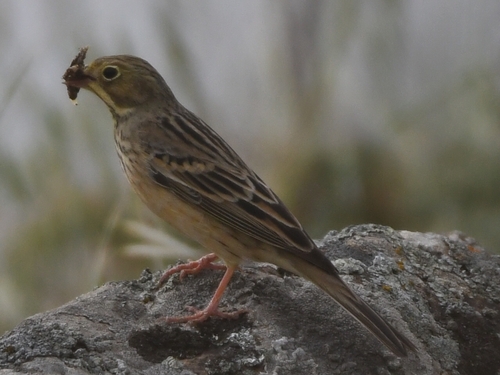
Ortolan Bunting (Emberiza hortulana) Ortolan Bunting
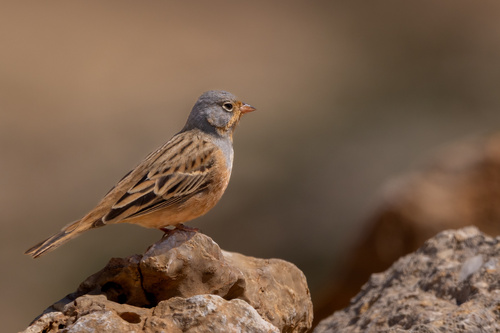
Cretzschmar's Bunting (Emberiza caesia) Cretzschmar's Bunting

Media

Loading…

In short

The most reliable field mark for separating Ortolan Bunting from Cretzschmar's Bunting is the head and rump coloration, especially in breeding males: Ortolan has a greenish-grey head and plain brown rump, while Cretzschmar's shows a grey head with orange moustaches and a distinctly warm brown rump. Females and immatures are trickier, but Cretzschmar's typically shows a white eye-ring and warmer rump, while Ortolan is plainer. Cretzschmar's is also slightly smaller and more compact, with a pinker bill. In all ages, focus on the rump color and eye-ring for Cretzschmar's, and the overall plainer, colder tones for Ortolan. Beware that young and female Cretzschmar's can closely resemble Ortolan, so multiple features should be checked.

Identification tips

  1. Head coloration (breeding males): Ortolan Bunting shows a greenish-grey head, while Cretzschmar's Bunting has a grey head with striking orange moustaches. This is the most obvious difference in adult males during the breeding season.
  2. Rump color: Cretzschmar's Bunting of all ages has a warm brown rump, contrasting with the rest of the upperparts. Ortolan Bunting's rump is plain brown and less distinctly colored, blending with the back.
  3. Underparts (breeding males): Cretzschmar's Bunting has rusty orange underparts, while Ortolan's are duller and less saturated.
  4. Eye-ring: Female and immature Cretzschmar's Buntings show a noticeable white eye-ring, which is lacking or much weaker in Ortolan Bunting. This is a key mark for non-breeding and young birds.
  5. Bill color: Cretzschmar's Bunting has a pinkish bill, especially noticeable in breeding plumage. Ortolan's bill is less distinctly colored but this mark is subtle and variable.
  6. Upperparts streaking: Cretzschmar's Bunting has heavily streaked brown upperparts except on the rump, which is plain and warm brown. Ortolan is generally plainer above, with less contrast between back and rump.
  7. Head pattern (females/immatures): Female and young Cretzschmar's have a weaker head pattern but still show the eye-ring and warmer tones, while Ortolan is more uniformly plain and cold-toned.
  8. Size and structure: Cretzschmar's is slightly smaller and more compact than Ortolan, but this is subtle and unreliable on lone birds.
  9. Flight views: No strong wing or tail pattern differences are described for either species, so focus on rump color and overall tones if seen in flight.
  10. Sex and age pitfalls: Females and immatures of both species are very similar and can be confused. Use a combination of rump color, eye-ring, and overall warmth of plumage to separate them; avoid relying on a single feature.
  11. Seasonal variation: Breeding males are easiest to separate by head and underpart color. In autumn and winter, or for females/immatures, use rump and eye-ring.
  12. Habitat and range: Not diagnostic where both species may occur as vagrants or migrants.
  13. Voice: Not reliably separable with the information provided.
  14. Context: If seen with other buntings, compare directly for head and rump color; Ortolan will always lack the orange and warm brown tones of Cretzschmar's.
  15. When in doubt: If the bird shows a plain brown rump and lacks a white eye-ring, lean toward Ortolan; if it has a warm brown rump and a white eye-ring, Cretzschmar's is more likely.

Size

Cretzschmar's Bunting is smaller than Ortolan Bunting. Ortolan measures 16–17 cm in length with a wingspan of 23–29 cm [wikipedia], while Cretzschmar's is described as smaller, though precise measurements are not given in the notes. In the field, Cretzschmar's may appear more compact and slightly shorter-tailed, but size overlap is possible and should not be relied on as a sole separator.

Plumage

For adult breeding males, Ortolan Bunting has a greenish-grey head with a generally plain brown rump and less saturated underparts, while Cretzschmar's Bunting shows a grey head with prominent orange moustaches, a warm brown rump, and rusty orange underparts. The upperparts of Cretzschmar's are brown and heavily streaked except on the rump, which is a key contrast. Females and juveniles of both species are more similar, but Cretzschmar's can be picked out by its warmer brown rump and a white eye-ring, whereas Ortolan is plainer overall, lacking a strong eye-ring and showing a colder brown tone. In all plumages, Ortolan lacks the orange tones and the contrasting head pattern of male Cretzschmar's. No distinctive wing pattern or flight mark is described for either species in the notes, so focus should remain on head and rump coloration, and eye-ring, especially in perched birds.

Behaviour

No diagnostic behavioral differences are noted between these two species in the sources provided. Both are typical buntings in habits and jizz.

Habitat

Ortolan Bunting frequents cornfields and open farmland across most of Europe and West Asia, reaching as far north as Scandinavia and occasionally vagrant farther afield. Cretzschmar's Bunting habitat is not detailed in the notes, but both species are generally associated with open, cultivated, or semi-open country. Habitat is not a reliable separator where ranges overlap or for vagrants.

Voice

No vocalization details are provided for Cretzschmar's Bunting. Ortolan Bunting's male song is said to resemble that of the Yellowhammer, but without a direct comparison or description for Cretzschmar's, voice is not a reliable field mark based on the current notes.

Submit a better description

Use the same sections as the comparison. Your text is published immediately.

The most reliable field mark for separating Ortolan Bunting from Cretzschmar's Bunting is the head and rump coloration, especially in breeding males: Ortolan has a greenish-grey head and plain brown rump, while Cretzschmar's shows a grey head with orange moustaches and a distinctly warm brown rump. Females and immatures are trickier, but Cretzschmar's typically shows a white eye-ring and warmer rump, while Ortolan is plainer. Cretzschmar's is also slightly smaller and more compact, with a pinker bill. In all ages, focus on the rump color and eye-ring for Cretzschmar's, and the overall plainer, colder tones for Ortolan. Beware that young and female Cretzschmar's can closely resemble Ortolan, so multiple features should be checked.

  1. Head coloration (breeding males): Ortolan Bunting shows a greenish-grey head, while Cretzschmar's Bunting has a grey head with striking orange moustaches. This is the most obvious difference in adult males during the breeding season.
  2. Rump color: Cretzschmar's Bunting of all ages has a warm brown rump, contrasting with the rest of the upperparts. Ortolan Bunting's rump is plain brown and less distinctly colored, blending with the back.
  3. Underparts (breeding males): Cretzschmar's Bunting has rusty orange underparts, while Ortolan's are duller and less saturated.
  4. Eye-ring: Female and immature Cretzschmar's Buntings show a noticeable white eye-ring, which is lacking or much weaker in Ortolan Bunting. This is a key mark for non-breeding and young birds.
  5. Bill color: Cretzschmar's Bunting has a pinkish bill, especially noticeable in breeding plumage. Ortolan's bill is less distinctly colored but this mark is subtle and variable.
  6. Upperparts streaking: Cretzschmar's Bunting has heavily streaked brown upperparts except on the rump, which is plain and warm brown. Ortolan is generally plainer above, with less contrast between back and rump.
  7. Head pattern (females/immatures): Female and young Cretzschmar's have a weaker head pattern but still show the eye-ring and warmer tones, while Ortolan is more uniformly plain and cold-toned.
  8. Size and structure: Cretzschmar's is slightly smaller and more compact than Ortolan, but this is subtle and unreliable on lone birds.
  9. Flight views: No strong wing or tail pattern differences are described for either species, so focus on rump color and overall tones if seen in flight.
  10. Sex and age pitfalls: Females and immatures of both species are very similar and can be confused. Use a combination of rump color, eye-ring, and overall warmth of plumage to separate them; avoid relying on a single feature.
  11. Seasonal variation: Breeding males are easiest to separate by head and underpart color. In autumn and winter, or for females/immatures, use rump and eye-ring.
  12. Habitat and range: Not diagnostic where both species may occur as vagrants or migrants.
  13. Voice: Not reliably separable with the information provided.
  14. Context: If seen with other buntings, compare directly for head and rump color; Ortolan will always lack the orange and warm brown tones of Cretzschmar's.
  15. When in doubt: If the bird shows a plain brown rump and lacks a white eye-ring, lean toward Ortolan; if it has a warm brown rump and a white eye-ring, Cretzschmar's is more likely.

Cretzschmar's Bunting is smaller than Ortolan Bunting. Ortolan measures 16–17 cm in length with a wingspan of 23–29 cm [wikipedia], while Cretzschmar's is described as smaller, though precise measurements are not given in the notes. In the field, Cretzschmar's may appear more compact and slightly shorter-tailed, but size overlap is possible and should not be relied on as a sole separator.

For adult breeding males, Ortolan Bunting has a greenish-grey head with a generally plain brown rump and less saturated underparts, while Cretzschmar's Bunting shows a grey head with prominent orange moustaches, a warm brown rump, and rusty orange underparts. The upperparts of Cretzschmar's are brown and heavily streaked except on the rump, which is a key contrast. Females and juveniles of both species are more similar, but Cretzschmar's can be picked out by its warmer brown rump and a white eye-ring, whereas Ortolan is plainer overall, lacking a strong eye-ring and showing a colder brown tone. In all plumages, Ortolan lacks the orange tones and the contrasting head pattern of male Cretzschmar's. No distinctive wing pattern or flight mark is described for either species in the notes, so focus should remain on head and rump coloration, and eye-ring, especially in perched birds.

No diagnostic behavioral differences are noted between these two species in the sources provided. Both are typical buntings in habits and jizz.

Ortolan Bunting frequents cornfields and open farmland across most of Europe and West Asia, reaching as far north as Scandinavia and occasionally vagrant farther afield. Cretzschmar's Bunting habitat is not detailed in the notes, but both species are generally associated with open, cultivated, or semi-open country. Habitat is not a reliable separator where ranges overlap or for vagrants.

No vocalization details are provided for Cretzschmar's Bunting. Ortolan Bunting's male song is said to resemble that of the Yellowhammer, but without a direct comparison or description for Cretzschmar's, voice is not a reliable field mark based on the current notes.

Discard your changes?

You have unsaved edits. If you leave now, those changes will be lost.

Ortolan Bunting · Cretzschmar's Bunting · My Tricky Birds