

Motmot

Ornate Melidectes vs Belford's Melidectes

Melidectes torquatus versus Melidectes belfordi

Play a quiz with Ornate Melidectes and Belford's Melidectes
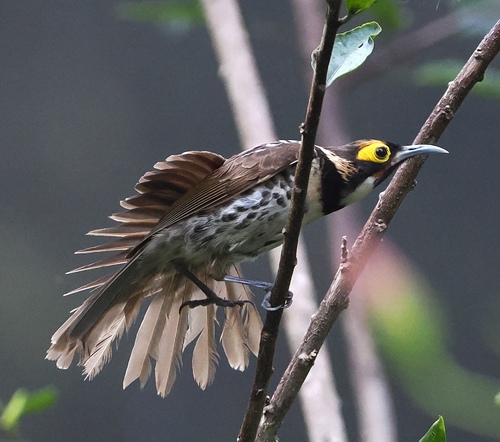
Ornate Melidectes (Melidectes torquatus) Ornate Melidectes
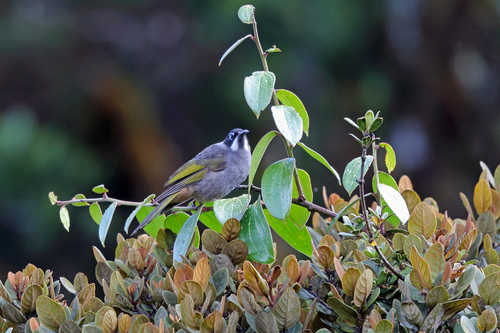
Belford's Melidectes (Melidectes belfordi) Belford's Melidectes

Media

Loading…

In short

Ornate Melidectes and Belford's Melidectes are both large honeyeaters of the New Guinea Highlands' montane forests, and their similar habitats and overall structure make them easy to confuse at a glance. However, field separation is extremely challenging based on the available information, as both species share nearly identical habitat preferences and there are no documented differences in plumage, structure, or vocalizations in the current sources. The only quantitative distinction is that Belford's Melidectes has a recorded average body mass of 82g, but this is not easily judged in the field. Without further details on age-specific plumage or structural differences, birders must rely on subtle cues or local knowledge, and should be cautious about overconfidence in identification when encountering these species together.

Identification tips

  1. Do not rely on habitat or range: Both species occur in the New Guinea Highlands' montane forests, so location alone will not separate them.
  2. Plumage is not diagnostic: Current sources do not describe any differences in coloration, pattern, or age-specific plumage between these two species.
  3. Size is not a reliable field mark: While Belford's Melidectes averages 82g, this is not a field-separable trait unless birds are directly compared, and no size for Ornate Melidectes is available.
  4. No known structural differences: There are no documented differences in bill shape, tail length, or wing structure between the two species.
  5. No age-specific flight or wing pattern differences: Neither species is described as having distinctive juvenile or immature wing markings that could be used for separation.
  6. Behavior is not helpful: Both species are described as typical honeyeaters, with no noted differences in foraging or social behavior.
  7. Vocalizations are not described: Without song or call differences, sound cannot be used for identification based on current knowledge.
  8. Be cautious with field guides: If a field guide or local expert claims a difference, check for recent photographic or audio evidence, as the current literature does not support any clear field marks.
  9. Document your sightings: If you encounter either species, try to obtain photos or recordings, as further study may reveal subtle differences not yet described.
  10. Check for updates: Taxonomy and field marks for New Guinea honeyeaters are still being refined; consult the latest literature or community reports for possible new information.
  11. Avoid overconfidence: Given the lack of distinguishing features in the available sources, it is reasonable to leave some birds unidentified to species level when both are possible.
  12. Consult local experts: Sometimes, local birders may know subtle cues (such as microhabitat or behavior) not yet published, but treat these with caution unless well documented.
  13. Photograph any unusual individuals: If you notice a bird that seems different from typical Melidectes, detailed photos may help clarify identification in the future.
  14. Consider context if one species is much more common: If eBird or local checklists show one species is vastly more likely at your site, this may guide your identification, but is not a substitute for field marks.
  15. Report uncertain records: If you are unsure, report as "Melidectes sp." to contribute to better understanding of their distribution and identification challenges.

Size

Belford's Melidectes has a documented average body mass of 82g, but there is no corresponding measurement for Ornate Melidectes. Both are robust, medium-to-large honeyeaters, and in the field, this size difference is likely negligible or extremely difficult to judge unless the birds are side by side. No other structural or proportional differences are noted in the sources.

Plumage

There are no documented differences in plumage between Ornate Melidectes and Belford's Melidectes in the available sources. No age-specific or seasonally variable field marks are described, and both species are simply described as typical Melidectes honeyeaters. No mention is made of distinctive juvenile, immature, or adult wing or body patterning that could be used for separation.

Behaviour

Both species are described as typical members of the Meliphagidae family and are found in the same habitat. No behavioral differences—such as feeding style, flocking, or flight pattern—are noted in the available sources.

Habitat

Both Ornate Melidectes and Belford's Melidectes inhabit subtropical or tropical moist montane forests in the New Guinea Highlands. There is no indication of habitat partitioning, elevation separation, or microhabitat preference between the two species in the current references.

Voice

No information is available on vocal differences between Ornate Melidectes and Belford's Melidectes in the provided sources.

Submit a better description

Use the same sections as the comparison. Your text is published immediately.

Ornate Melidectes and Belford's Melidectes are both large honeyeaters of the New Guinea Highlands' montane forests, and their similar habitats and overall structure make them easy to confuse at a glance. However, field separation is extremely challenging based on the available information, as both species share nearly identical habitat preferences and there are no documented differences in plumage, structure, or vocalizations in the current sources. The only quantitative distinction is that Belford's Melidectes has a recorded average body mass of 82g, but this is not easily judged in the field. Without further details on age-specific plumage or structural differences, birders must rely on subtle cues or local knowledge, and should be cautious about overconfidence in identification when encountering these species together.

  1. Do not rely on habitat or range: Both species occur in the New Guinea Highlands' montane forests, so location alone will not separate them.
  2. Plumage is not diagnostic: Current sources do not describe any differences in coloration, pattern, or age-specific plumage between these two species.
  3. Size is not a reliable field mark: While Belford's Melidectes averages 82g, this is not a field-separable trait unless birds are directly compared, and no size for Ornate Melidectes is available.
  4. No known structural differences: There are no documented differences in bill shape, tail length, or wing structure between the two species.
  5. No age-specific flight or wing pattern differences: Neither species is described as having distinctive juvenile or immature wing markings that could be used for separation.
  6. Behavior is not helpful: Both species are described as typical honeyeaters, with no noted differences in foraging or social behavior.
  7. Vocalizations are not described: Without song or call differences, sound cannot be used for identification based on current knowledge.
  8. Be cautious with field guides: If a field guide or local expert claims a difference, check for recent photographic or audio evidence, as the current literature does not support any clear field marks.
  9. Document your sightings: If you encounter either species, try to obtain photos or recordings, as further study may reveal subtle differences not yet described.
  10. Check for updates: Taxonomy and field marks for New Guinea honeyeaters are still being refined; consult the latest literature or community reports for possible new information.
  11. Avoid overconfidence: Given the lack of distinguishing features in the available sources, it is reasonable to leave some birds unidentified to species level when both are possible.
  12. Consult local experts: Sometimes, local birders may know subtle cues (such as microhabitat or behavior) not yet published, but treat these with caution unless well documented.
  13. Photograph any unusual individuals: If you notice a bird that seems different from typical Melidectes, detailed photos may help clarify identification in the future.
  14. Consider context if one species is much more common: If eBird or local checklists show one species is vastly more likely at your site, this may guide your identification, but is not a substitute for field marks.
  15. Report uncertain records: If you are unsure, report as "Melidectes sp." to contribute to better understanding of their distribution and identification challenges.

Belford's Melidectes has a documented average body mass of 82g, but there is no corresponding measurement for Ornate Melidectes. Both are robust, medium-to-large honeyeaters, and in the field, this size difference is likely negligible or extremely difficult to judge unless the birds are side by side. No other structural or proportional differences are noted in the sources.

There are no documented differences in plumage between Ornate Melidectes and Belford's Melidectes in the available sources. No age-specific or seasonally variable field marks are described, and both species are simply described as typical Melidectes honeyeaters. No mention is made of distinctive juvenile, immature, or adult wing or body patterning that could be used for separation.

Both species are described as typical members of the Meliphagidae family and are found in the same habitat. No behavioral differences—such as feeding style, flocking, or flight pattern—are noted in the available sources.

Both Ornate Melidectes and Belford's Melidectes inhabit subtropical or tropical moist montane forests in the New Guinea Highlands. There is no indication of habitat partitioning, elevation separation, or microhabitat preference between the two species in the current references.

No information is available on vocal differences between Ornate Melidectes and Belford's Melidectes in the provided sources.

Discard your changes?

You have unsaved edits. If you leave now, those changes will be lost.

Ornate Melidectes · Belford's Melidectes · My Tricky Birds