

Motmot

Northern Yellow White-eye vs South Pare White-eye

Zosterops senegalensis versus Zosterops winifredae

Play a quiz with Northern Yellow White-eye and South Pare White-eye
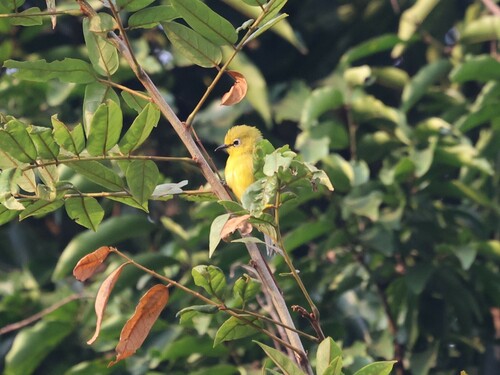
Northern Yellow White-eye (Zosterops senegalensis) Northern Yellow White-eye
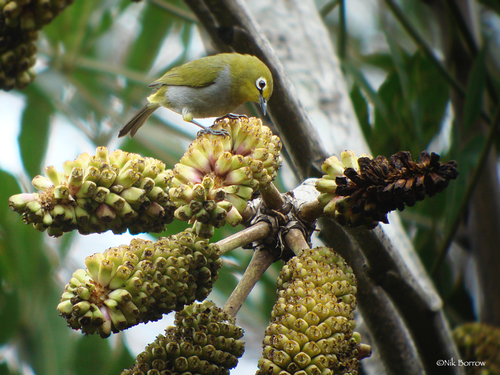
South Pare White-eye (Zosterops winifredae) South Pare White-eye

Media

Loading…

In short

The most reliable way to separate Northern Yellow White-eye from South Pare White-eye is by geographic range: Northern Yellow White-eye is widespread across sub-Saharan Africa, while South Pare White-eye is restricted to the southern Pare Mountains of northeastern Tanzania. In the field, both species are small, yellowish birds with a white eye-ring, but the Northern Yellow White-eye is more likely to show a brighter yellow head and underparts, a black loral stripe, and brownish flight feathers edged yellow-olive. Juvenile plumage in Northern Yellow White-eye is darker, but there are no detailed contrasts for South Pare White-eye immatures. Structural and behavioral differences are not described in the available sources, so identification relies mainly on range and subtle plumage cues.

Identification tips

  1. Range is the most decisive mark: Northern Yellow White-eye is widespread across sub-Saharan Africa, while South Pare White-eye is endemic to the southern Pare Mountains in Tanzania. If you are not in this restricted area, you are almost certainly seeing Northern Yellow White-eye.
  2. Yellow intensity: Northern Yellow White-eye typically shows a brighter yellow head and underparts, especially in open or savanna habitats. South Pare White-eye may appear duller or more olive, but this is not well documented and may overlap in forested populations of Northern Yellow White-eye.
  3. Black loral stripe: Northern Yellow White-eye often shows a distinct black line between the bill and eye (loral stripe), which is a helpful mark in good light. There is no information on this feature for South Pare White-eye, so its absence or weakness could suggest South Pare, but this is uncertain.
  4. White eye-ring: Both species have a prominent white eye-ring, so this feature does not separate them.
  5. Flight and tail feathers: Northern Yellow White-eye has brown flight and tail feathers edged with yellowish olive. This may be less pronounced in South Pare White-eye, but direct comparisons are lacking.
  6. Juvenile plumage: Juvenile Northern Yellow White-eye is darker overall but still shows the white eye-ring. There is no information on South Pare White-eye juveniles, so caution is needed with young birds.
  7. Structural features: No reliable differences in bill shape, wing length, or tail shape are described between these two species.
  8. Size: Both are small white-eyes, and size is not a reliable separator.
  9. Habitat context: If you are birding in lowland or savanna habitats outside the southern Pare Mountains, you are almost certainly seeing Northern Yellow White-eye. In montane forest in the southern Pare Mountains, South Pare White-eye is the expected species.
  10. Flock composition: Both species may join mixed-species flocks, but there are no known differences in flocking behavior that help with identification.
  11. Season and sex: No seasonal or sexual plumage differences are described for either species, so these are not useful for separation.
  12. Voice: No vocal differences are described in the available sources, so calls and songs are not currently helpful for separating these two species.
  13. Plumage pitfalls: Some forest populations of Northern Yellow White-eye are greener, potentially overlapping with South Pare White-eye. Use range and loral stripe in these cases.
  14. When in doubt: If you are within the southern Pare Mountains and see a white-eye that does not match the bright yellow, black-lored pattern of Northern Yellow White-eye, consider South Pare White-eye, but be aware of the lack of detailed field descriptions.

Size

Northern Yellow White-eye averages about 8.1g in body mass and measures around 11.5 cm in length [wikidata]. No specific size data is available for South Pare White-eye, but as a member of the same genus, it is likely similar in overall proportions. Size is not a reliable field mark for separating these two species.

Plumage

For Northern Yellow White-eye, adults show a bright yellow head and underparts, a prominent white eye-ring, a black loral stripe, and brownish flight and tail feathers edged with yellowish olive. Some populations are greener, especially in forested regions. Juveniles are darker overall, but still show the white eye-ring. No detailed plumage description is available for South Pare White-eye, but as a former subspecies of Heuglin's (Montane) White-eye, it may show less intense yellow and possibly more olive or greenish tones, especially on the upperparts. Without detailed descriptions, the best field marks are the intensity of yellow and the presence of a black loral stripe in Northern Yellow White-eye. Both species have a white eye-ring, which is not diagnostic between them.

Behaviour

No behavioral differences are described in the available sources. Both species are typical white-eyes, likely to be active, social, and foraging in flocks, often in the canopy or mid-levels of trees. Behavior is not a useful separator in this pair based on current information.

Habitat

Northern Yellow White-eye occupies a wide range of habitats across sub-Saharan Africa, from savanna to forest edges and gardens. South Pare White-eye is restricted to the southern Pare Mountains in northeastern Tanzania, likely favoring montane forest or woodland. Thus, habitat and especially geographic location are the most useful context clues: if you are outside the southern Pare Mountains, you are almost certainly seeing Northern Yellow White-eye.

Submit a better description

Use the same sections as the comparison. Your text is published immediately.

The most reliable way to separate Northern Yellow White-eye from South Pare White-eye is by geographic range: Northern Yellow White-eye is widespread across sub-Saharan Africa, while South Pare White-eye is restricted to the southern Pare Mountains of northeastern Tanzania. In the field, both species are small, yellowish birds with a white eye-ring, but the Northern Yellow White-eye is more likely to show a brighter yellow head and underparts, a black loral stripe, and brownish flight feathers edged yellow-olive. Juvenile plumage in Northern Yellow White-eye is darker, but there are no detailed contrasts for South Pare White-eye immatures. Structural and behavioral differences are not described in the available sources, so identification relies mainly on range and subtle plumage cues.

  1. Range is the most decisive mark: Northern Yellow White-eye is widespread across sub-Saharan Africa, while South Pare White-eye is endemic to the southern Pare Mountains in Tanzania. If you are not in this restricted area, you are almost certainly seeing Northern Yellow White-eye.
  2. Yellow intensity: Northern Yellow White-eye typically shows a brighter yellow head and underparts, especially in open or savanna habitats. South Pare White-eye may appear duller or more olive, but this is not well documented and may overlap in forested populations of Northern Yellow White-eye.
  3. Black loral stripe: Northern Yellow White-eye often shows a distinct black line between the bill and eye (loral stripe), which is a helpful mark in good light. There is no information on this feature for South Pare White-eye, so its absence or weakness could suggest South Pare, but this is uncertain.
  4. White eye-ring: Both species have a prominent white eye-ring, so this feature does not separate them.
  5. Flight and tail feathers: Northern Yellow White-eye has brown flight and tail feathers edged with yellowish olive. This may be less pronounced in South Pare White-eye, but direct comparisons are lacking.
  6. Juvenile plumage: Juvenile Northern Yellow White-eye is darker overall but still shows the white eye-ring. There is no information on South Pare White-eye juveniles, so caution is needed with young birds.
  7. Structural features: No reliable differences in bill shape, wing length, or tail shape are described between these two species.
  8. Size: Both are small white-eyes, and size is not a reliable separator.
  9. Habitat context: If you are birding in lowland or savanna habitats outside the southern Pare Mountains, you are almost certainly seeing Northern Yellow White-eye. In montane forest in the southern Pare Mountains, South Pare White-eye is the expected species.
  10. Flock composition: Both species may join mixed-species flocks, but there are no known differences in flocking behavior that help with identification.
  11. Season and sex: No seasonal or sexual plumage differences are described for either species, so these are not useful for separation.
  12. Voice: No vocal differences are described in the available sources, so calls and songs are not currently helpful for separating these two species.
  13. Plumage pitfalls: Some forest populations of Northern Yellow White-eye are greener, potentially overlapping with South Pare White-eye. Use range and loral stripe in these cases.
  14. When in doubt: If you are within the southern Pare Mountains and see a white-eye that does not match the bright yellow, black-lored pattern of Northern Yellow White-eye, consider South Pare White-eye, but be aware of the lack of detailed field descriptions.

Northern Yellow White-eye averages about 8.1g in body mass and measures around 11.5 cm in length [wikidata]. No specific size data is available for South Pare White-eye, but as a member of the same genus, it is likely similar in overall proportions. Size is not a reliable field mark for separating these two species.

For Northern Yellow White-eye, adults show a bright yellow head and underparts, a prominent white eye-ring, a black loral stripe, and brownish flight and tail feathers edged with yellowish olive. Some populations are greener, especially in forested regions. Juveniles are darker overall, but still show the white eye-ring. No detailed plumage description is available for South Pare White-eye, but as a former subspecies of Heuglin's (Montane) White-eye, it may show less intense yellow and possibly more olive or greenish tones, especially on the upperparts. Without detailed descriptions, the best field marks are the intensity of yellow and the presence of a black loral stripe in Northern Yellow White-eye. Both species have a white eye-ring, which is not diagnostic between them.

No behavioral differences are described in the available sources. Both species are typical white-eyes, likely to be active, social, and foraging in flocks, often in the canopy or mid-levels of trees. Behavior is not a useful separator in this pair based on current information.

Northern Yellow White-eye occupies a wide range of habitats across sub-Saharan Africa, from savanna to forest edges and gardens. South Pare White-eye is restricted to the southern Pare Mountains in northeastern Tanzania, likely favoring montane forest or woodland. Thus, habitat and especially geographic location are the most useful context clues: if you are outside the southern Pare Mountains, you are almost certainly seeing Northern Yellow White-eye.

Discard your changes?

You have unsaved edits. If you leave now, those changes will be lost.

Northern Yellow White-eye · South Pare White-eye · My Tricky Birds